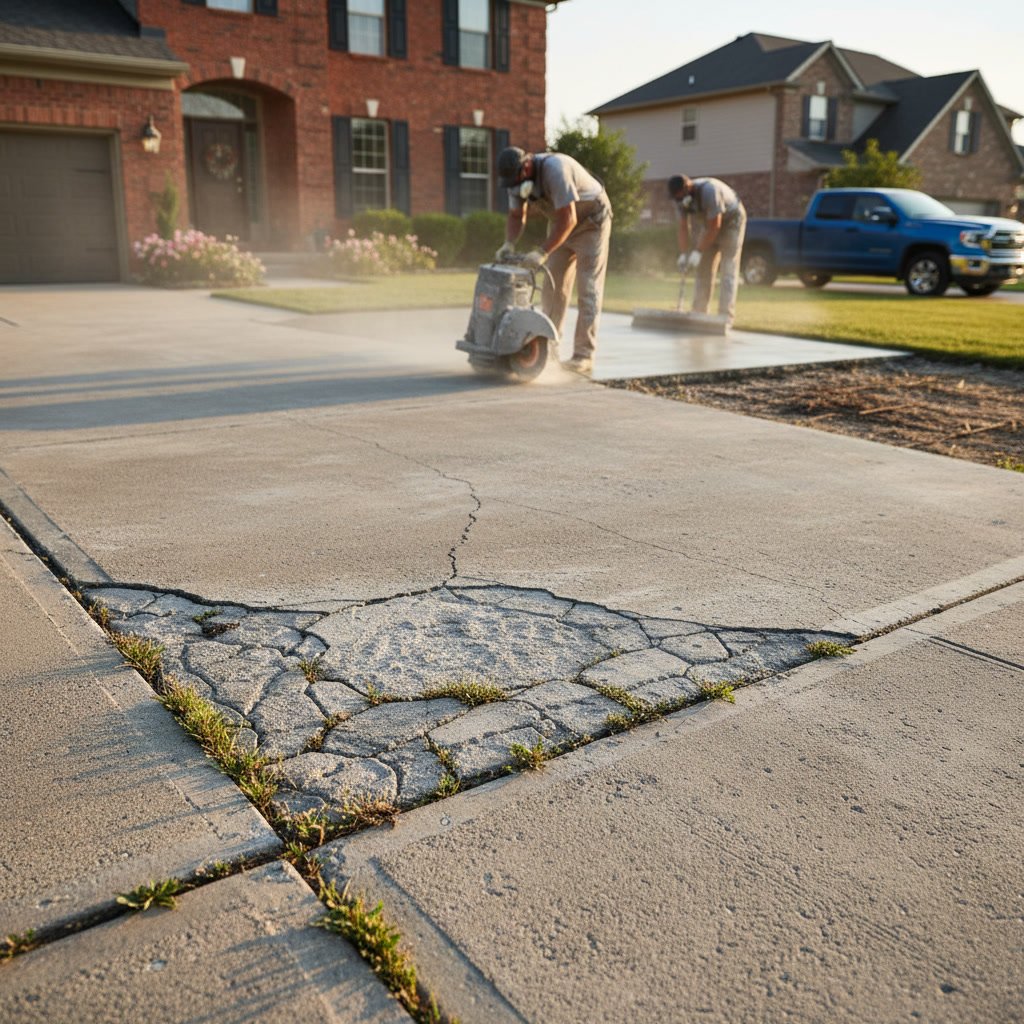
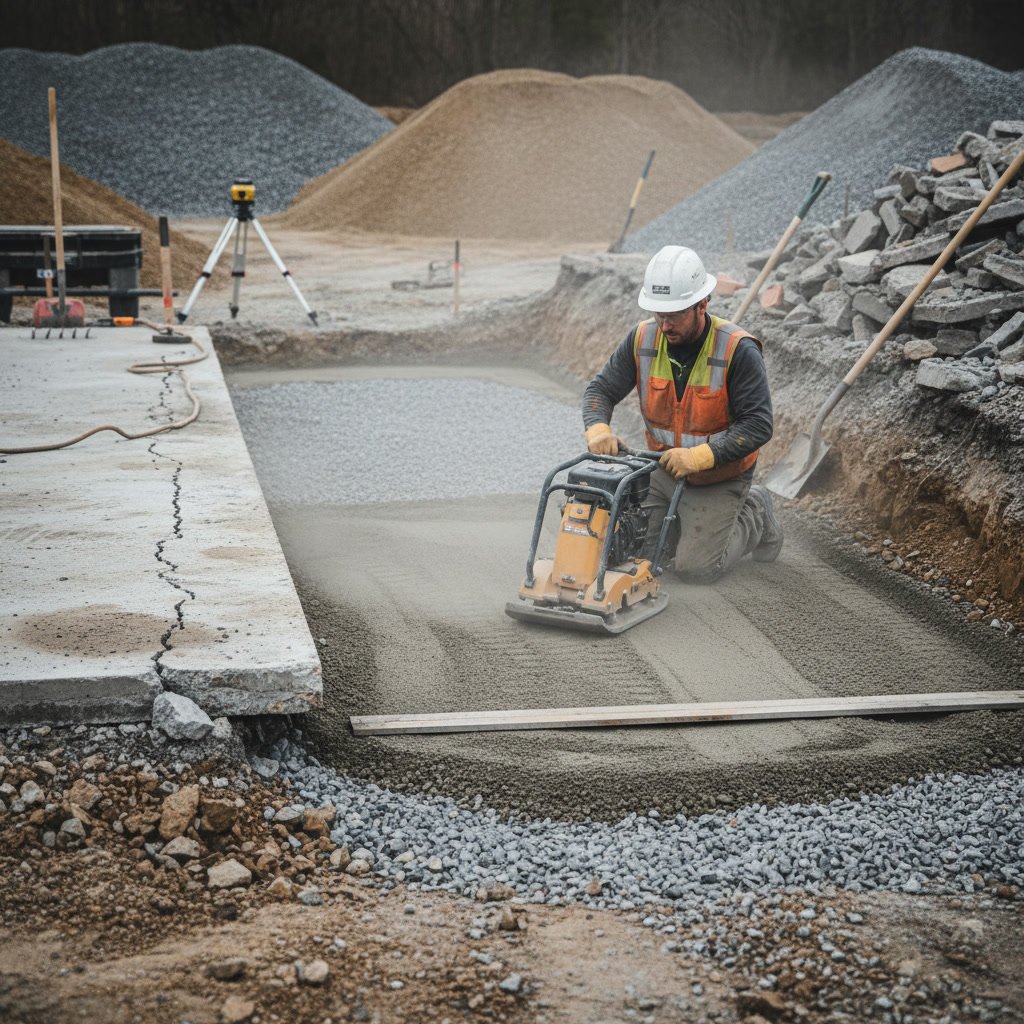
Proper concrete subbase preparation creates a stable foundation that dramatically reduces the risk of cracks, settling, and structural failure over time. The subbase acts as a load-distributing platform that manages soil movement, controls moisture, and provides uniform support for the concrete slab above. Without adequate preparation, even the highest-quality concrete mix will eventually crack and settle, leading to costly repairs and reduced lifespan.
Why the Foundation Beneath Your Concrete Matters
The subbase serves as the unsung hero of every concrete installation. While you see the finished surface, the real work happens in the layers below. A well-prepared subbase distributes weight evenly, prevents moisture intrusion from below, and compensates for soil expansion and contraction caused by temperature changes and freeze-thaw cycles.
Most concrete failures stem not from the concrete itself but from inadequate support beneath it. Soil compaction issues, poor drainage, and insufficient base material thickness cause the majority of premature cracking in residential concrete installations.
The Hidden Costs of Skipping Proper Base Work
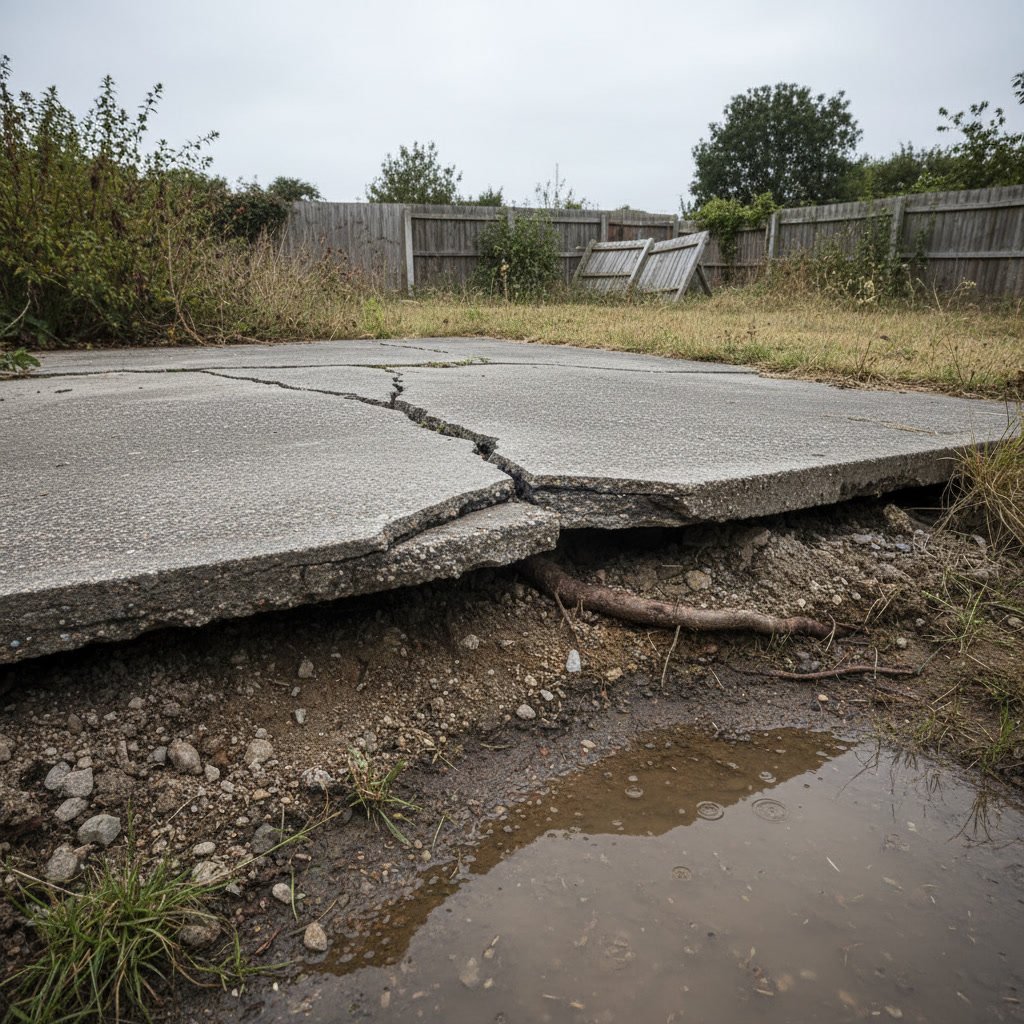
Cutting corners during subbase preparation might save a few hours during installation, but the consequences appear quickly. Settling creates uneven surfaces that pool water, accelerating deterioration. Cracks allow moisture to penetrate beneath the slab, further destabilizing the base and creating a cycle of progressive damage.
Homeowners often discover these issues within the first two to three years when warranty coverage may no longer apply. The repair costs for failed concrete typically exceed the original installation price because remediation requires removing the damaged slab, addressing the underlying problems, and starting over.
Critical Steps in Professional Subbase Preparation
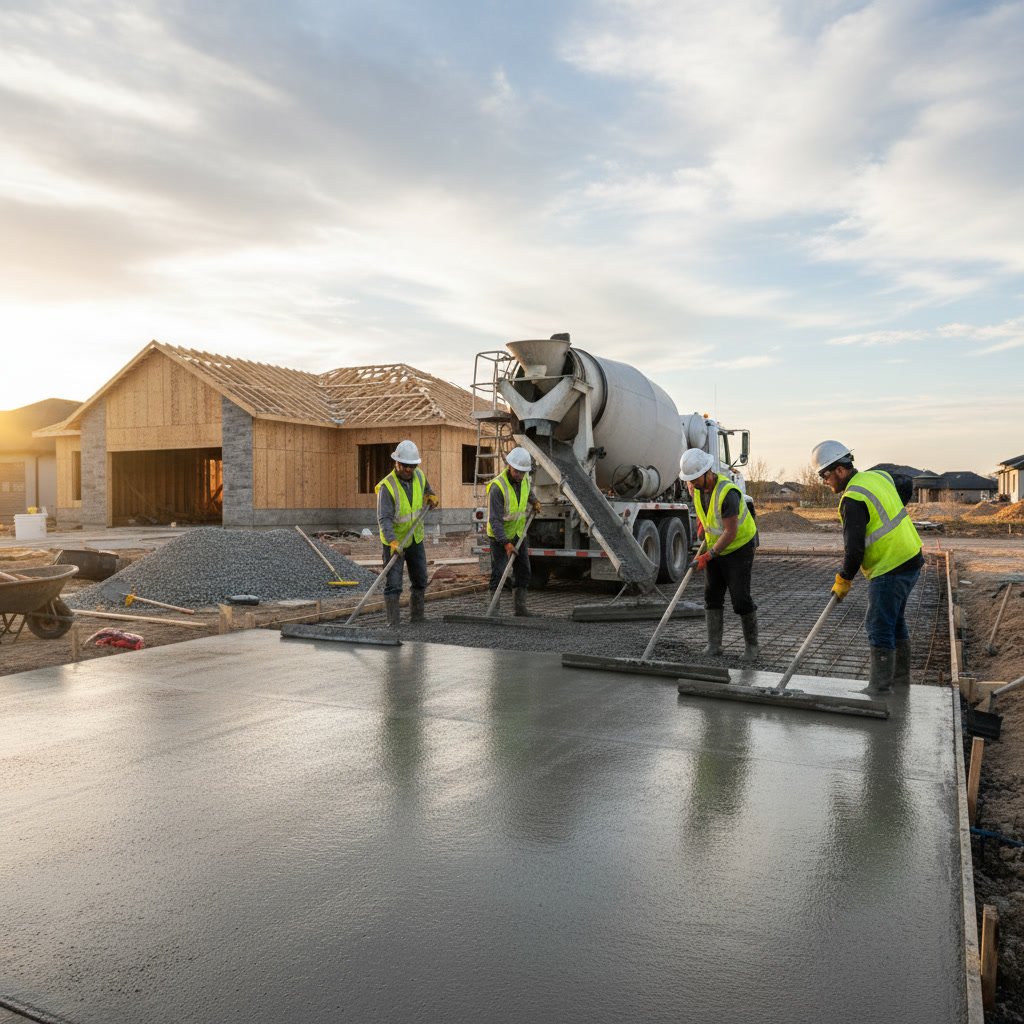
Professional concrete work follows a systematic approach to base preparation. The process begins with complete excavation of organic material, topsoil, and unstable ground to reach solid, undisturbed earth. Depth varies based on soil type and project requirements, but most residential installations require 8 to 12 inches of excavation below the finished grade.
After excavation, contractors grade the soil to establish proper drainage away from structures. A minimum slope of one-quarter inch per foot ensures water moves away from the concrete surface rather than pooling beneath it. This step alone prevents many common moisture-related problems.
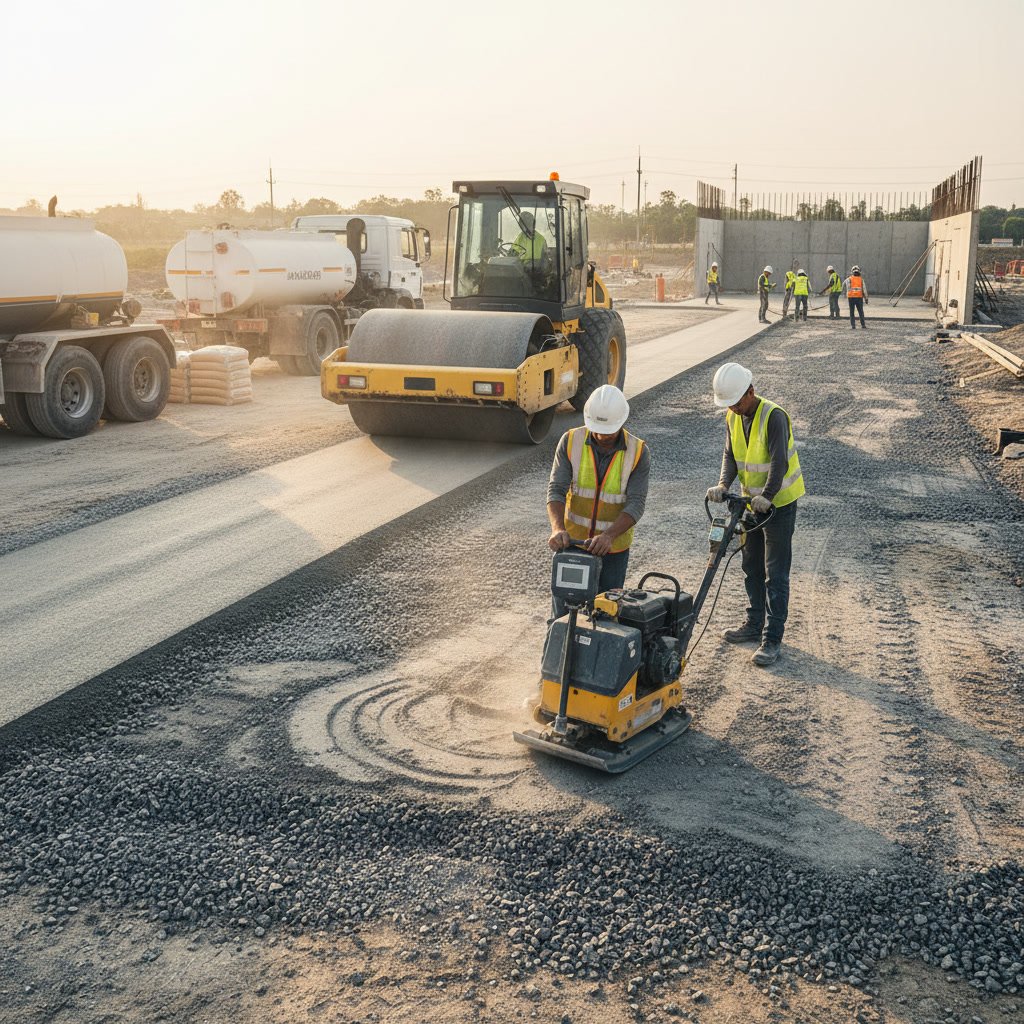
Next comes installation of the aggregate base layer, typically four to six inches of crushed stone or gravel. The specific thickness depends on soil conditions, expected load, and local frost depth. In areas with expansive clay soils, a thicker base provides additional insurance against movement.
Compaction represents the most critical step in the entire process. Each two-inch lift of base material must be mechanically compacted to 95% density or greater. Hand tampers cannot achieve adequate compaction for driveways or heavy-use areas. Professional plate compactors or jumping jack tampers are essential for proper density.
Soil Types and Their Impact on Base Requirements
The native soil beneath your project determines the base preparation strategy. Clay soils expand when wet and shrink when dry, creating substantial movement that can crack concrete. These soils require thicker base layers and sometimes benefit from geotextile fabric barriers that separate the base from unstable soil below.
Sandy soils drain well but lack cohesion and can shift under load. A properly compacted gravel base locks sandy soils in place and provides the stable platform concrete needs. Rocky or gravelly native soils often require less additional base material since they already provide good drainage and stability.
Organic-rich soils compress over time as organic matter decomposes, causing settling. These soils must be completely removed and replaced with suitable base material. No amount of compaction can prevent organic soil from eventually compressing.
Dealing with Poor Drainage Conditions in Shingle Springs
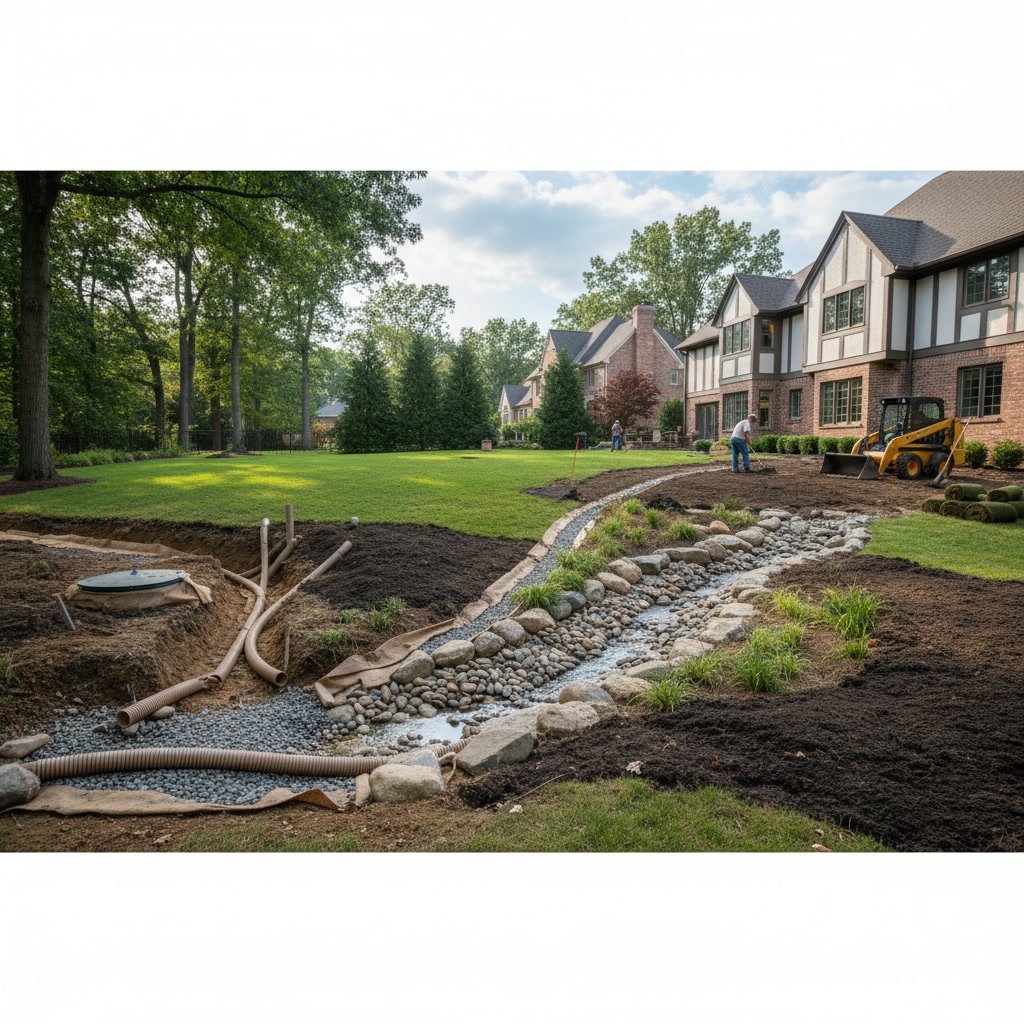
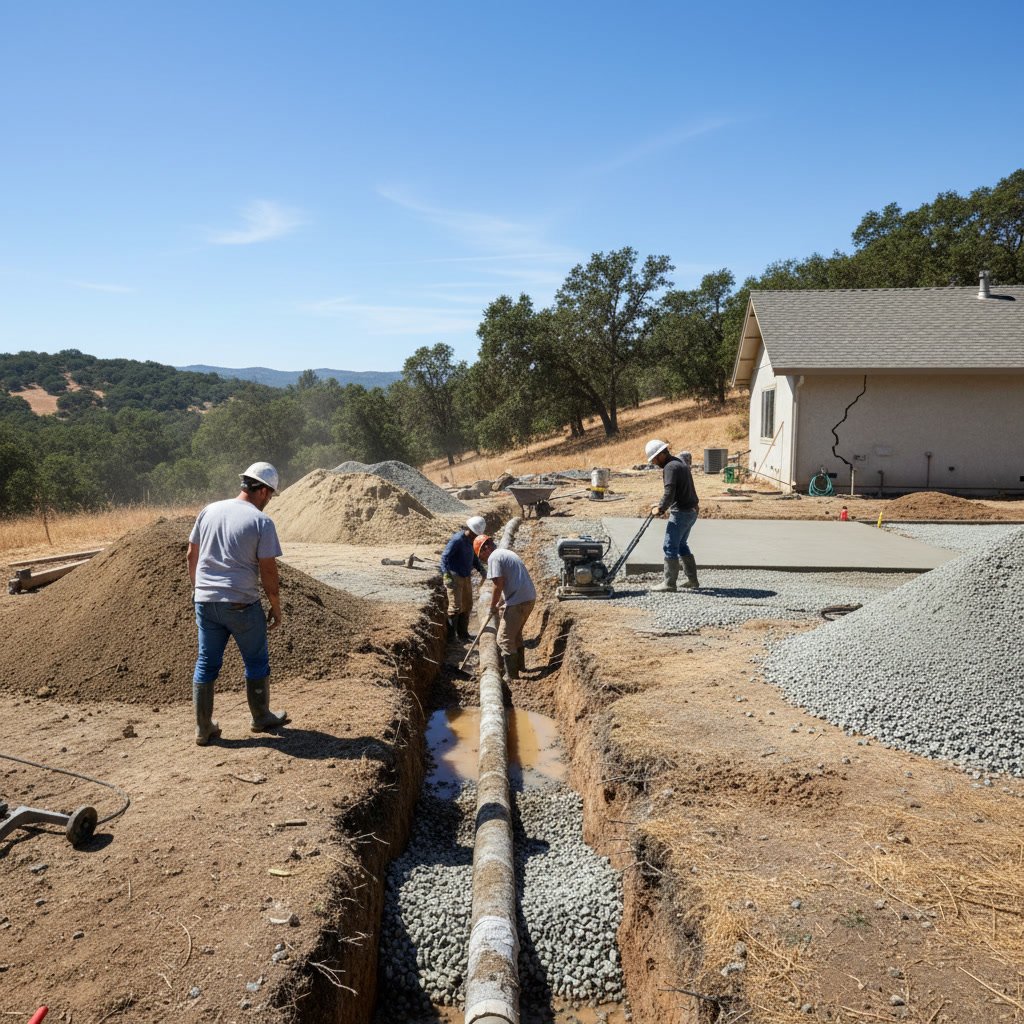
Local soil conditions and seasonal weather patterns influence base preparation requirements. Areas with high water tables or poor natural drainage need additional measures beyond standard base preparation. Installing perforated drainage pipes in a gravel bed alongside the concrete directs water away before it can undermine the base.
For concrete pool decks and other areas near constant moisture sources, waterproof membranes beneath the base layer provide an extra barrier against water migration. These installations require careful attention to edge details where water can infiltrate if the membrane is not properly sealed.
The Role of Aggregate Size and Type
Not all gravel bases perform equally. Three-quarter-inch crushed angular stone compacts better than rounded river rock because the angular edges lock together under compaction. Crushed stone also contains a blend of sizes that fill voids and create a denser, more stable base.
Avoid using pure sand as a base layer for concrete. While sand fills easily and levels smoothly, it lacks the load-bearing capacity and drainage properties of larger aggregate. Sand can also shift laterally under load, creating voids beneath the concrete that lead to cracking.
The base must extend beyond the concrete edges by at least six inches on all sides. This perimeter support prevents edge loading that causes corner breaks, one of the most common concrete failures in custom walkways and driveways.
Moisture Control Beyond Drainage
Even with proper drainage, moisture vapor from the soil can migrate upward through the base and into the concrete. This vapor transmission causes problems with floor coatings, staining applications, and interior slabs. A six-mil polyethylene vapor barrier placed directly beneath the concrete stops this migration.
The vapor barrier requires careful installation with all seams overlapped at least six inches and sealed with compatible tape. Punctures during rebar or wire mesh placement compromise effectiveness, so many contractors place a two-inch sand cushion above the barrier to protect it during finishing work.
Understanding why concrete driveways crack helps homeowners recognize the importance of moisture management throughout the installation process.
Compaction Testing and Quality Control
Professional contractors verify compaction through field testing rather than assuming the work is adequate. A simple proof roll using a heavy loaded truck reveals soft spots that require additional compaction. More precise testing uses a nuclear density gauge or lightweight deflectometer to measure actual compaction percentages.
These quality control steps identify problems before concrete placement when corrections cost pennies compared to post-installation repairs. STAMATELOS CONSTRUCTION employs systematic verification at every project phase to ensure long-term performance meets or exceeds industry standards.
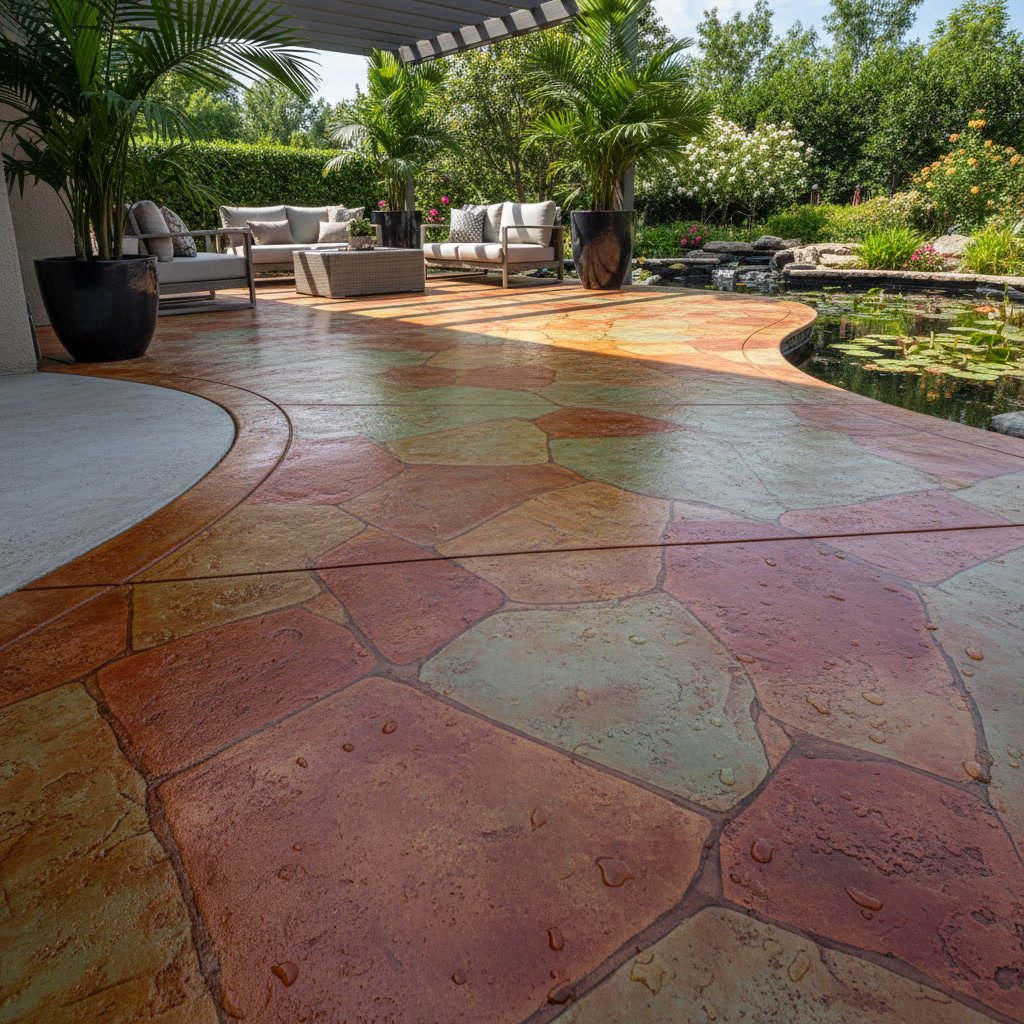
For projects like stamp concrete installations where aesthetics combine with structural requirements, proper base work prevents the surface cracks that ruin decorative finishes and require expensive restoration.
Frost Protection in Freeze-Thaw Climates
Areas experiencing freezing temperatures require base depth below the frost line to prevent heave. When moisture in the soil freezes, it expands with tremendous force that lifts concrete slabs. The resulting cracks appear as the ground thaws and settles unevenly.
Local building codes specify minimum frost depth, but experienced contractors often exceed these minimums in areas with known frost problems. The additional base material costs far less than repairing frost-damaged concrete.
Proper base drainage becomes even more critical in freeze-thaw climates. Water trapped in the base freezes and expands, causing the same heaving problems as frozen soil. Free-draining aggregate bases allow water to escape before freezing temperatures arrive.
When to Consider Specialized Base Solutions
Problem sites sometimes require engineered solutions beyond standard base preparation. Geogrid reinforcement products provide tensile strength that stabilizes weak soils and reduces the base thickness needed for adequate support. These polymer grids interlock with aggregate particles to create a semi-rigid platform.
Cement-stabilized base courses mix a small percentage of Portland cement with the aggregate base to create a rigid layer that spans soft spots and resists erosion. This approach works well for large commercial applications or residential projects over particularly challenging soils.
Foam void fill systems inject expanding polyurethane beneath settled concrete to lift and level slabs. While useful for concrete restoration projects, these solutions represent temporary fixes unless the underlying base problems are also addressed.
Building Long-Term Performance Into Every Project
Quality base preparation extends concrete lifespan from 15 to 20 years for marginal installations to 40 years or more for properly executed work. The additional time and material investment during installation pays dividends throughout the concrete’s service life through reduced maintenance costs and preserved appearance.
Homeowners benefit from understanding these fundamentals when evaluating contractor bids. The lowest price often reflects shortcuts in areas invisible after installation. Questions about excavation depth, base material specifications, compaction methods, and quality verification separate contractors who build for the long term from those focused only on initial installation.
Since 1990, STAMATELOS CONSTRUCTION has maintained the philosophy that proper preparation work, though unseen in the finished project, defines the difference between concrete that lasts and concrete that fails prematurely. Every installation reflects the accumulated knowledge of decades of hands-on experience across all soil types and applications common to Northern California residential construction.
The foundation beneath your concrete determines everything that follows. Adequate excavation depth, properly selected and compacted base materials, effective moisture management, and attention to local soil conditions create the stable platform that prevents cracking and settling. These fundamentals apply whether you are installing a simple walkway or an elaborate decorative concrete feature.
If you are planning a concrete project and want the assurance that comes from proper base preparation and expert installation, contact our team at +19163055310. We bring more than three decades of experience to every project, ensuring your investment delivers lasting performance and value.