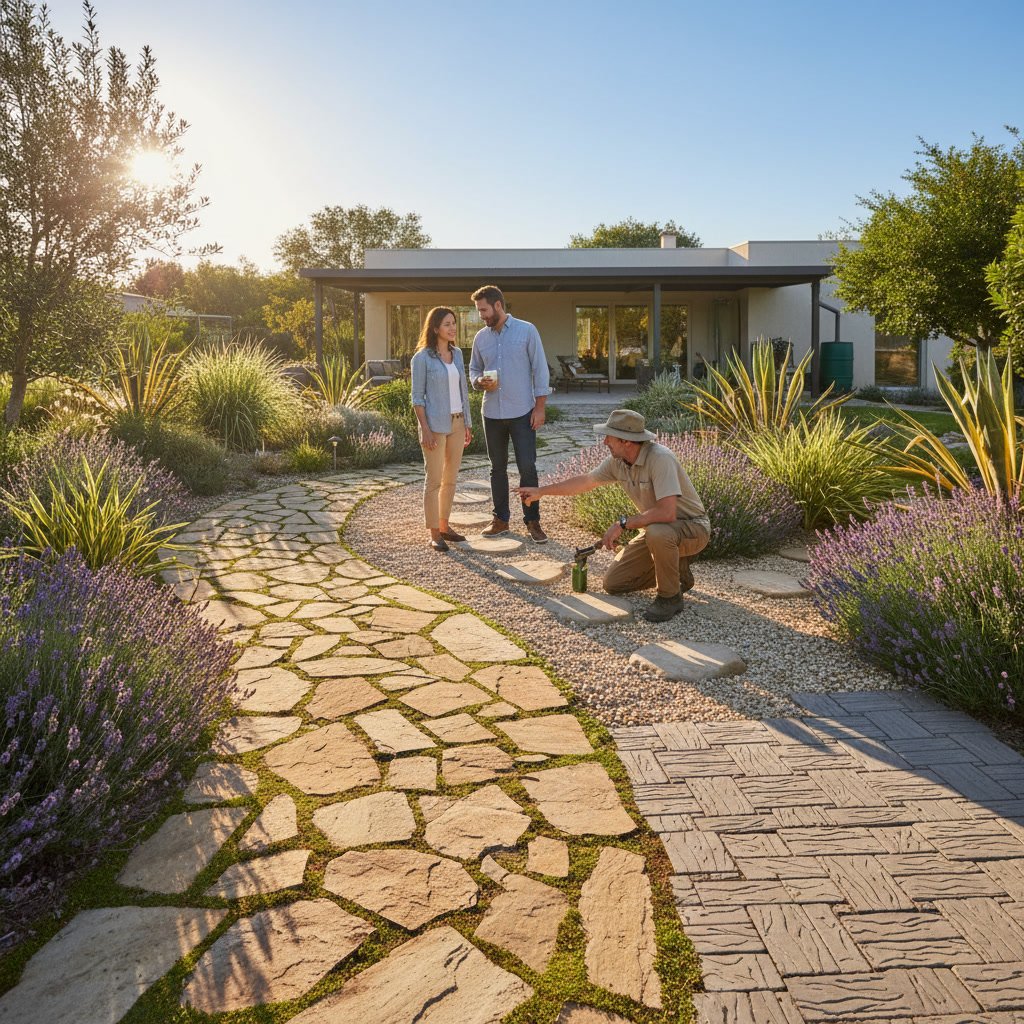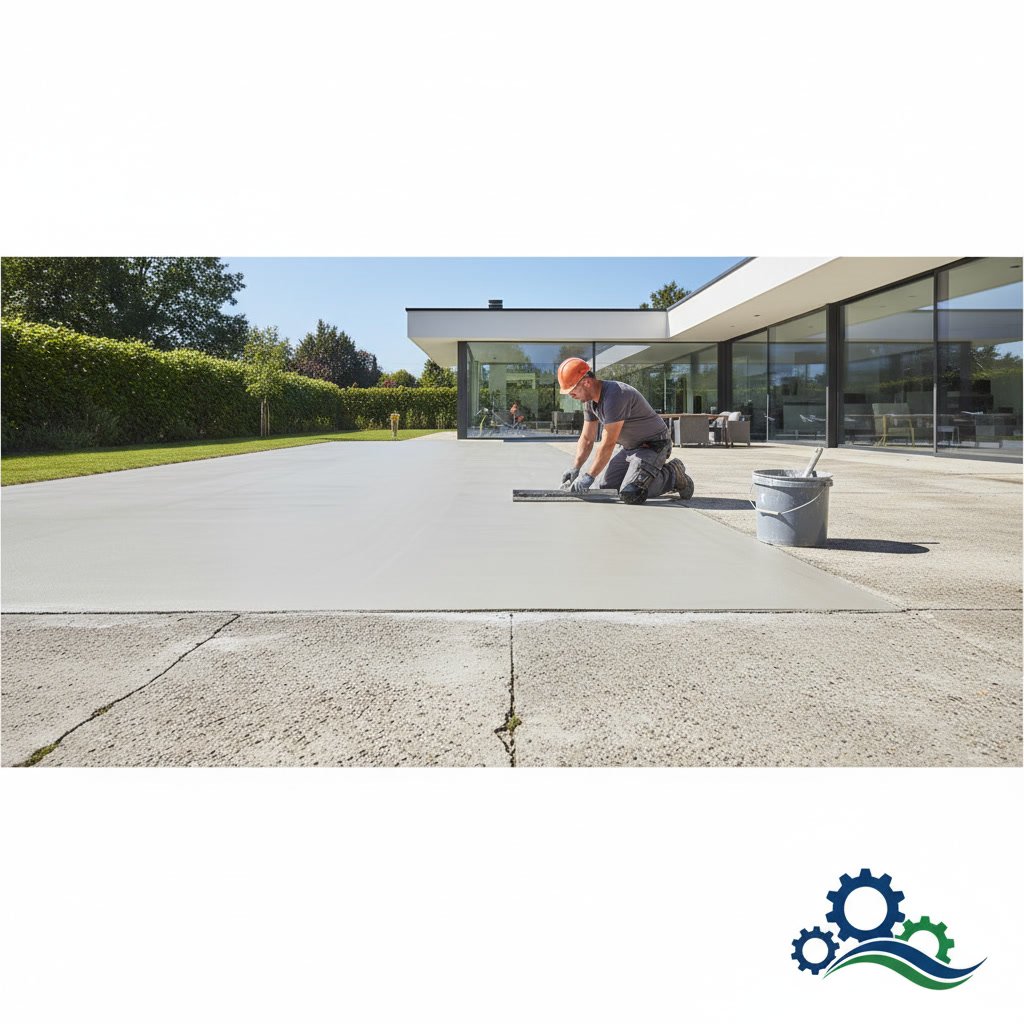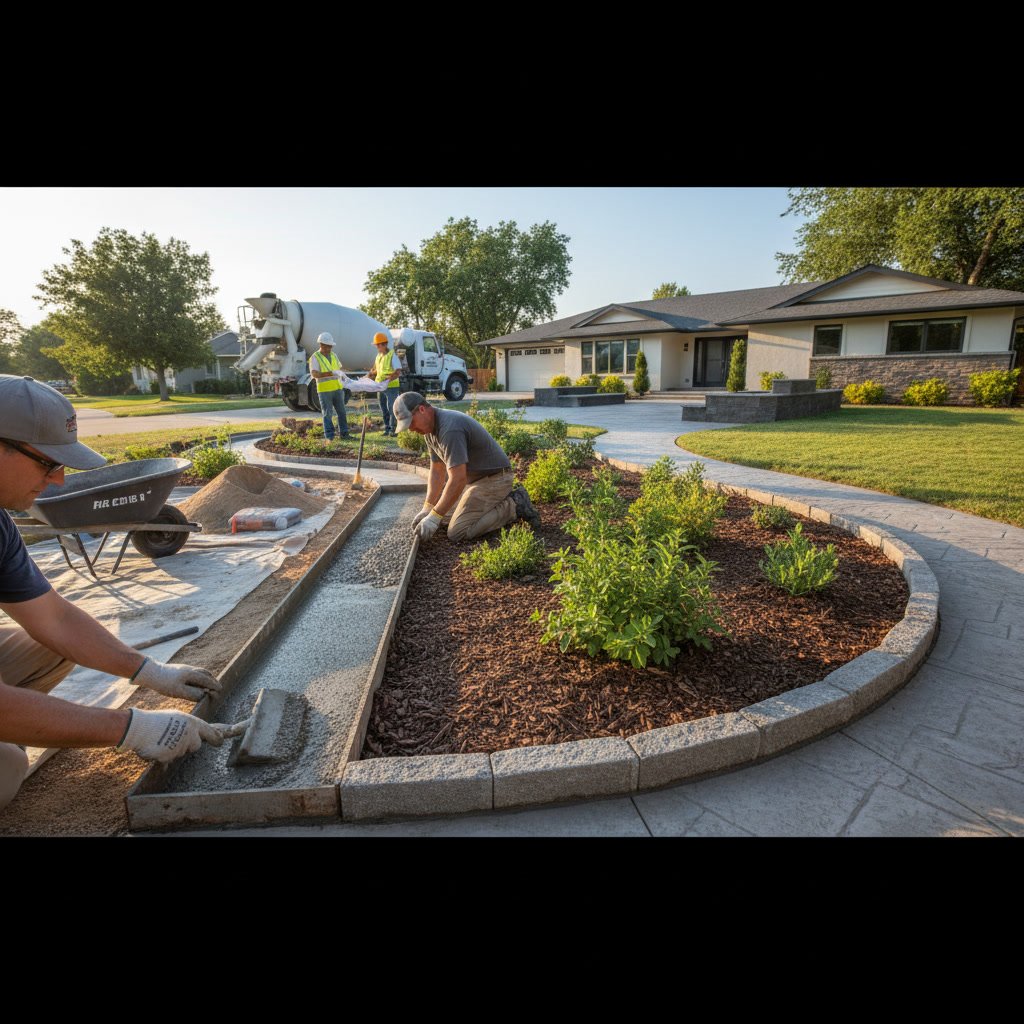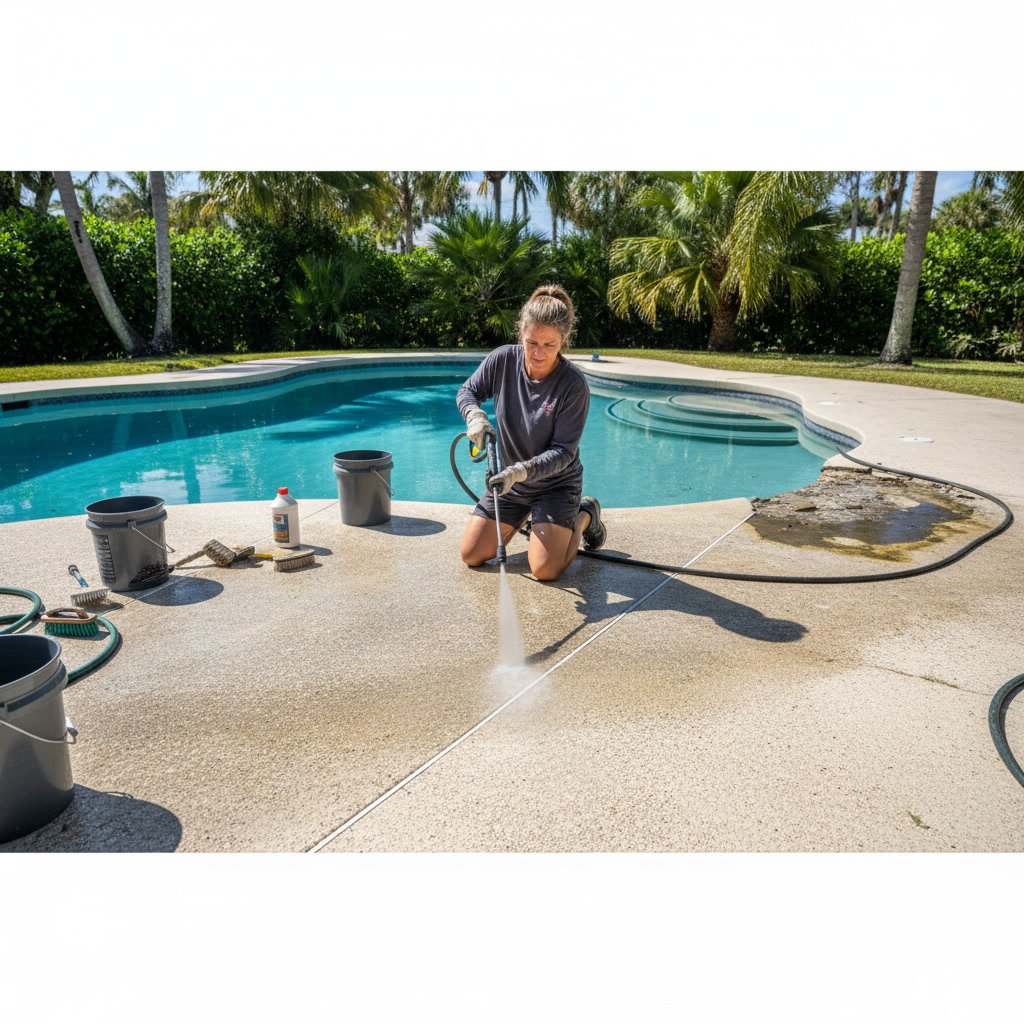
The concrete restoration process begins with a thorough surface assessment to identify cracks, spalling, discoloration, and structural issues. Professional contractors then clean and prepare the surface, repair damaged areas with appropriate materials, apply color restoration or staining if needed, and finish with protective sealers that lock in the repairs and prevent future deterioration. This methodical approach can extend your concrete’s lifespan by 10 to 20 years when executed properly.
Damaged concrete doesn’t always mean replacement. Many driveways, patios, pool decks, and walkways showing signs of wear can be brought back to excellent condition through professional restoration. Understanding each phase of the restoration workflow helps property owners make informed decisions and recognize quality workmanship.
Why Surface Assessment Matters Before Any Repair Work Begins
A proper assessment determines whether restoration is viable or if full replacement makes more financial sense. Contractors examine the depth of cracks, the extent of surface spalling, and whether the slab foundation remains stable. Hairline cracks under an eighth of an inch wide typically qualify for simple filling, while wider structural cracks may require routing and deeper repair methods.
The assessment also checks for underlying issues that caused the damage in the first place. Poor drainage, tree root intrusion, and soil settlement create recurring problems if left unaddressed. Identifying these factors early prevents costly do-overs and ensures repairs actually last. A comprehensive evaluation includes moisture testing, especially in regions with clay-heavy soil that expands and contracts seasonally.
Surface Cleaning and Preparation Sets the Foundation for Lasting Results
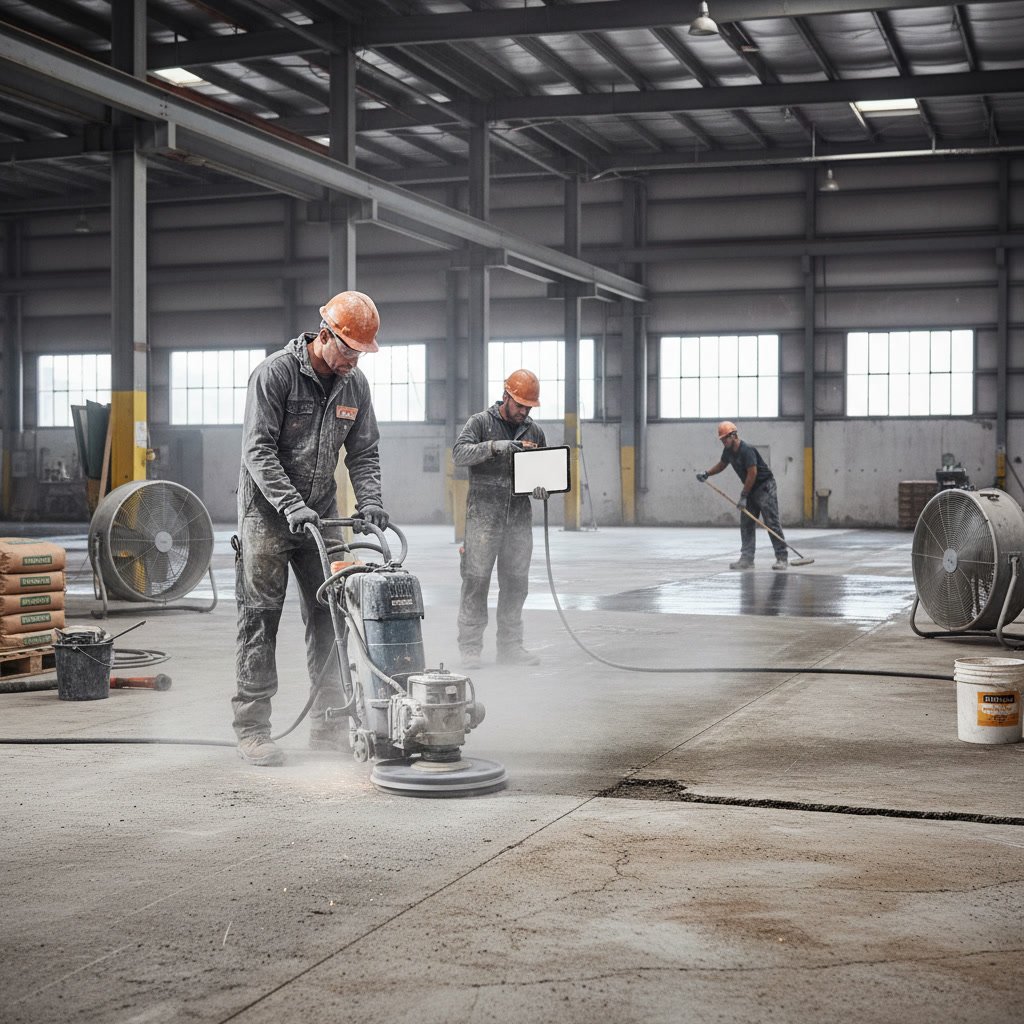
No restoration material bonds properly to dirty, oily, or contaminated concrete. Professional crews use pressure washing at 3,000 to 4,000 psi to remove surface grime, mildew, old sealers, and efflorescence. Chemical degreasers tackle oil stains in garage floors and driveways, while muriatic acid solutions open the concrete pores for better adhesion.
After cleaning, the surface must dry completely before repairs begin. Moisture trapped under repair materials causes delamination and early failure. Contractors often wait 24 to 48 hours depending on weather conditions, using moisture meters to confirm readiness. This patience separates quality restoration from rushed jobs that fail within months.
Crack Routing Creates Proper Channels for Durable Repair Material
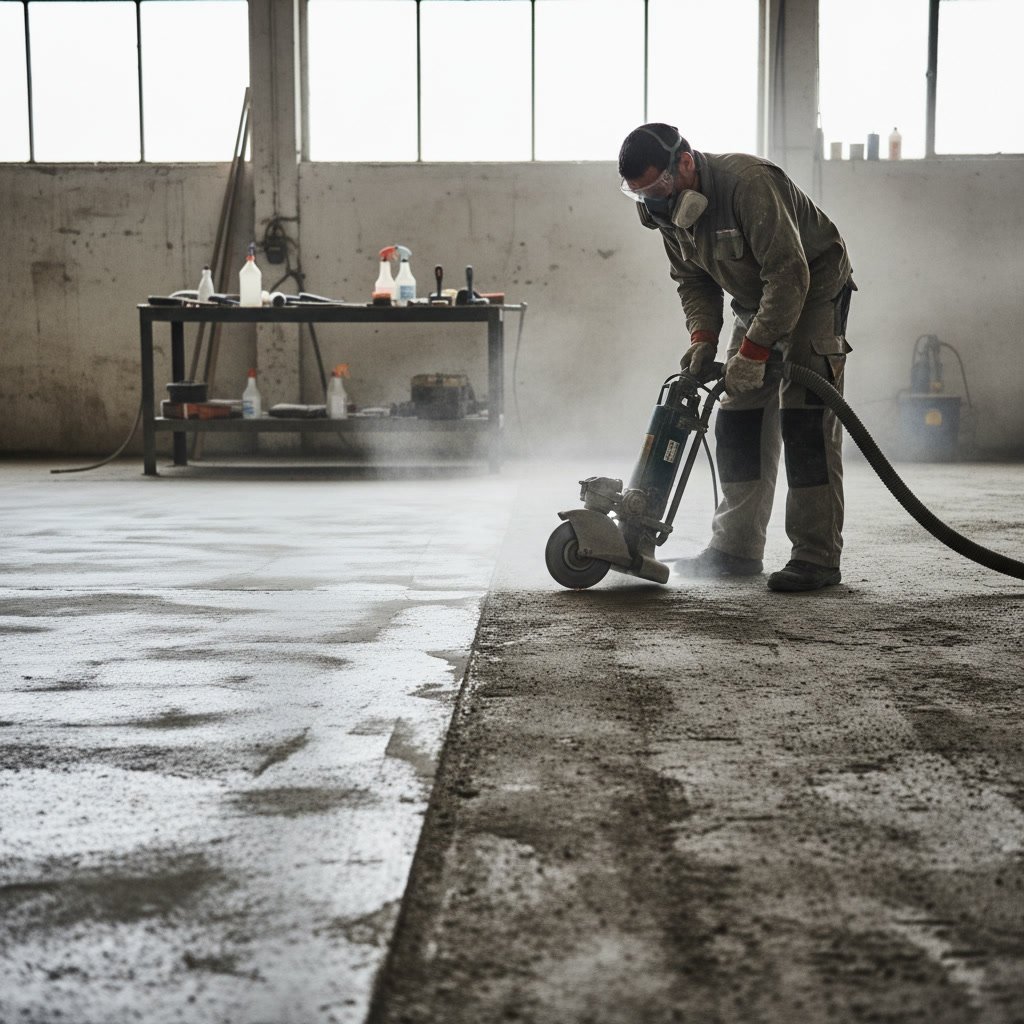
Wide cracks need routing, a process that uses specialized saws to cut a uniform channel along the crack’s length. This creates clean vertical edges that give repair materials something to grip. Without routing, fillers simply sit on top of irregular crack surfaces and pop out under stress.
The routed channel typically measures three-quarters of an inch wide and deep, though dimensions adjust based on crack severity. Contractors clean out all loose debris from the channel using compressed air or wire brushes. This step removes particles that would prevent the repair compound from bonding directly to sound concrete.
Choosing the Right Repair Compound for Different Damage Types
Not all concrete repair products perform the same job. Epoxy-based fillers work best for structural cracks requiring maximum strength and minimal flexibility. Polyurethane compounds suit cracks that need some give to accommodate minor movement. Polymer-modified cement repairs handle larger spalled areas and surface damage where matching the existing texture matters.
Temperature during application affects curing times and final strength. Most products require ambient temperatures between 50 and 90 degrees Fahrenheit. Applying repair materials outside this range leads to improper curing, reduced bond strength, and premature failure. Professional crews monitor conditions closely and sometimes delay work rather than compromise results.
Step-by-Step Repair Application Techniques
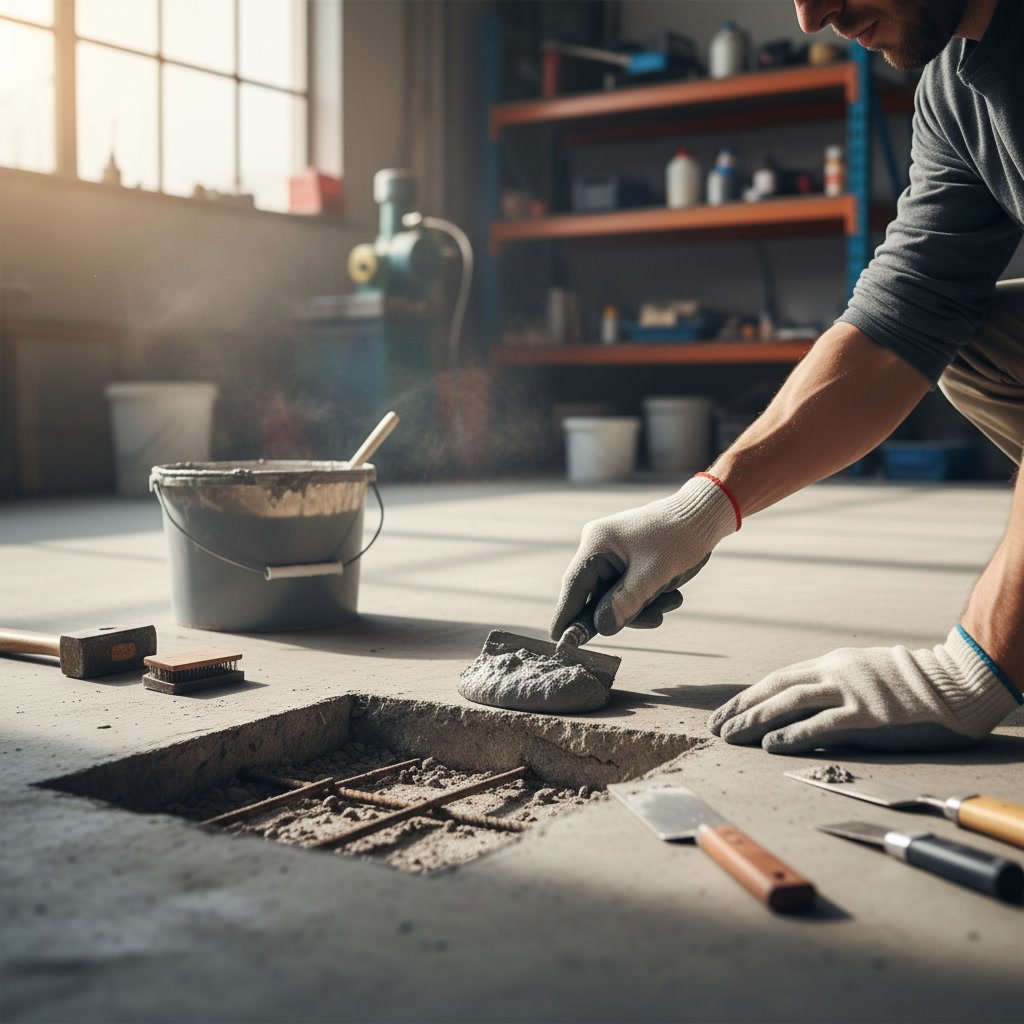
The actual repair follows a specific sequence. First, a bonding agent gets brushed into the prepared crack or damaged area. This primer creates a chemical bridge between old concrete and new repair material. Without it, the thermal expansion differences between products can cause separation.
Next, the repair compound fills the void completely, working from the bottom up to eliminate air pockets. Contractors overfill slightly, then screed the surface flush with surrounding concrete once the material begins to set. Proper timing here is critical. Smoothing too early causes the material to slump and sink below grade. Waiting too long makes finishing nearly impossible as the compound hardens.
For larger damaged areas, multiple layers may be necessary. Each layer must cure to the manufacturer’s specified timeline before the next application. Rushing this process creates weak internal bonds that fail under traffic or weather stress. The best concrete restoration jobs sometimes take several days of patient, methodical work.
Surface Restoration Options in Shingle Springs After Structural Repairs
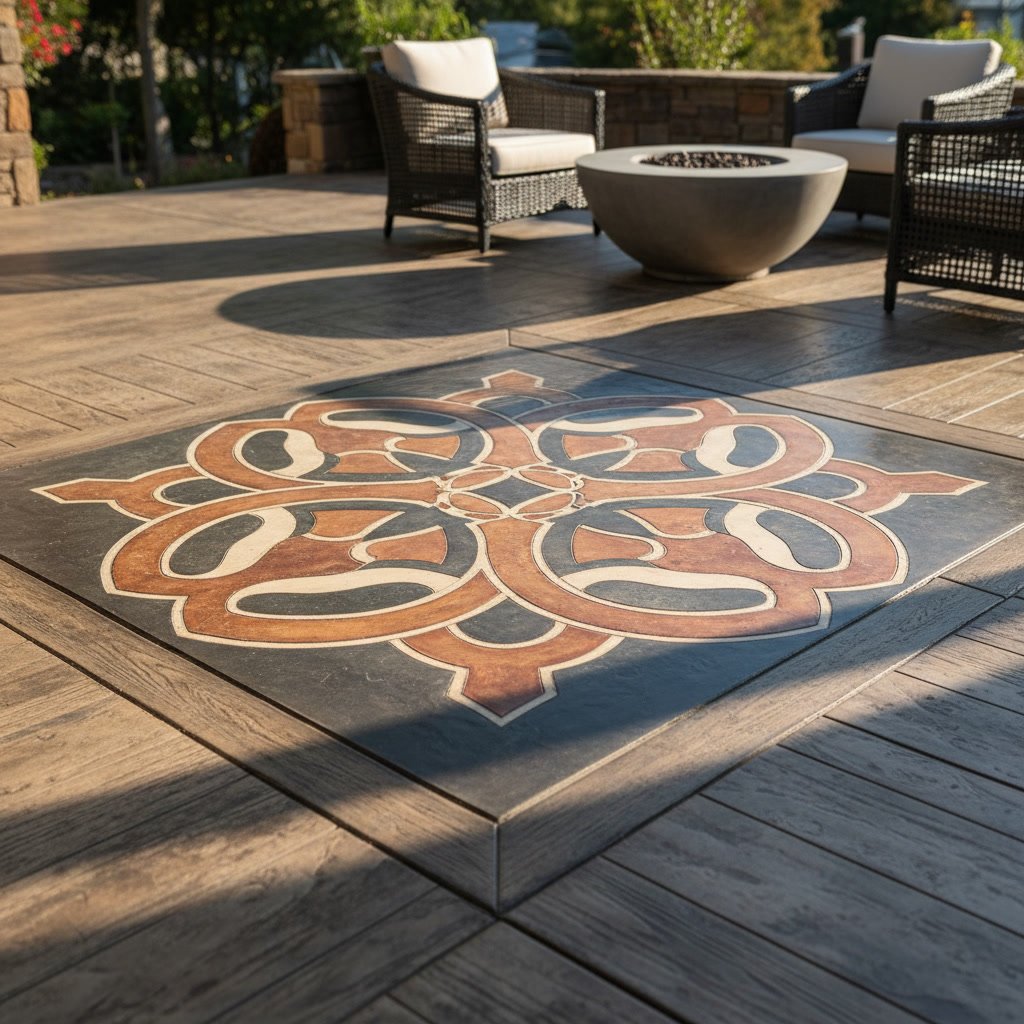
Once structural repairs cure, many property owners choose to restore the concrete’s appearance. Discoloration, staining, and patchy repairs often leave surfaces looking worse than before, even though the structural integrity improved. Three main approaches address this cosmetic concern.
Single color restoration applies a uniform tinted coating that hides repairs and creates a fresh, consistent look. This works well for pool decks, patios, and entryways where aesthetics matter. The coating also adds a thin protective layer that resists UV damage and moisture penetration.
Staining offers more design flexibility, with acid-based and water-based options creating varied tones and patterns. Acid stains react chemically with concrete to produce permanent, variegated colors that won’t peel or chip. Understanding the differences between staining versus sealing or resurfacing helps you choose the right approach for your specific situation and budget.
Resurfacing with a thin overlay completely covers damaged concrete with a fresh layer, allowing decorative stamps, patterns, or textures. This option costs more but delivers the most dramatic transformation when existing surfaces show extensive wear beyond what simple repairs can fix.
The Science Behind Concrete Sealers and Protection
Sealing represents the final and arguably most important step in any restoration project. Quality sealers penetrate the concrete surface or form a protective film that blocks moisture, chemicals, and de-icing salts from entering the porous concrete structure. This prevention stops the freeze-thaw cycle damage that causes spalling and cracking.
Penetrating sealers soak into the concrete and react chemically to fill microscopic pores. They don’t change the surface appearance but provide excellent protection while allowing the concrete to breathe and release internal moisture vapor. Film-forming sealers sit on top of the surface, offering superior protection against stains and abrasion while adding a glossy or matte sheen depending on the product.
Application timing matters tremendously. New concrete must cure for at least 28 days before sealing, while restored concrete needs sufficient time for repair materials to reach full strength. Sealing too early traps moisture and uncured compounds, causing hazing, bubbling, and adhesion failure. Professional contractors use moisture meters and follow manufacturer guidelines precisely.
Common Mistakes That Undermine Restoration Longevity
The biggest error involves rushing the process. Each phase needs proper cure time, and weather conditions must align with product specifications. Homeowners attempting DIY restoration often skip surface preparation steps, use inappropriate repair materials, or apply sealers before the concrete is ready. These shortcuts create work that looks acceptable initially but fails within one or two seasons.
Another frequent mistake is ignoring the root cause of damage. If poor drainage caused the original cracking, simply filling cracks without addressing water flow means the problem returns quickly. Sometimes landscaping modifications or drainage corrections must happen alongside concrete repairs to achieve lasting results.
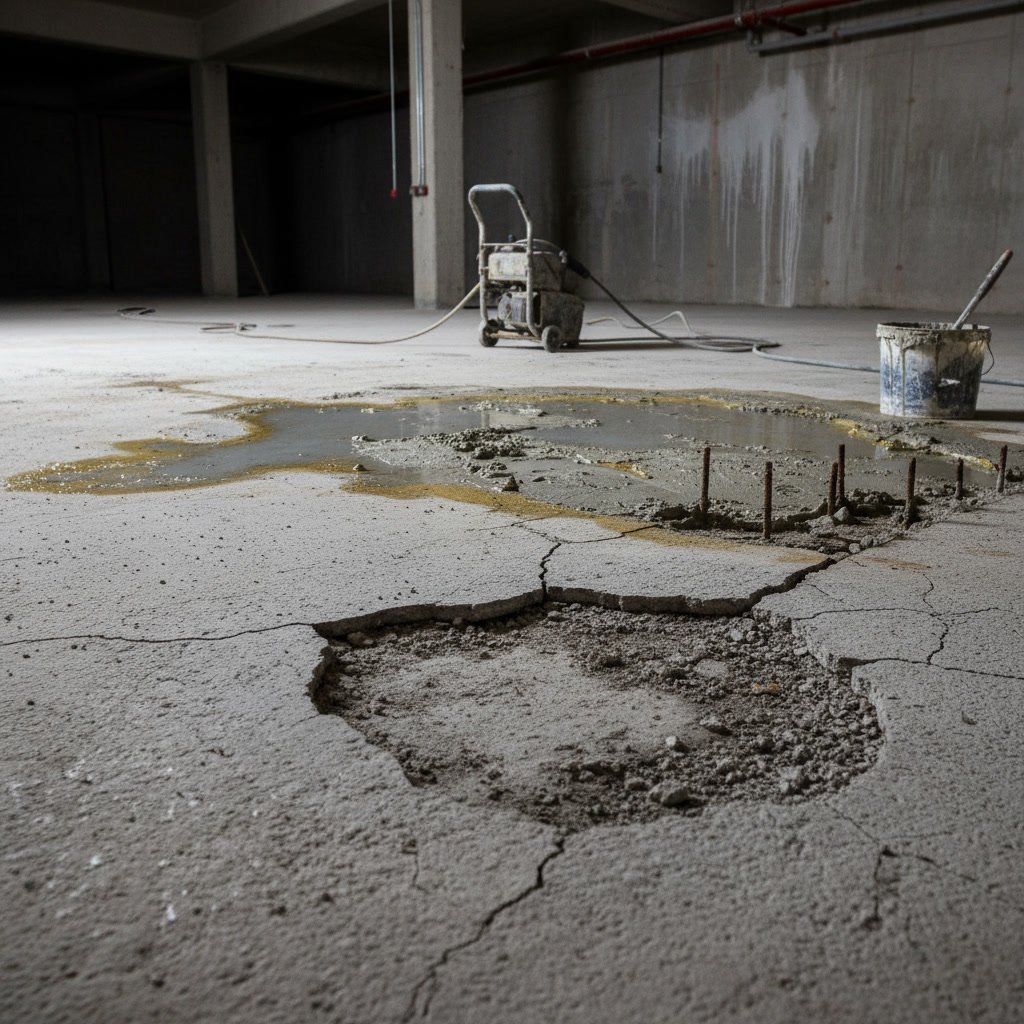
Using incompatible products also causes problems. Mixing repair compounds and sealers from different manufacturers without checking compatibility can lead to delamination or discoloration. Professional contractors stick with proven product systems where all components work together as engineered.
Timeline Expectations for Complete Restoration Projects
A typical residential concrete restoration project spans three to seven days depending on damage extent and weather. Day one involves assessment and surface preparation. Days two and three handle crack routing, repairs, and initial curing. Days four and five cover color restoration or staining if included. Final sealing happens on days six and seven after all previous work has cured properly.
Weather delays can extend timelines significantly. Rain during any phase stops progress and may require additional drying time. Temperatures below 50 degrees slow curing times, while excessive heat above 95 degrees causes products to set too quickly for proper finishing. Experienced contractors build buffer time into schedules and communicate realistic expectations upfront.
The restored concrete needs protection during curing. Most surfaces require three to seven days before light foot traffic and 14 to 28 days before vehicle traffic, depending on the specific repair products and sealers used. Rushing this final curing period damages fresh work and voids warranties.
When Restoration Makes More Sense Than Replacement
Restoration typically costs 40 to 60 percent less than full concrete replacement, making it attractive for surfaces with isolated damage rather than systemic failure. If the underlying slab remains structurally sound and level, restoration delivers excellent results at a fraction of replacement cost.
However, concrete with extensive cracking covering more than 30 percent of the surface, significant settling or heaving, or deep structural damage often warrants replacement. An honest assessment weighs repair costs against replacement longevity. Sometimes spending more upfront for new concrete proves wiser than repeated restoration attempts on failing surfaces.
The age and condition of surrounding concrete also factors into the decision. Restoring one section of a driveway while the rest continues deteriorating creates a patchwork appearance and repeated service calls. A comprehensive evaluation considers the entire concrete installation, not just the most visible damage.
Getting Restoration Results That Last for Decades
Professional concrete restoration delivers surfaces that can last 15 to 25 years when properly maintained. The key factors include thorough surface preparation, using commercial-grade materials, following precise application protocols, and protecting the work during curing. Homeowner maintenance after completion matters too, with periodic cleaning and resealing every three to five years extending the restoration’s effective life.
Quality restoration work backed by experienced contractors delivers predictable, long-lasting results. The investment protects your property value and eliminates the ongoing deterioration that only worsens with time. When damage first appears, addressing it promptly costs far less than waiting until more extensive repairs become necessary.
STAMATELOS CONSTRUCTION has refined the concrete restoration process through decades of hands-on experience serving Cameron Park and surrounding communities. Our family-operated team brings the specialized knowledge and proven techniques that turn damaged concrete into durable, attractive surfaces built to last. If your concrete shows signs of damage or deterioration, contact us at +19163055310 to schedule a thorough assessment and receive a detailed restoration plan tailored to your specific needs.