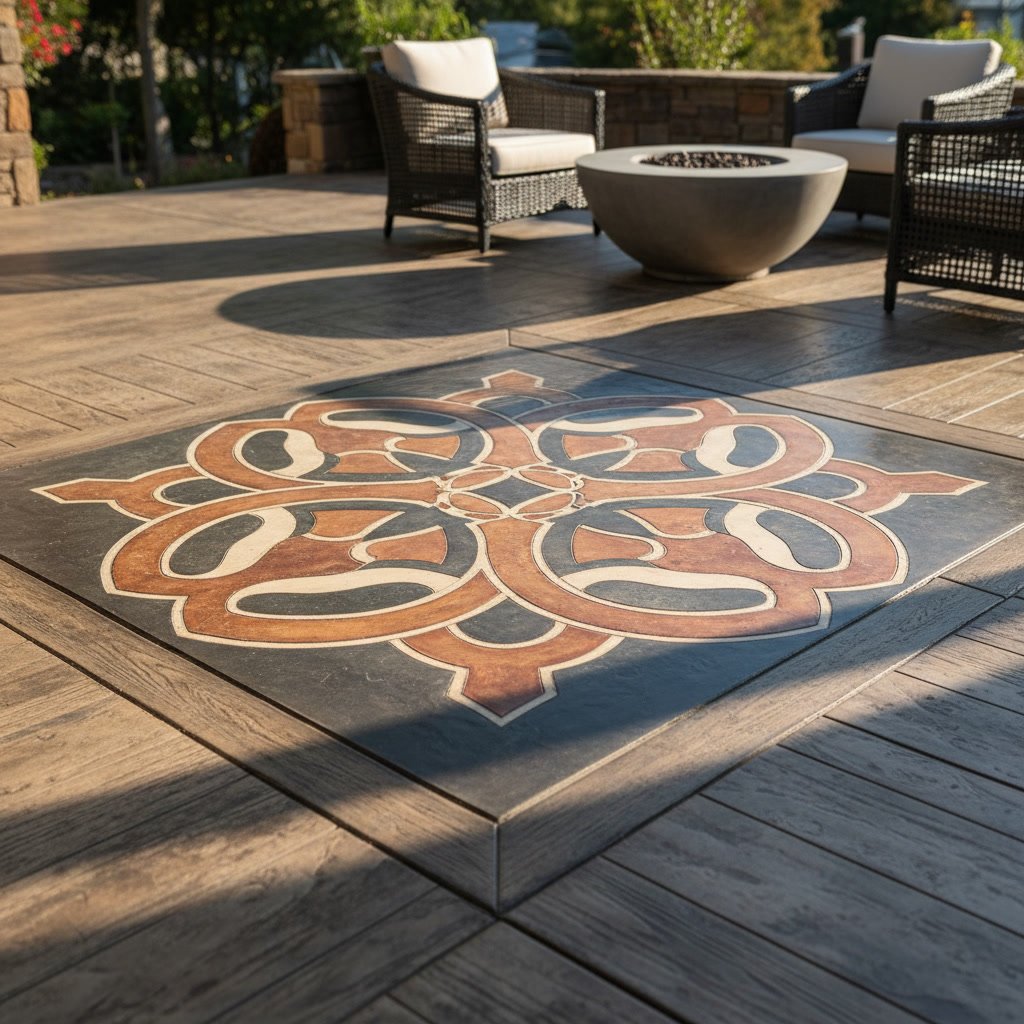
Decorative concrete staining uses acid-based or water-based dyes to penetrate deep into the surface, reacting with minerals to create permanent, variegated color patterns. Unlike paint or coatings that sit on top, stain bonds chemically with the concrete, producing organic, one-of-a-kind designs that resist fading and wear. This makes it an ideal solution for patios, driveways, pool decks, and indoor floors where you want beauty that lasts without constant maintenance.
Why Staining Produces Unique Multi-Tone Effects
The concrete itself determines much of the final appearance. Every slab has slight variations in mineral content, porosity, and moisture levels. When stain is applied, it reacts differently across these areas, creating natural mottling and tonal shifts. Even when two adjacent sections receive identical treatment, the color intensity can vary, resulting in a look that cannot be replicated exactly.
This unpredictability is not a flaw but a feature. The organic variation mimics natural stone, aged leather, or weathered wood, giving concrete character that uniform paint never achieves. Skilled applicators can guide the process to emphasize certain tones or patterns, but the concrete always contributes its own signature.
Acid-Based Versus Water-Based Stains
Acid-based stains rely on a chemical reaction between metallic salts and the calcium hydroxide in cured concrete. The result is a translucent finish with earthy tones like terra cotta, amber, brown, and green. Because the color develops through reaction rather than pigment alone, the finish is permanent and will not chip or peel. Acid stains produce the most dramatic mottling and depth, making them popular for high-end residential and commercial spaces.
Water-based stains use acrylic polymers and pigments to penetrate the surface. They offer a broader color palette, including blues, reds, and blacks, and produce more consistent coverage with less mottling. Water-based options are also safer to handle and produce fewer fumes during application. They work well when you want a specific hue or when the concrete lacks the mineral content needed for acid staining.
How Applicators Create Custom Patterns
Pattern creation starts with surface preparation. The concrete must be clean, dry, and free of sealers or oils that block penetration. Grinding or shot blasting opens the pores, allowing stain to soak in evenly. Any existing coatings or residues will prevent the chemical reaction and leave blotchy results.
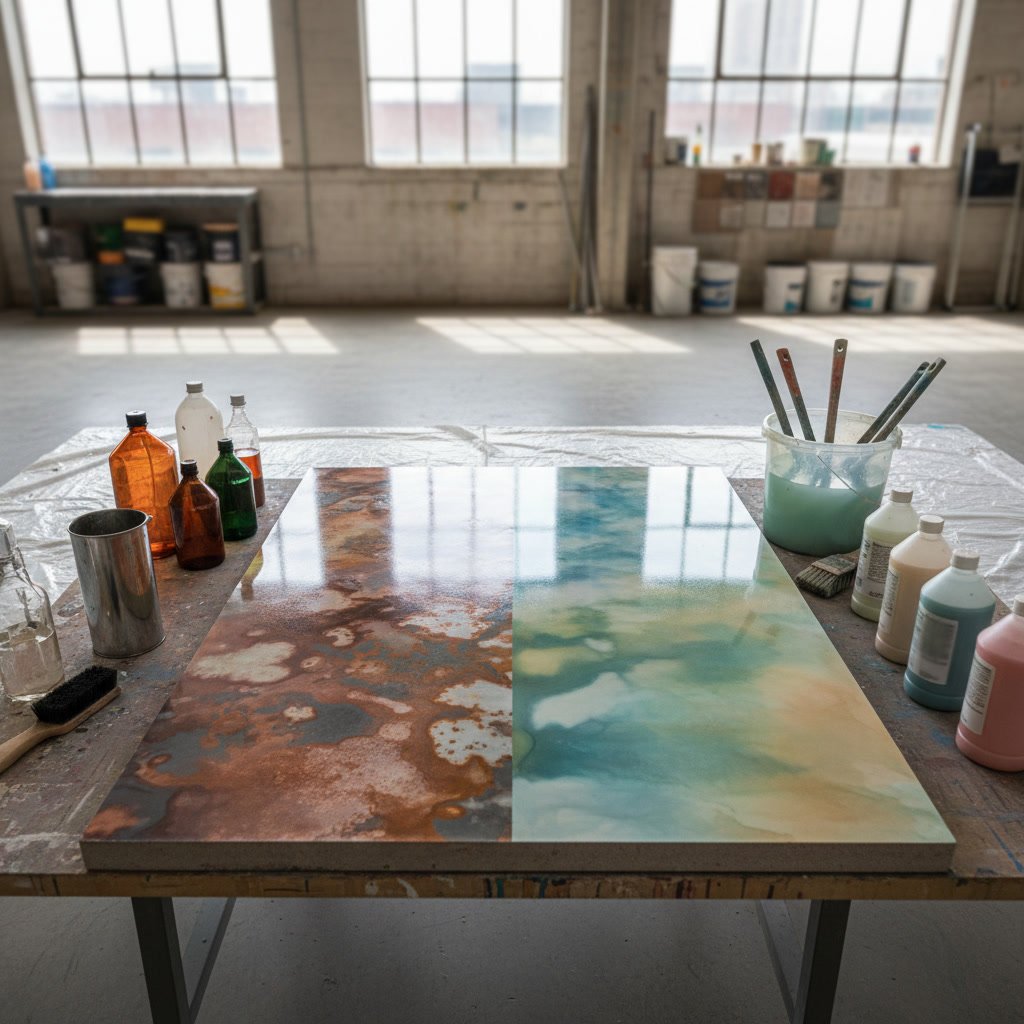
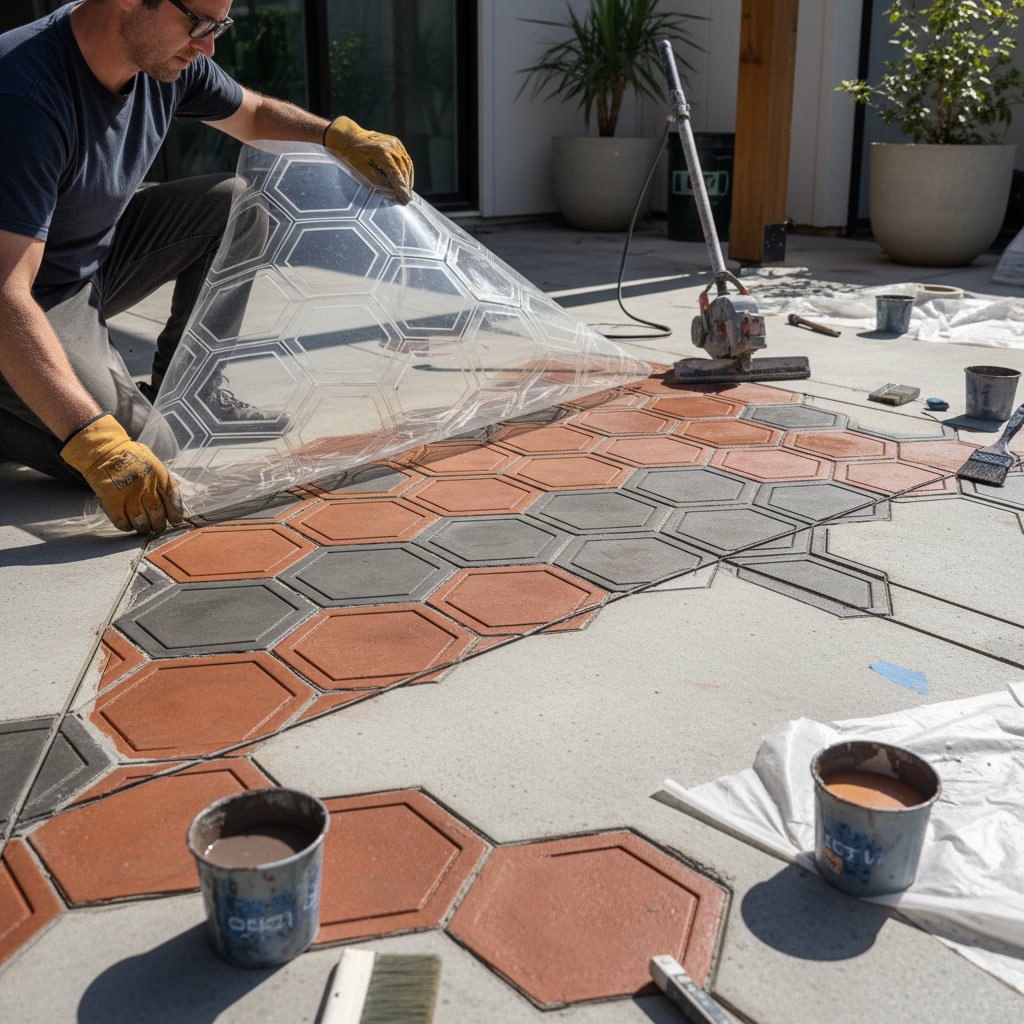
Applicators then use masking tape, stencils, or freehand techniques to section off areas. A single color can be applied uniformly, or multiple stains can be layered to build depth. Spray application creates soft, blended transitions, while brushing or sponging produces more defined edges. The stain is left to dwell for several hours, sometimes overnight, as the reaction develops. Once the desired tone appears, the surface is neutralized, rinsed, and allowed to dry completely.
Layering and Blending Techniques
Professional contractors often apply a base color first, then add accent tones in strategic areas. For example, a warm amber base might receive touches of chocolate brown in the corners or along edges to simulate natural stone veining. Each layer reacts independently with the concrete, so the final color is a composite of all applications.
Blending is achieved by diluting stain or overlapping spray patterns. A skilled technician can fade one color into another, creating gradients that mimic sunset hues or ocean waves. This level of artistry turns a functional slab into a focal point. If you’re considering whether your existing surface is a good candidate, our guide on signs your concrete needs staining versus sealing or resurfacing can help clarify the best approach.
Stencils and Scoring for Geometric Designs
Stencils allow you to add borders, medallions, or repeating motifs. Adhesive-backed stencils are pressed onto the concrete, stain is applied around them, and the stencil is removed to reveal a crisp design. Common choices include compass roses, Greek keys, or custom logos for commercial spaces.
Scoring involves cutting shallow grooves into the concrete with a saw or grinder. These lines can mimic tile grout joints, planks, or geometric tile patterns. When stain is applied, the grooves act as boundaries, keeping colors separate and enhancing the illusion of individual tiles or stones. Combining scoring with multi-tone staining produces results that rival expensive natural materials at a fraction of the cost.
Maintenance and Longevity of Stained Concrete in Shingle Springs
Because stain penetrates rather than coats, it does not wear away with foot traffic. The color remains even if the sealer scratches or fades. However, a quality sealer is essential to protect the surface from moisture, stains, and UV exposure. Resealing every two to three years keeps the finish vibrant and guards against spills.
In the Shingle Springs climate, temperature swings and seasonal rain can stress concrete. Proper drainage and a stable base prevent shifting that leads to cracks. If cracks do appear, they can be repaired and re-stained to blend with the surrounding area. Our team at STAMATELOS CONSTRUCTION has served this region since 1990, and we understand the local conditions that affect concrete performance.
Combining Staining with Other Decorative Finishes
Staining pairs well with other techniques to multiply your design options. Stamped concrete adds texture that mimics stone or brick, and staining enhances the dimensional look by highlighting the highs and lows. A single stamp pattern can receive two or three stain colors, creating a realistic variegated appearance.
You can also combine staining with exposed aggregate or polished finishes. Exposed aggregate reveals the natural stones within the concrete, and staining those stones along with the matrix produces a terrazzo-like effect. Polished concrete reflects light beautifully, and staining before polishing adds depth and color that shimmer under illumination.
Indoor Applications and Design Flexibility
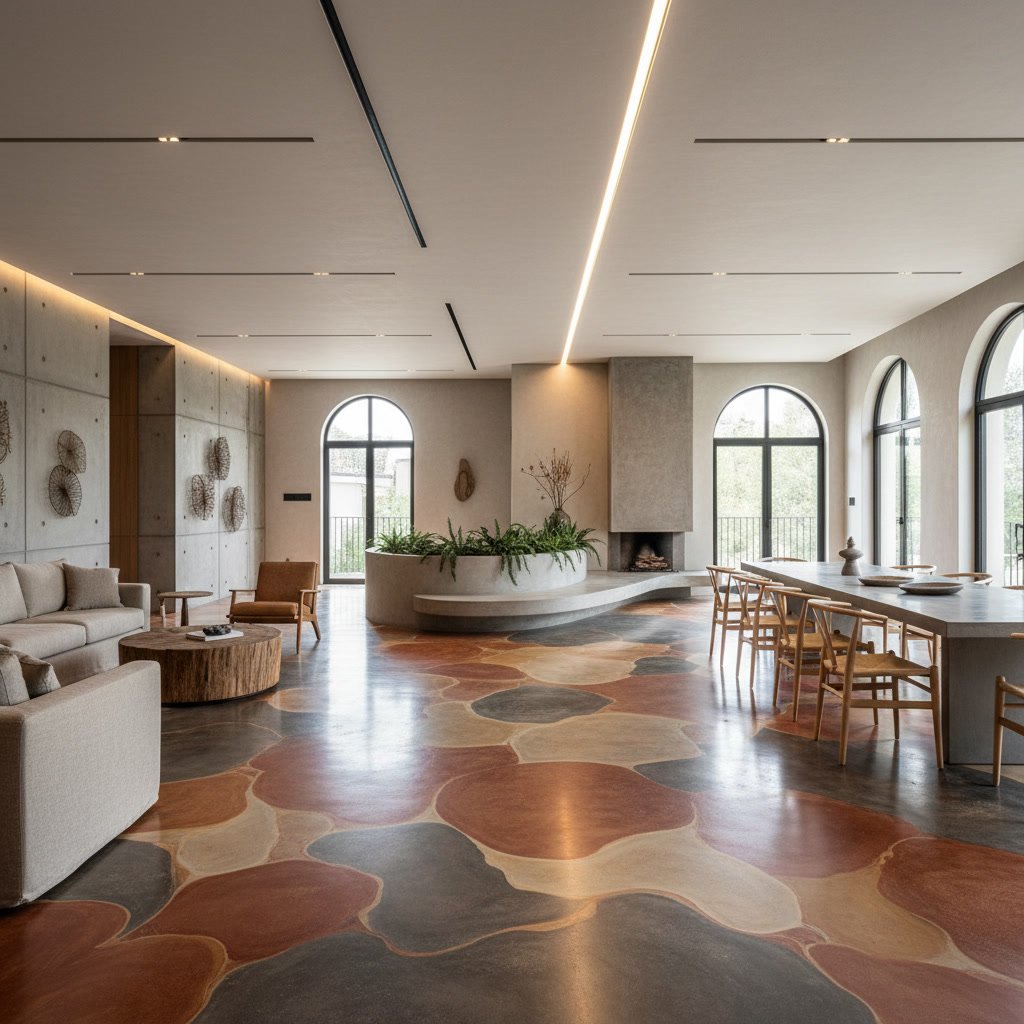
Stained concrete is not limited to outdoor spaces. Interior floors in living rooms, kitchens, and basements benefit from the same durability and beauty. Radiant heating systems integrate seamlessly with stained slabs, providing efficient warmth without covering the decorative surface.
Design flexibility indoors is nearly limitless. You can stain different rooms in complementary tones to define zones or create a cohesive flow throughout the home. Because the finish is low maintenance and hypoallergenic, it suits families with pets or allergies. Pairing concrete staining with thoughtful landscaping ties indoor and outdoor spaces into a unified aesthetic.
Common Mistakes That Ruin Staining Projects
The most frequent error is applying stain to improperly prepared concrete. Old sealers, oils, or contaminants block penetration, leaving patches of unstained surface. Testing a small inconspicuous area first reveals whether preparation is adequate.
Another mistake is rushing the dwell time. Acid stains need several hours to react fully, and rinsing too soon results in weak, faded color. Conversely, leaving acid on too long can over-etch the surface, creating an uneven texture. Following manufacturer guidelines and adjusting for temperature and humidity ensures optimal results.
Finally, skipping the sealer or using the wrong type compromises longevity. Outdoor concrete requires a UV-stable sealer, while indoor floors benefit from a low-sheen finish that resists scuffing. A professional applicator selects the right sealer for your specific environment and use case.
Real-World Example of Multi-Tone Design
Consider a 600-square-foot patio that receives full sun most of the day. The homeowner wants a Mediterranean feel with warm earth tones. The contractor starts with a medium tan acid stain as the base, then adds random applications of rust and dark brown in a mottled pattern using a pump sprayer. After the stain reacts overnight, the surface is neutralized and rinsed.
Next, a saw-cut border is added around the perimeter, and a darker brown stain is applied only within that border to frame the space. The result is a patio that looks like aged flagstone, with natural variation and a defined edge. A penetrating sealer with a matte finish protects the color without adding gloss. Total material cost is less than half what natural stone would have required, and the installation time is a fraction.
Bringing Lasting Beauty to Your Concrete Surfaces
Staining transforms plain concrete into a custom design element that reflects your taste and complements your property. The combination of chemical reaction, skilled application, and thoughtful color choices produces finishes that age gracefully and require minimal upkeep. Whether you want subtle elegance or bold statement floors, staining delivers results that synthetic coatings and surface treatments cannot match.
STAMATELOS CONSTRUCTION brings more than three decades of family expertise to every project, ensuring your decorative concrete meets both aesthetic and structural standards. Our team handles everything from surface preparation through final sealing, so you get a finish that performs as beautifully as it looks. If you’re ready to explore how multi-tone staining can enhance your home or business, reach out at +19163055310 to schedule a consultation and receive a detailed project estimate.