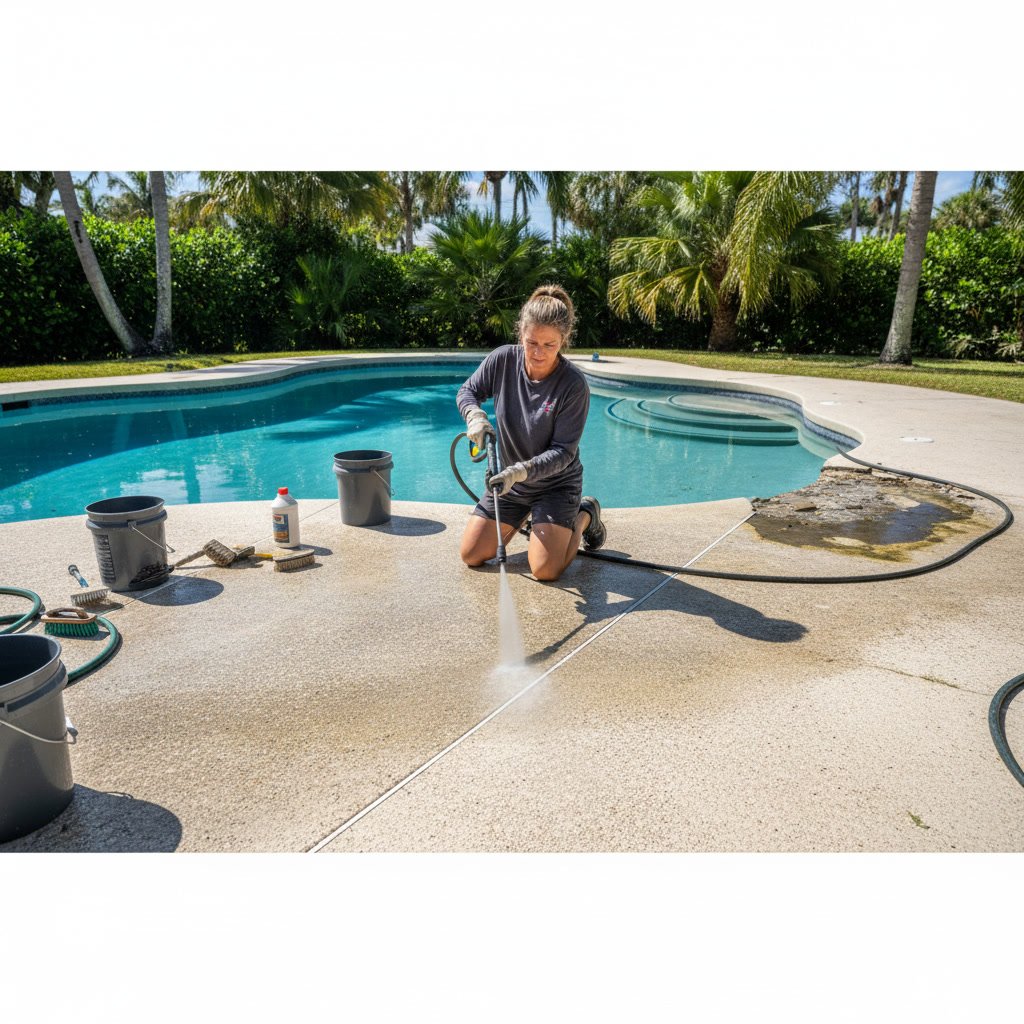
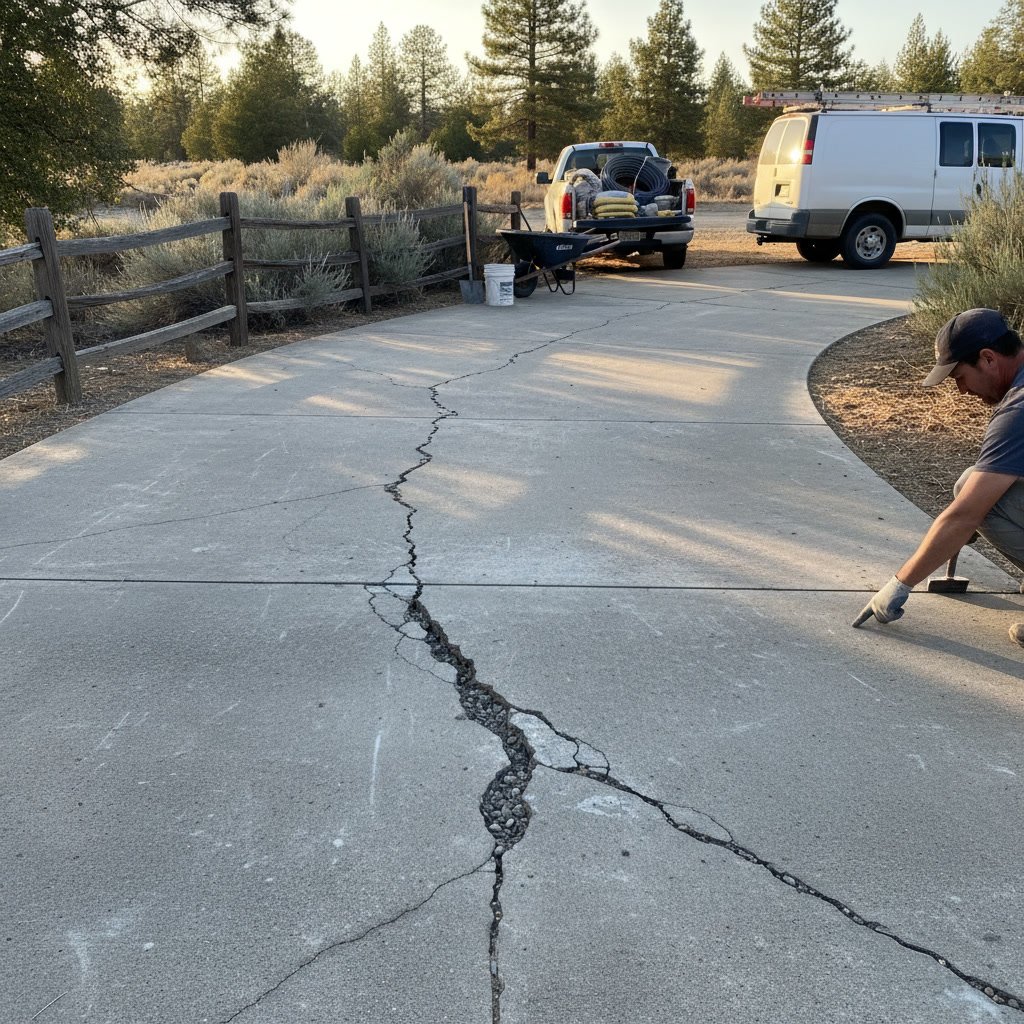
Concrete driveway cracks can turn your home’s curb appeal into a maintenance headache. If you live in Shingle Springs, you have probably noticed these cracks appearing faster than in other regions. The good news is that understanding why concrete driveway cracks form in this area helps you prevent them and choose the right repair method when they do appear.
This guide explains the specific soil and climate conditions that cause driveways to crack in Shingle Springs and surrounding El Dorado County communities. You will learn the difference between minor surface cracks and serious structural damage, plus the professional repair techniques that actually last.
The Unique Soil Conditions in Shingle Springs
Shingle Springs sits in the Sierra Nevada foothills where soil composition creates challenging conditions for concrete. The area features expansive clay soils that shrink during dry months and swell when wet. This constant movement puts enormous pressure on any concrete slab poured directly on the ground.
The region’s decomposed granite base, while excellent for drainage in some applications, provides an unstable foundation when not properly compacted. Many driveways poured without adequate base preparation start showing stress cracks within the first five years.
Property owners in Cameron Park, El Dorado Hills, and Placerville face similar challenges. The soil throughout the western slope of El Dorado County shares these expansive characteristics. Understanding your specific soil type before pouring new concrete or planning repairs makes the difference between a 10-year fix and a 30-year solution.
Weather Patterns That Accelerate Cracking
The foothills climate creates a perfect storm for concrete damage. Summer temperatures regularly exceed 95 degrees, causing concrete to expand. Winter nights drop below freezing, forcing contraction. This thermal cycling happens hundreds of times per year.
Rainfall patterns compound the problem. Shingle Springs receives minimal rain from May through October, then heavy precipitation from November through March. The sudden transition from bone-dry soil to saturated ground creates dramatic shifts in the support beneath your driveway.
When water penetrates existing hairline cracks and freezes, it expands with roughly 5,000 pounds per square inch of force. This freeze-thaw cycle widens small cracks into large structural problems within a single winter season.
The Role of Summer Heat
Triple-digit temperatures do more than make concrete hot to the touch. Direct sun exposure can heat the surface to 140 degrees or higher while the bottom remains 30 to 40 degrees cooler. This temperature differential creates internal stress that manifests as surface crazing and eventually deeper cracks.
Dark-colored concrete absorbs even more heat, accelerating the damage. Properties with southern or western exposure face the worst conditions, with some driveways receiving eight or more hours of direct afternoon sun during summer months.
Common Types of Concrete Driveway Cracks
Not all concrete driveway cracks signal the same level of concern. Identifying the type and severity helps you decide between DIY maintenance and professional repair.
Hairline Cracks
These fine surface cracks measure less than 1/16 inch wide and rarely penetrate the full depth of the slab. They typically result from surface shrinkage during the curing process or minor thermal expansion. While cosmetically undesirable, hairline cracks do not usually compromise structural integrity.
However, they do provide entry points for water. Left unsealed, hairline cracks can develop into larger problems within two to three years as water penetrates and undermines the base.
Settlement Cracks
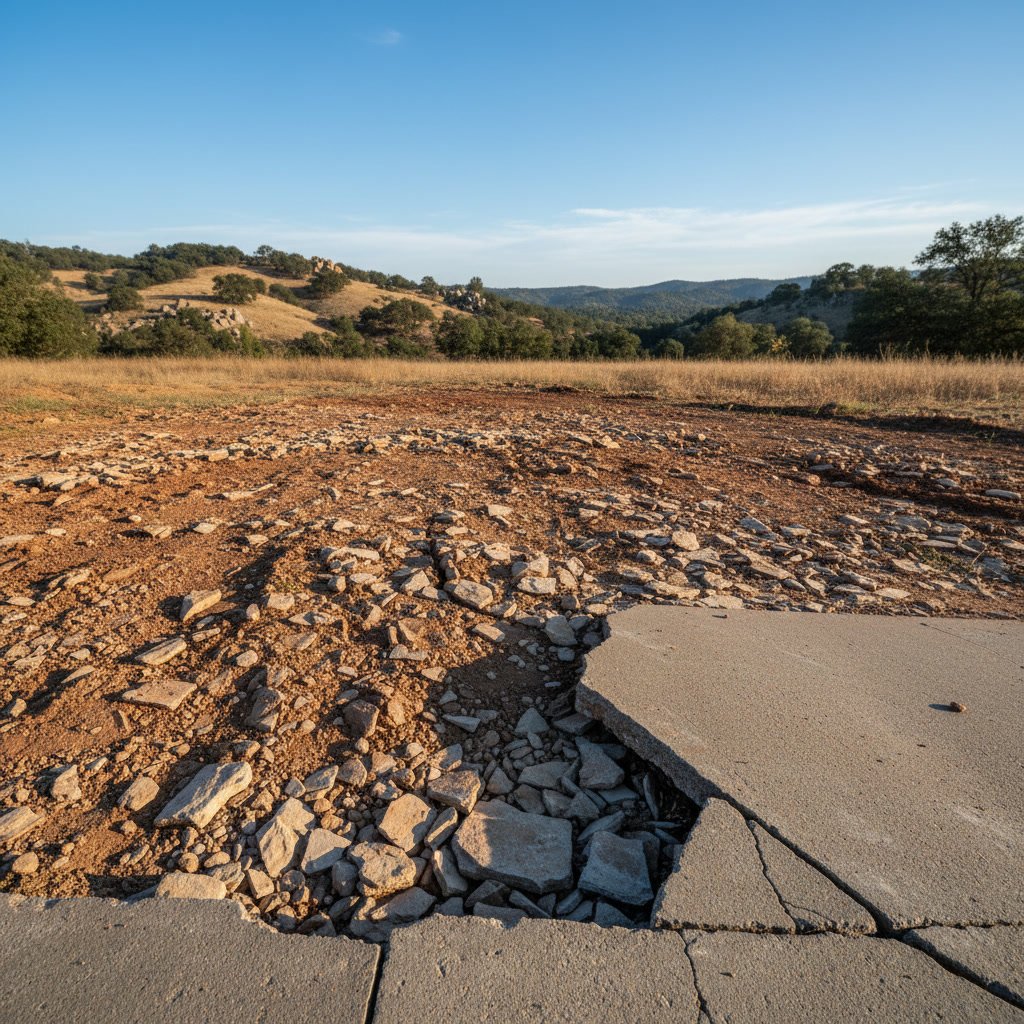
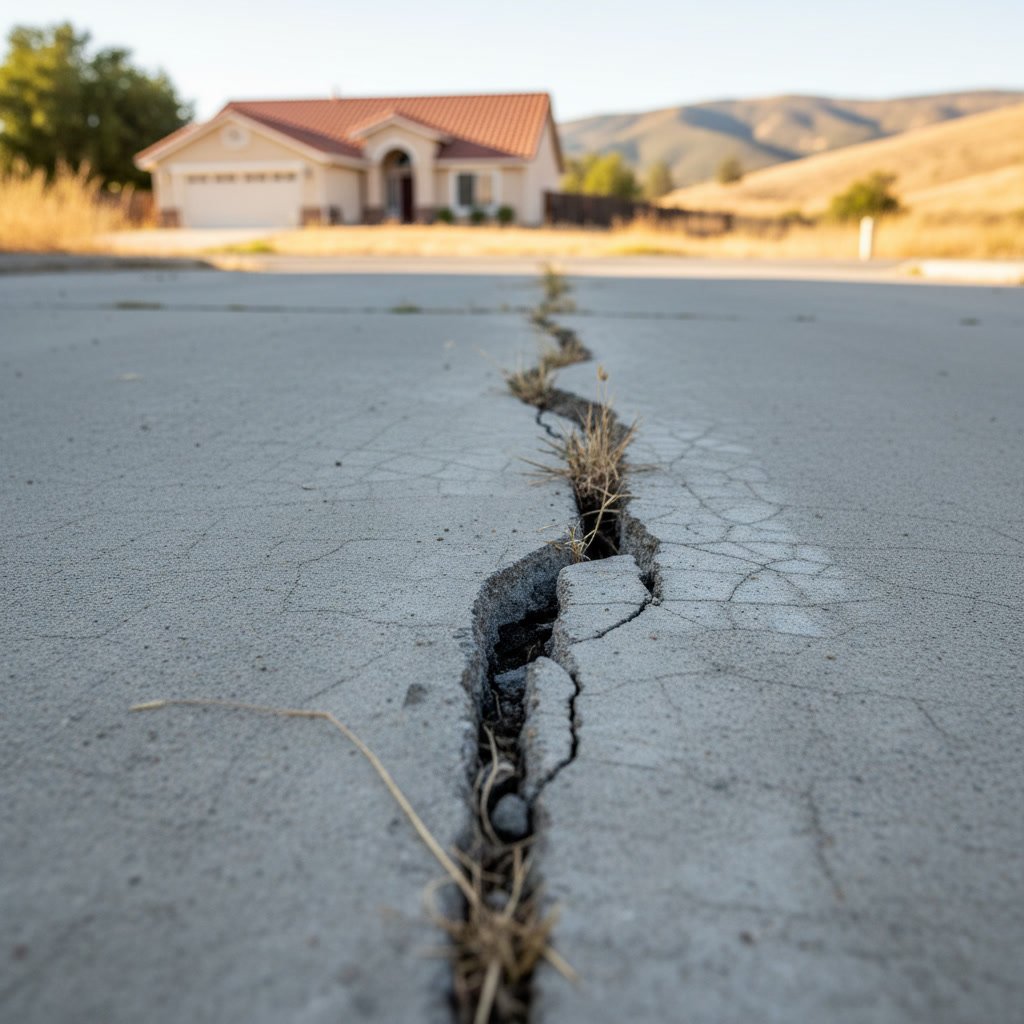
When sections of your driveway sink or tilt, cracks form along the stress points. Settlement cracks often run diagonally across corners or create stair-step patterns. These indicate serious foundation problems that will worsen without intervention.
In Shingle Springs, settlement typically occurs where poorly compacted fill was used during initial construction or where underground water flow erodes the base material. The cracks themselves are just symptoms of the deeper structural issue.
Edge Cracks
The perimeter of your driveway takes the most abuse from lateral pressure and edge loading. Cracks that run parallel to the driveway edge, typically within 12 to 18 inches of the side, indicate inadequate edge support or subgrade preparation.
These cracks often appear where vehicles drive close to the edge or where landscaping irrigation saturates the soil beside the concrete. Edge cracks accelerate deterioration because they allow water to flow directly under the slab.
Control Joint Failures
Properly placed control joints create intentional weak points where concrete can crack in a controlled manner. When these joints fail to function as designed, random cracks appear in unpredictable locations. This happens when joints are spaced too far apart, cut too shallow, or omitted entirely.
Standard practice calls for control joints every 8 to 12 feet in a driveway, cut to a depth of one-quarter the slab thickness. Many older driveways in the area lack adequate joint spacing.
How Poor Installation Creates Future Problems
Many concrete driveway cracks in Shingle Springs trace back to shortcuts during installation. Understanding these issues helps you evaluate whether repair is worthwhile or complete replacement makes more sense.
Inadequate base preparation tops the list of installation failures. A proper base requires four to six inches of compacted aggregate, installed in layers and compacted to 95% density or greater. Skipping this step or using insufficient material creates voids where the soil will eventually settle.
Thin concrete represents another common problem. While building codes specify minimum four-inch thickness for residential driveways, six inches provides much better longevity in areas with challenging soil. Undersized slabs crack under normal vehicle loads, especially near the garage apron where turning vehicles create maximum stress.
Reinforcement Matters
Unreinforced concrete cracks far more readily than properly reinforced slabs. Wire mesh or rebar should be positioned in the upper third of the slab depth to control crack width and prevent separation when cracks do occur.
Many budget installations place reinforcement on the ground before the pour, where it settles to the bottom of the slab and provides minimal benefit. Proper technique uses chairs or supports to maintain correct positioning as concrete is placed.
Improper Curing
Concrete gains strength through hydration, a chemical process requiring adequate moisture over several days. In Shingle Springs’ dry climate, concrete loses surface moisture rapidly, especially during summer. Surface crazing and premature cracking result when slabs dry too quickly.
Professional installations use curing compounds, wet burlap, or plastic sheeting to retain moisture for at least seven days. Quick-finish jobs that skip this step show damage within the first year.
Professional Repair Methods That Last
Effective crack repair depends on accurate diagnosis and choosing the appropriate technique. Different crack types and severities require different solutions.
Routing and Sealing
For cracks between 1/8 and 1/2 inch wide, routing creates a reservoir for flexible sealant. A specialized saw cuts a uniform channel along the crack, typically 1/4 to 3/8 inch wide and 1/4 inch deeper than the crack itself. This channel gets cleaned thoroughly, then filled with polyurethane or silicone-based sealant.
The flexible sealant accommodates the thermal expansion and contraction that caused the original crack, preventing it from reopening. This method works well for structural cracks that have stabilized but need protection from water infiltration.
Epoxy Injection
Narrow cracks under 1/8 inch wide benefit from epoxy injection. This technique forces liquid epoxy deep into the crack under pressure, bonding the separated concrete back together. When done correctly, the repair actually becomes stronger than the surrounding concrete.
Epoxy injection requires dry conditions and works best during moderate temperatures. The process demands specialized equipment and expertise, making it strictly a professional repair method.
Concrete Resurfacing
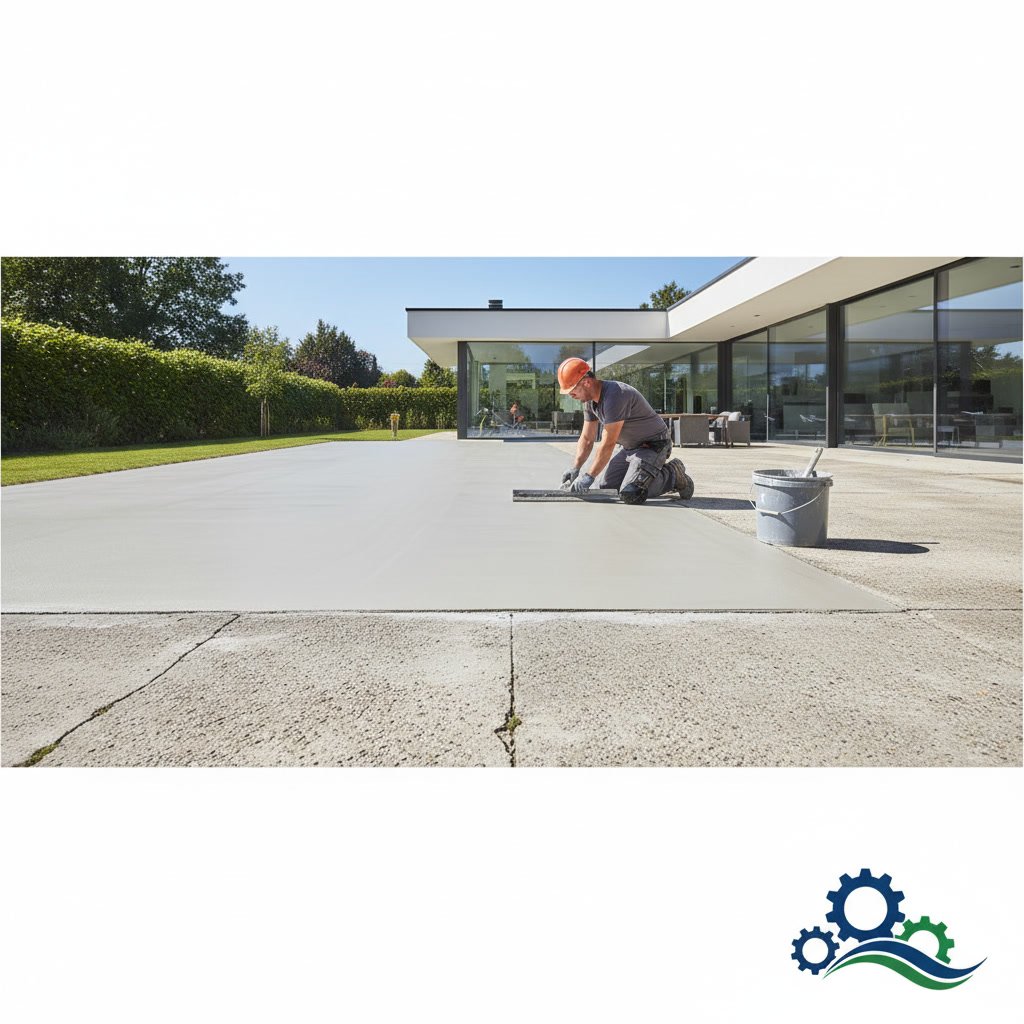
When multiple surface cracks create a spiderweb pattern but the slab remains structurally sound, resurfacing provides a cost-effective solution. A polymer-modified overlay between 1/4 and 1/2 inch thick covers the damaged surface with a fresh layer.
Stamatelos Construction offers concrete restoration services that can transform a cracked, worn driveway into a surface that looks brand new. Resurfacing also provides an opportunity to add color or texture through stamped or stained concrete finishes.
Slab Jacking and Stabilization
Settlement cracks require addressing the underlying support problem. Slab jacking, also called mudjacking or concrete leveling, pumps a cement-based slurry or polyurethane foam beneath sunken sections to raise them back to the proper level.
This process costs 50 to 70% less than replacement and can be completed in a single day. Once the slab is level, the cracks can be sealed to prevent water intrusion.
Pro Tip: Schedule crack repairs during dry, moderate weather between April and June or September and October. Avoid winter months when freezing temperatures can compromise sealant adhesion and summer heat that makes materials difficult to work with.
When to Replace Instead of Repair
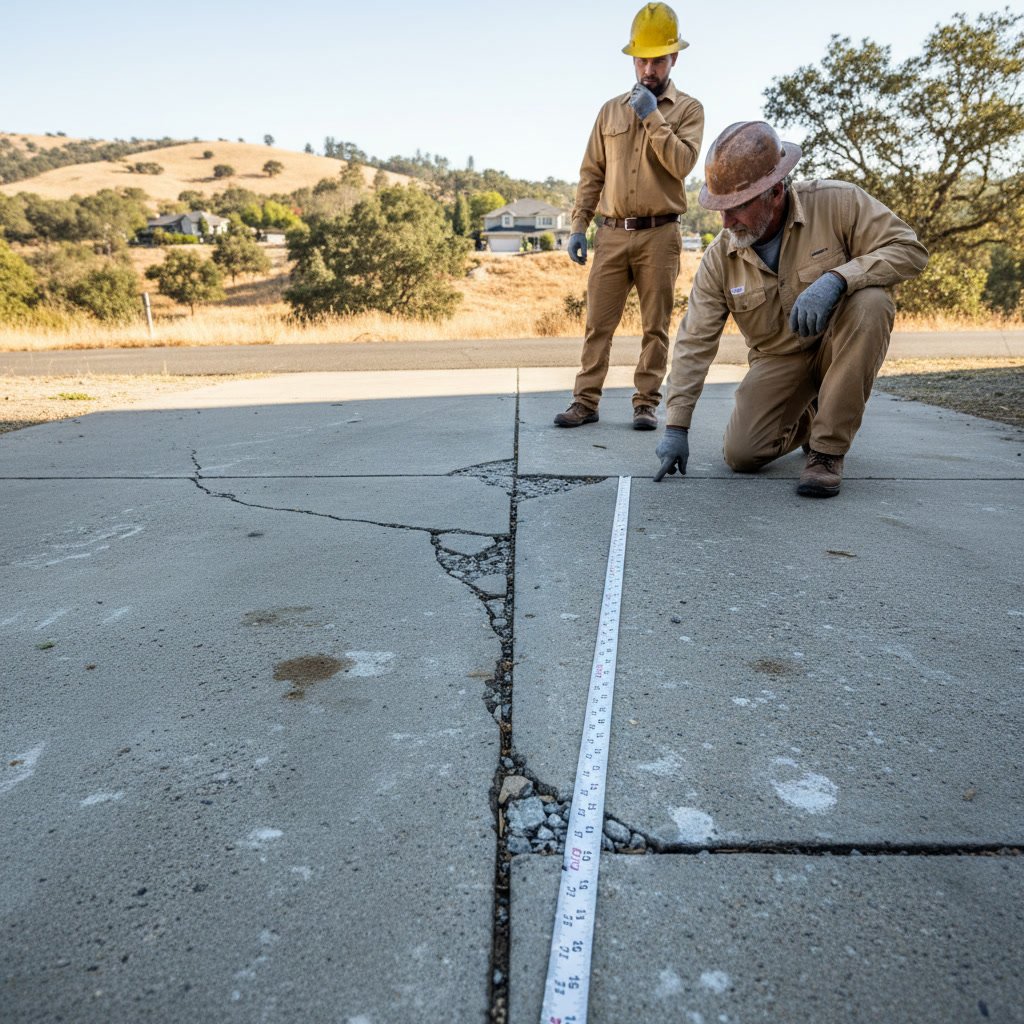
Some situations make replacement the smarter long-term investment. Multiple wide cracks covering more than 30% of the driveway surface indicate fundamental structural failure. Patching extensive damage typically provides only temporary relief.
Significant settlement, where sections have dropped more than two inches, usually signals base failure that will continue to worsen. While slab jacking can address moderate settlement, severe cases need complete reconstruction with proper base preparation.
Consider replacement when your driveway shows combination problems like widespread cracking plus flaking surface, exposed aggregate, and drainage issues. The cumulative cost of addressing multiple problems often approaches or exceeds replacement cost.
The 50% Rule
Many contractors recommend replacement when repair costs exceed 50% of what new construction would cost. This guideline accounts for the reality that extensive repairs on a compromised foundation rarely deliver the longevity of a properly installed new driveway.
A new driveway installed with modern techniques, proper reinforcement, and adequate base preparation should last 30 to 40 years in Shingle Springs with routine maintenance.
Preventing Future Cracks
Whether you repair existing damage or install new concrete, preventive measures significantly extend lifespan and minimize concrete driveway cracks.
Seal Your Concrete
Quality concrete sealer creates a protective barrier against water, oil, and chemical intrusion. Apply sealer every two to three years, more frequently on driveways that see heavy use or harsh sun exposure. The investment of $200 to $400 for professional sealing can prevent thousands in future repair costs.
Manage Water Flow
Proper drainage prevents water from pooling on or beside your driveway. Ensure downspouts direct roof runoff at least six feet away from concrete edges. Grade landscaping so water flows away from the driveway rather than toward it.
In Rescue, Folsom, and other nearby communities, many properties sit on slopes where uphill water naturally flows toward driveways. Installing French drains or swales intercepts this water before it undermines your concrete.
Limit Edge Loading
The outer 12 inches of your driveway has less support than the center. Regularly parking with wheels at the very edge or driving off the side creates stress that leads to edge cracks. When possible, keep vehicles at least six inches from the edge.
Address Cracks Early
Small cracks sealed promptly stay small. Once water penetrates and begins eroding the base, minor damage escalates quickly. Inspect your driveway twice per year, in spring and fall, and seal any new cracks before winter rains begin.
Choosing the Right Contractor
Concrete work requires specialized knowledge and equipment. The contractor you choose directly impacts how long your repair or new installation will last.
Look for contractors with extensive local experience. Someone who understands Shingle Springs soil conditions and climate patterns will make better decisions about base preparation, reinforcement, and finishing techniques. Companies serving El Dorado County for decades have seen how different installation methods perform over time.
Verify proper licensing and insurance. California requires a Class C-8 concrete contractor license for this work. Ask to see the license number and verify it through the Contractors State License Board website. Insurance protects you if accidents occur during the project.
Request references from projects at least five years old. Recent work may look good, but older projects reveal how the contractor’s methods hold up over time. Drive by previous jobs in Orangevale, Granite Bay, Fair Oaks, or Rancho Cordova to see real-world results.
Key Takeaway: A properly installed or repaired concrete driveway in Shingle Springs requires careful attention to base preparation, adequate reinforcement, proper joint spacing, and protection from water intrusion. Cutting corners on any of these factors leads to premature cracking and costly repairs.
Cost Factors for Repair and Replacement
Understanding cost drivers helps you budget appropriately and evaluate contractor quotes. Simple crack sealing typically runs $3 to $8 per linear foot depending on crack width and accessibility.
Epoxy injection for structural repairs costs $10 to $25 per linear foot. Concrete resurfacing ranges from $3 to $8 per square foot, while complete replacement runs $8 to $15 per square foot for standard broom finish driveways.
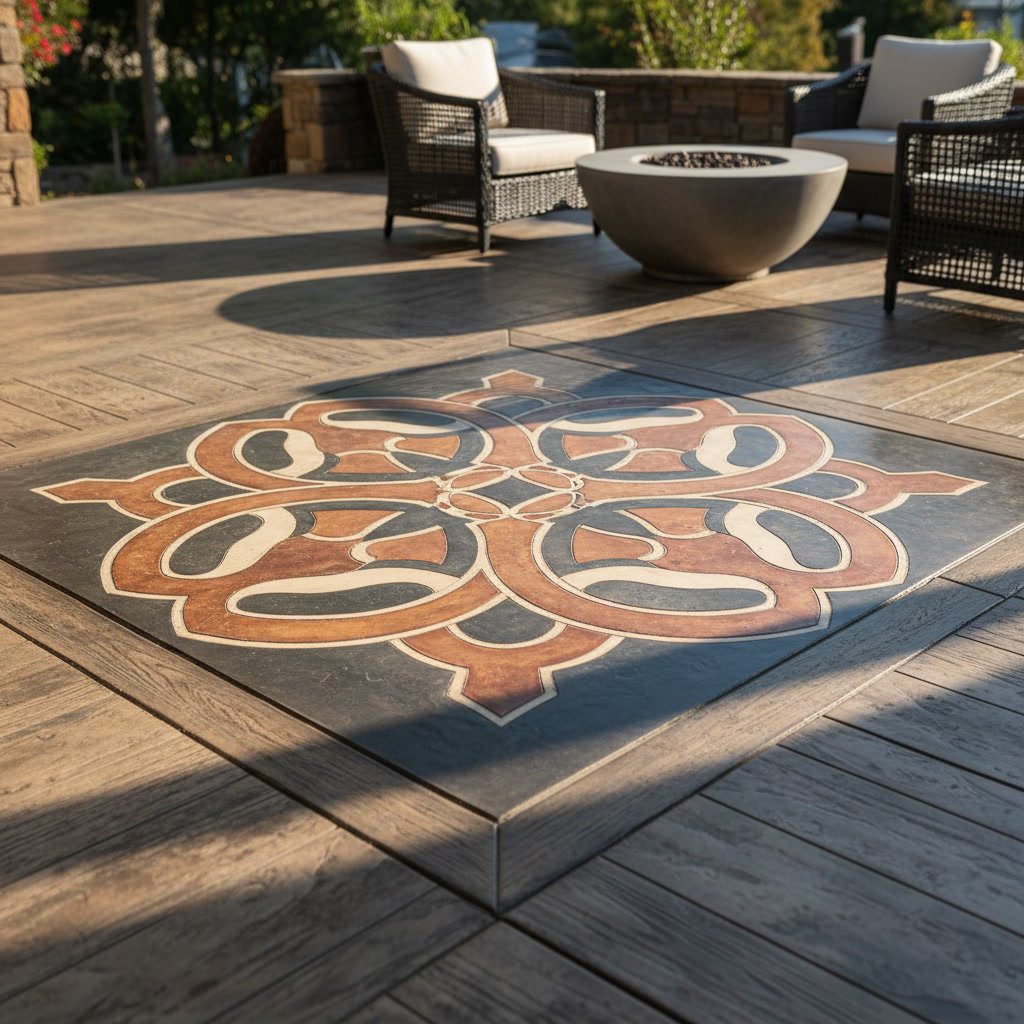
Decorative finishes like stamped concrete or concrete staining add $3 to $10 per square foot to base costs. These upgraded finishes not only improve appearance but can actually increase durability by incorporating color and sealant throughout the surface layer.
Hidden Costs to Consider
Permits, required in most El Dorado County jurisdictions for new driveway installation, add $200 to $500 to project costs. Base repair or stabilization can add 20 to 40% to total costs when poor soil conditions exist.
Removal and disposal of old concrete for replacement projects typically costs $2 to $4 per square foot beyond the new installation cost. Some contractors include this in their quote while others charge it separately.
Frequently Asked Questions
How long do concrete driveway crack repairs last?
Professional repairs using appropriate methods typically last 5 to 15 years depending on crack severity and ongoing maintenance. Epoxy injection and routing with quality sealants provide the longest service life. Simple surface patching may fail within two to three years, especially if underlying causes are not addressed.
Can I repair concrete driveway cracks myself?
Homeowners can successfully seal small hairline cracks using concrete crack filler from hardware stores. However, structural cracks, settlement issues, and cracks wider than 1/4 inch require professional equipment and expertise to repair properly. DIY repairs on serious damage often waste money and delay necessary professional intervention.
What time of year is best for concrete driveway repair in Shingle Springs?
Late spring (April through May) and early fall (September through October) provide ideal conditions. Temperatures between 50 and 80 degrees allow proper curing and sealant adhesion. Avoid repairs during rainy winter months and extreme summer heat above 95 degrees when materials become difficult to work with and may not cure properly.
Will sealing my driveway prevent cracks from forming?
Sealer protects against water damage and surface deterioration but cannot prevent cracks caused by structural issues like poor base preparation or settlement. Regular sealing does slow crack development by preventing water intrusion and reducing thermal stress. Think of sealer as preventive maintenance that extends lifespan rather than a solution to existing problems.
How thick should a concrete driveway be in this area?
Standard residential driveways should be at least four inches thick, but six inches performs much better in Shingle Springs due to expansive soils. The garage apron area, where vehicles turn and create maximum stress, benefits from seven to eight inches of thickness. Thicker concrete costs more upfront but dramatically reduces cracking and extends service life.
Getting Professional Help
Concrete driveway cracks do not fix themselves, and minor problems become major expenses when ignored. The unique soil and climate conditions in Shingle Springs make professional expertise especially valuable for both repairs and new installations.
Stamatelos Construction has served Cameron Park and surrounding El Dorado County communities since 1990, bringing three decades of experience with local conditions. The family team handles everything from minor crack repair and concrete restoration to complete driveway replacement with custom finishes including stamp concrete, broom finish, and concrete staining.
If you are dealing with cracked concrete or planning a new driveway installation in Shingle Springs, El Dorado Hills, Placerville, or nearby areas, call +19163055310 to discuss your project. A thorough evaluation identifies the root cause of damage and determines whether repair or replacement provides the best long-term value for your property.