Cracked concrete around your pool creates trip hazards, collects debris, and makes your backyard look worn and neglected. These surface flaws worsen every season as water seeps into the cracks, freezes, and expands. This post covers the most effective pool deck resurfacing methods available to Fair Oaks homeowners, including costs, durability, and which options work best for different levels of damage.
Pool deck resurfacing transforms damaged surfaces without the expense of complete demolition and replacement. You’ll understand the difference between overlays, coatings, and stamped finishes, and learn which solution matches your specific situation.
Why Pool Decks Crack in Fair Oaks
The soil composition and climate in Fair Oaks create specific challenges for concrete surfaces. Clay-heavy soil expands and contracts with moisture changes, putting constant pressure on pool deck slabs from below.
Temperature swings between hot summers and cooler winters cause concrete to expand and contract. This thermal movement stresses the material, especially around pool edges where water exposure accelerates the process.
Poor initial installation compounds these natural stresses. Inadequate base preparation, missing control joints, or insufficient reinforcement all lead to premature cracking. Many pool decks installed 15 to 20 years ago used outdated techniques that don’t hold up to modern standards.
Tree roots can also lift and crack sections of concrete as they grow beneath the surface. Even small decorative trees planted too close to the pool can cause significant damage over time.
Assessing Your Pool Deck Damage
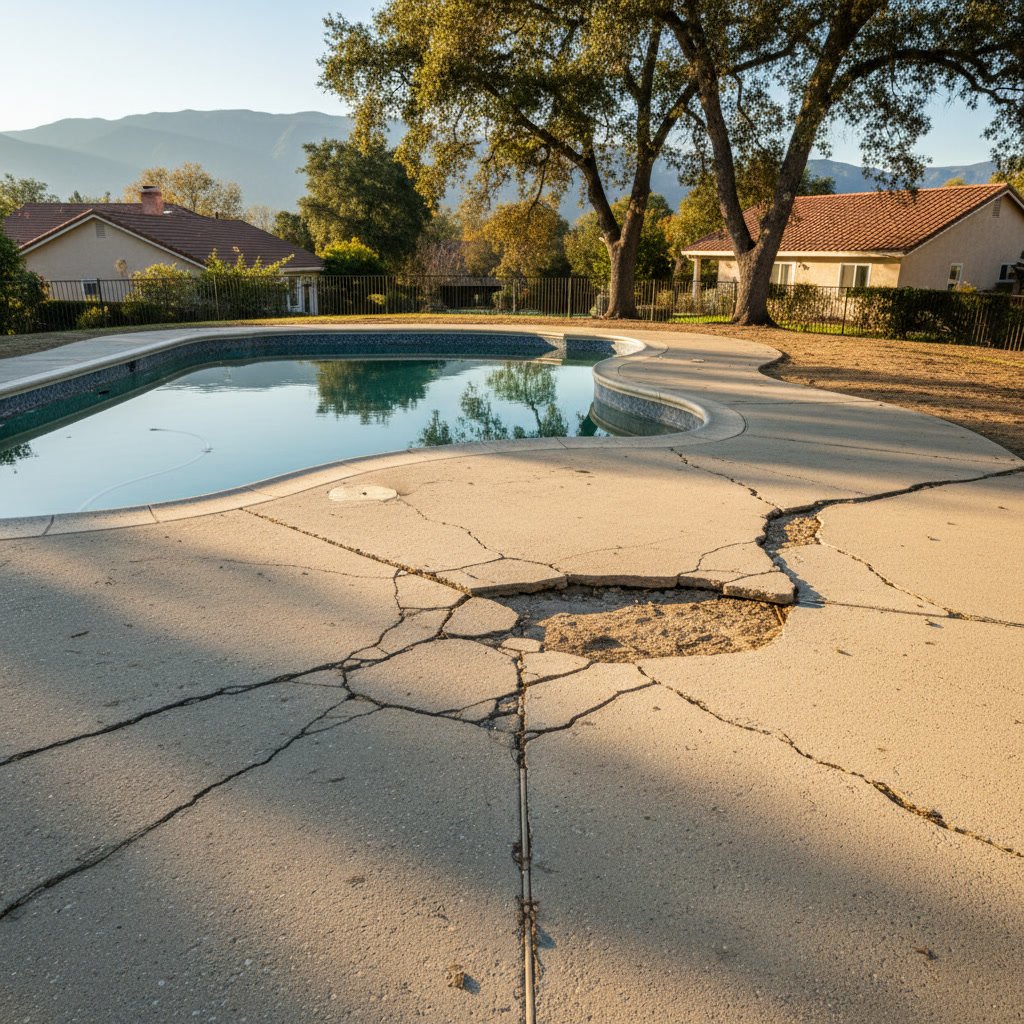
Not all cracks require the same solution. The depth, width, and location of damage determine which pool deck resurfacing option makes sense for your situation.
Surface Cracks and Crazing
Hairline cracks less than 1/8 inch wide typically affect only the surface layer. These shallow cracks, called crazing, create spiderweb patterns but don’t indicate structural problems. Simple overlay systems can seal and cover these without extensive preparation.
Crazing often results from rapid drying during the original pour or excessive troweling of the surface. While cosmetically unappealing, these cracks rarely worsen over time.
Structural Cracks
Cracks wider than 1/4 inch or those that have vertical displacement (one side higher than the other) signal structural movement. These require more extensive repair before resurfacing. The underlying cause must be addressed, or the new surface will crack again within months.
If sections of your deck have settled more than half an inch, professional assessment is necessary. Some situations call for mudjacking or slab stabilization before any cosmetic work begins.
Spalling and Surface Deterioration
Spalling occurs when the concrete surface flakes, peels, or pops off in chunks. This damage typically results from water intrusion, freeze-thaw cycles, or poor concrete mix ratios during installation. Spalled surfaces need more aggressive preparation than simple crack repair.
Areas near the pool edge or around drains often show the most spalling because of constant moisture exposure. These zones may need patching before resurfacing products can be applied successfully.
Top Pool Deck Resurfacing Options
Several proven methods can restore your pool deck, each with distinct advantages and price points. The right choice depends on your damage severity, aesthetic goals, and budget.
Concrete Overlays
Concrete overlays bond a thin layer of fresh material over the existing surface. Modern polymer-modified overlays are applied at thicknesses between 1/4 inch and 3/4 inch, depending on surface condition.
These systems fill cracks and create a smooth new surface. They work well for surfaces with moderate cracking and minor unevenness. The overlay bonds mechanically and chemically to the prepared substrate.
Overlays typically cost between $3 and $7 per square foot installed, making them one of the most economical resurfacing options. They can be textured, colored, or left smooth, though most pool applications use a slip-resistant texture for safety.
The concrete restoration process for overlays includes thorough cleaning, crack repair, and primer application before the overlay material goes down.
Stamped Concrete Overlays
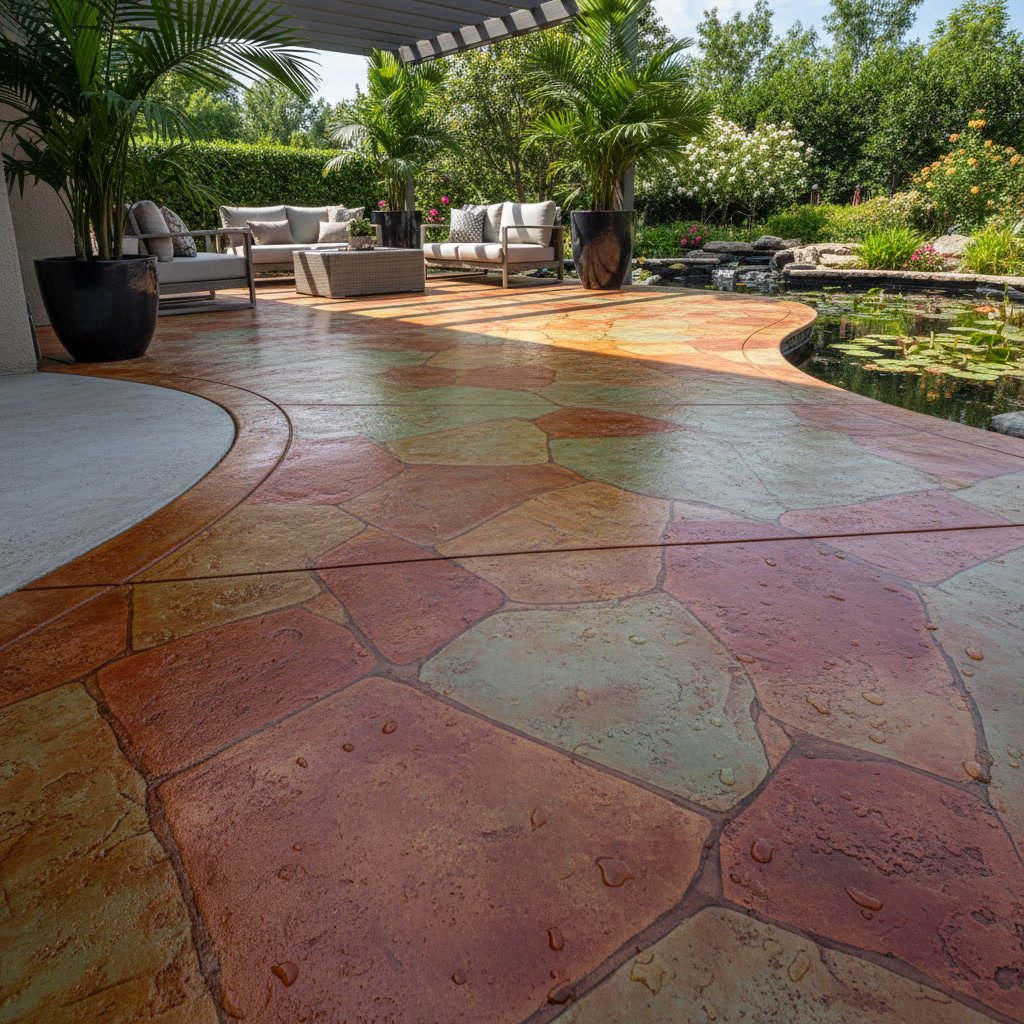
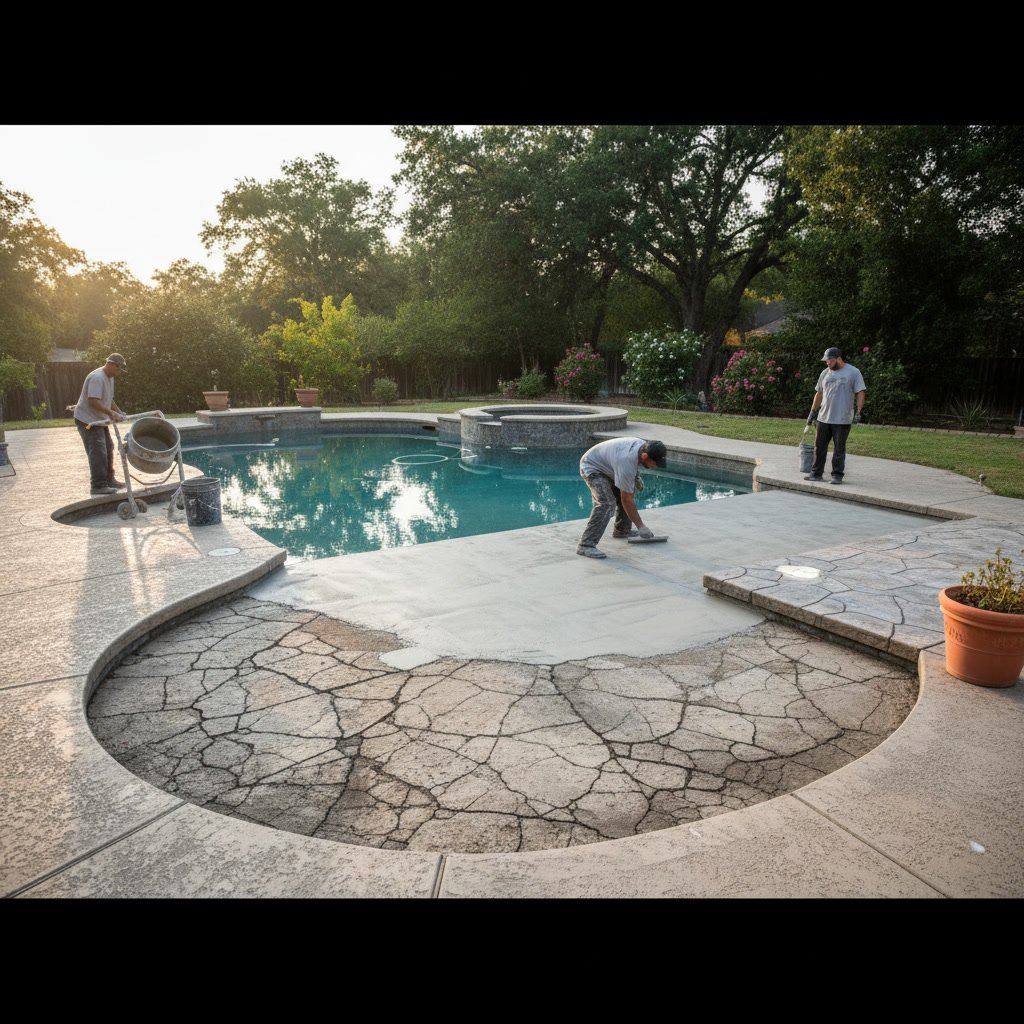
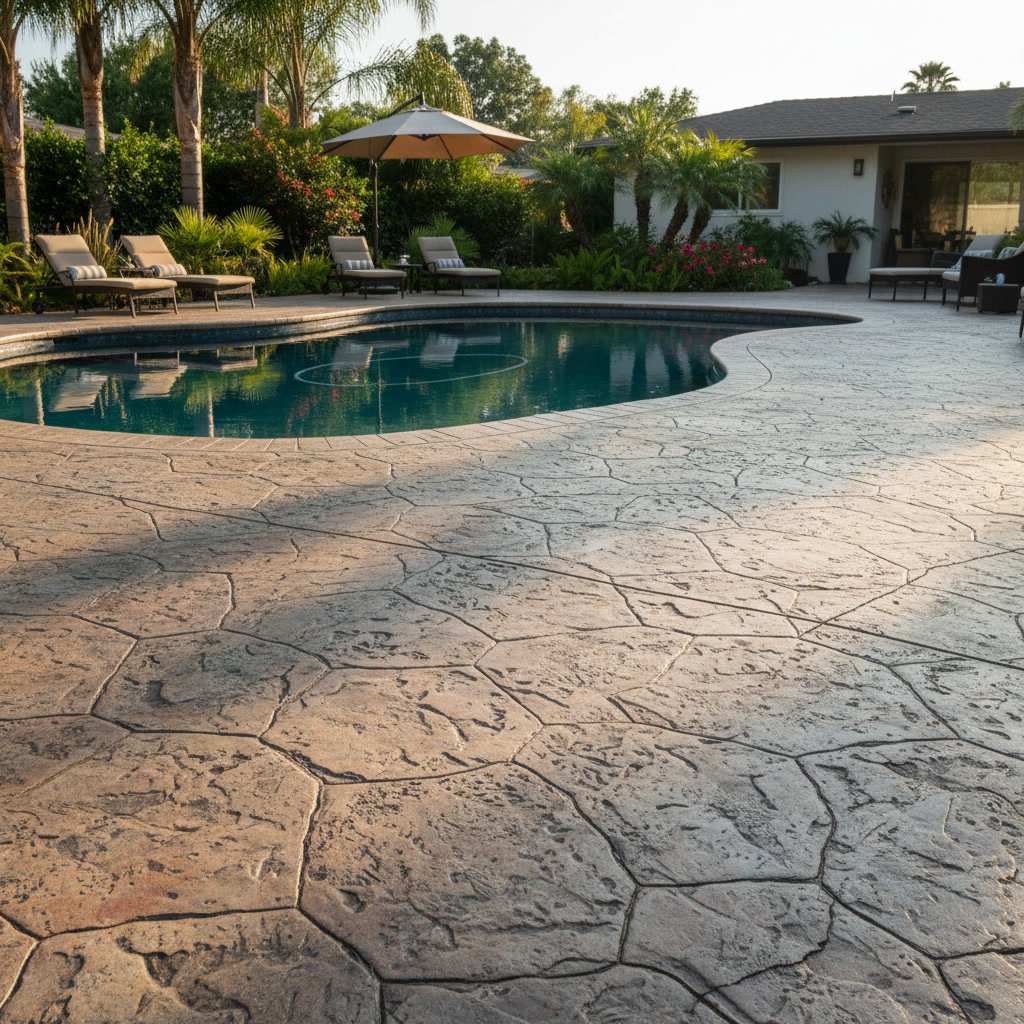
Stamped overlays combine the repair benefits of standard overlays with decorative patterns that mimic stone, slate, or tile. The overlay material is applied, then stamped with texture mats before it fully cures.
This option transforms a plain, cracked surface into an upscale design feature. Common patterns for pool decks include flagstone, wood plank, and ashlar slate, all chosen for their natural, organic appearance that complements outdoor settings.
Cost typically ranges from $8 to $15 per square foot for stamp concrete overlays. This price includes surface prep, overlay application, stamping, and sealing. While more expensive than plain overlays, stamped options deliver significantly more visual impact.
Color can be added through integral pigments mixed into the overlay or through dry-shake color hardeners applied to the surface. Accent colors create realistic stone appearances.
Concrete Staining
If your deck has only minor surface cracks and mainly needs a cosmetic refresh, concrete staining offers an affordable solution. Acid-based or water-based stains penetrate the surface and create rich, variegated colors that won’t peel or flake.
Staining works best on structurally sound surfaces with minimal cracking. It enhances the concrete rather than covering it, so significant damage will still be visible. Small cracks can be filled before staining, but large repair areas may show through the finish.
Professional concrete staining costs between $2 and $4 per square foot. This includes surface cleaning, crack filling, stain application, and sealer. The translucent color creates depth and visual interest without the texture of stamped systems.
Stained surfaces require resealing every two to three years to maintain appearance and protect against moisture intrusion. The stain itself is permanent, but the protective topcoat wears with use and weather exposure.
Spray Deck Coatings
Acrylic-based spray coatings create a durable, textured surface that’s cooler underfoot than bare concrete. These systems are applied with specialized equipment that sprays a thick coating over the prepared surface.
Spray deck finishes bridge small cracks and create a uniform, slip-resistant surface. They come in various colors and can include decorative chips or flecks for added visual texture. The resulting surface resembles fine aggregate or sand.
Installation costs run from $5 to $10 per square foot. The coating thickness, typically 1/8 inch to 1/4 inch, provides some crack resistance but won’t address structural movement or significant settling.
These coatings perform well in areas with high sun exposure. Many formulations include UV inhibitors that prevent color fading, an important consideration for Fair Oaks summers.
Pro Tip: For decks with cracks wider than 1/4 inch, use a flexible crack-filling compound before applying any overlay or coating system. This prevents the crack from telegraphing through the new surface as the deck continues to move with seasonal changes.
Matching Resurfacing to Your Damage Level
Choosing the right pool deck resurfacing approach starts with an honest assessment of your surface condition. Using the wrong method wastes money and leads to rapid failure.
For decks with only minor crazing and surface wear, staining or thin spray coatings work well. These surfaces are structurally sound and just need cosmetic improvement. The repairs are straightforward and budget-friendly.
Moderate cracking with some surface spalling calls for concrete overlays. The overlay thickness can bridge small cracks and level minor irregularities. This middle-ground option balances cost with durability.
Heavily damaged decks with wide cracks, significant spalling, or vertical displacement need evaluation before any resurfacing begins. Some situations require partial replacement of badly damaged sections, with concrete pool decks resurfacing applied to the remaining areas.
If your deck has settled substantially or if drainage problems cause water to pond, these issues must be corrected first. No surface treatment will hold up if the underlying problem continues. Similar challenges affect driveways, as explained in the post on why concrete driveways crack in the region.
Preparation Makes the Difference
Successful pool deck resurfacing depends more on preparation than the product itself. Cutting corners during prep leads to delamination, bubbling, and premature failure.
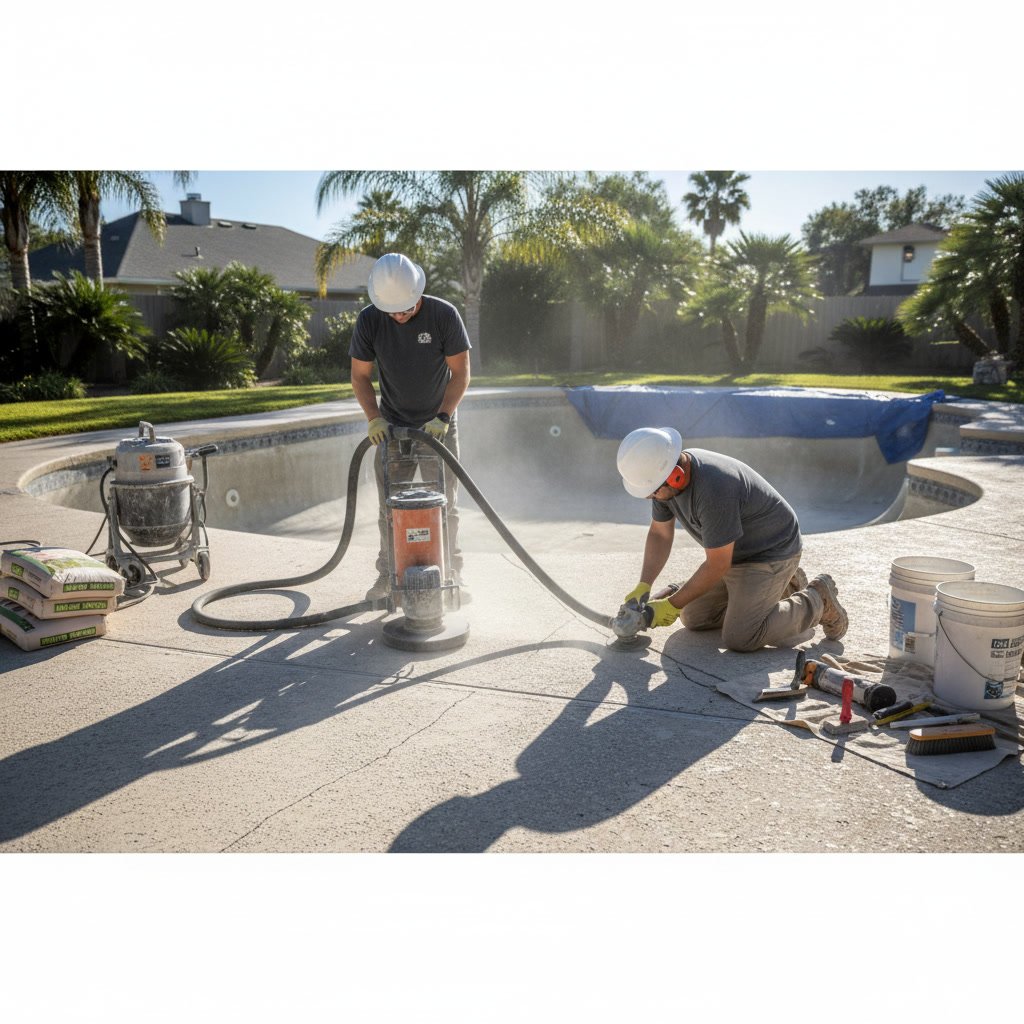
All surfaces must be thoroughly cleaned before any overlay or coating is applied. This means removing dirt, oil, algae, and any existing sealers. Pressure washing at 3,000 to 4,000 PSI typically handles most cleaning, though chemical degreasers may be necessary for oil stains.
After cleaning, the surface needs profiling. This creates tiny pores and rough texture that allow the new material to bond. Acid etching or mechanical grinding accomplishes this. The surface should feel like 80-grit sandpaper when properly prepared.
Cracks wider than hairlines must be routed out and filled. Routing creates a V-shaped groove that gives the filler material something to grip. Without this step, crack fillers simply pop out when the concrete moves.
A bonding primer is applied to most prepared surfaces before the overlay goes down. This primer acts as a bridge between old and new concrete, improving adhesion and reducing the chance of failure. Skipping primer is a common shortcut that compromises the entire job.
Maintaining Your Resurfaced Pool Deck
Any resurfacing system lasts longer with proper maintenance. The specific care depends on which option you choose, but some practices apply to all surfaces.
Seal your resurfaced deck every two to three years. Sealers protect against water intrusion, staining, and UV damage. They also enhance color and make the surface easier to clean. Use a sealer formulated for the specific product installed on your deck.
Keep the surface clean. Dirt and organic debris trap moisture against the concrete, accelerating wear. Regular sweeping and occasional pressure washing prevent buildup. Avoid harsh chemicals that can damage the sealer or finish.
Address drainage issues promptly. Standing water shortens the life of any concrete surface. If water ponds on your deck after rain, correct the slope or add drainage before the moisture causes damage.
Watch for new cracks. Small cracks that appear shortly after resurfacing may indicate inadequate preparation or underlying movement. Have these evaluated quickly, as early repair prevents larger problems.
The same maintenance principles apply to other decorative concrete around your property, including custom walkways and patios.
Cost Factors for Pool Deck Resurfacing
Understanding what drives resurfacing costs helps you budget accurately and compare bids from different contractors.
Surface size is the most obvious factor. Larger decks require more material and labor. Most contractors price by the square foot, with volume discounts sometimes available for large areas over 1,000 square feet.
Damage severity affects price significantly. Decks requiring extensive crack repair, grinding, or patching cost more to prepare than relatively smooth surfaces with minor flaws. Preparation often represents half the total project cost.
Material choice impacts price. Basic overlays cost less than decorative stamped or stained finishes. Spray coatings fall in the middle. Premium products with special performance features (extreme durability, fast cure times, cool-surface technology) command higher prices.
Access and working conditions matter. Decks in tight backyards with limited access for equipment may incur additional charges. Projects that must be completed in stages to allow pool use between phases take longer and cost more.
Geographic location affects labor rates. Contractors in Fair Oaks factor in travel, material sourcing, and local competition when pricing work. Costs typically align with the broader Sacramento region rates.
Key Takeaway: Get at least three detailed bids before choosing a contractor. Ensure each bid breaks down preparation, materials, and labor separately. The lowest price often comes from companies that skip preparation steps, leading to costly failures within a year or two.
Comparing Pool Deck Resurfacing to Replacement
Full replacement costs two to three times more than resurfacing. Complete demolition, removal, new base prep, and fresh concrete typically run from $12 to $18 per square foot for a basic brushed finish.
Replacement makes sense only if the existing slab has severe structural damage, significant settling across large areas, or deep subsurface problems that resurfacing can’t address. For most situations involving surface cracks and cosmetic damage, resurfacing delivers better value.
Resurfacing projects are also faster. Most pool decks can be resurfaced in two to four days, including prep and cure time. You can typically use the pool within a week. Replacement takes one to three weeks and disrupts your entire backyard.
Environmental factors favor resurfacing as well. Keeping the existing slab in place avoids landfill waste and reduces the carbon footprint of bringing in entirely new materials.
That said, if your deck has failed multiple times or if you’re planning a major pool remodel, replacement may be the better long-term investment. A concrete professional can assess whether your situation calls for repair or replacement.
Choosing a Contractor for Pool Deck Work
The contractor you choose matters more than the products they use. Proper installation technique separates successful projects from failures.
Look for contractors with specific pool deck experience. General concrete workers may not understand the unique demands of pool environments, including chemical exposure, constant moisture, and bare-foot traffic.
Check references and view completed projects. Photos are helpful, but actually visiting a finished job site reveals details about quality and craftsmanship. Ask to see projects at least two years old to confirm long-term performance.
Verify licensing and insurance. California requires contractors handling jobs over $500 to hold a valid license. Pool deck work often involves specialized coatings and techniques, so look for contractors with the appropriate classifications.
Get a detailed written contract that specifies materials by brand and product name, includes a project timeline, and clearly defines the preparation steps. Vague contracts lead to disputes and disappointment.
Ask about warranties. Reputable contractors stand behind their work with warranties covering both materials and labor. Typical warranties run one to five years depending on the system installed.
Climate Considerations for Fair Oaks Pool Decks
Fair Oaks experiences hot, dry summers with temperatures regularly exceeding 95 degrees and mild, wet winters. These conditions affect which resurfacing options perform best.
Heat resistance matters. Dark colors absorb more heat and can become uncomfortably hot underfoot. Light colors, cool-deck coatings, or textured finishes that create air gaps between bare feet and the surface help manage temperature.
UV stability prevents fading. Direct summer sun breaks down some coating systems quickly. Choose products with UV inhibitors specifically formulated for California sun exposure.
Moisture handling is crucial during winter months. Systems that allow some vapor transmission prevent moisture from becoming trapped under impermeable coatings, which can cause delamination. Breathable overlays and stains generally outperform completely sealed coatings in this regard.
Freeze-thaw resistance isn’t as critical in Fair Oaks as in colder climates, but occasional winter freezes do occur. All resurfacing products used locally should be rated for at least occasional freeze-thaw cycles.
Frequently Asked Questions
How long does pool deck resurfacing last?
Most professionally installed resurfacing systems last 10 to 15 years with proper maintenance. Stamped overlays and spray coatings typically perform at the longer end of this range, while simple stains may need refreshing every five to seven years. Regular sealing and cleaning extend the life of any system.
Can you resurface a pool deck yourself?
DIY resurfacing is possible for small areas using basic overlay kits, but most homeowners lack the specialized equipment and experience for quality results on full pool decks. Surface preparation requires heavy-duty grinders or sandblasters, and proper application technique takes practice. Poor installation often fails within months, costing more to fix than professional installation would have cost initially.
What is the best time of year to resurface a pool deck in Fair Oaks?
Spring and fall offer ideal conditions. Temperatures between 60 and 85 degrees allow proper curing without the complications of extreme heat or cold. Avoid summer months when temperatures exceed 95 degrees, as rapid drying can compromise bonding and cause surface defects. Winter work is possible during dry spells but requires temperature monitoring to ensure proper curing.
Will resurfacing fix uneven or settled concrete around my pool?
Resurfacing can level minor unevenness of up to half an inch using thicker overlay applications, but it won’t fix substantial settling. Sections that have dropped more than an inch require mudjacking, slab jacking, or replacement before resurfacing. Applying overlay over severely uneven surfaces creates an unstable system that fails quickly.
How soon can we use the pool after resurfacing the deck?
Most systems require 24 to 48 hours before light foot traffic and three to seven days before normal use, including pool furniture. The sealer needs an additional 24 hours to cure after application. Your contractor will provide specific timing based on the products used and weather conditions during installation. Using the deck too early can damage the surface and compromise bonding.
Restore Safety and Beauty to Your Pool Area
Pool deck resurfacing addresses both safety concerns and aesthetic issues in a single project. The right system repairs cracks, creates slip-resistant surfaces, and transforms worn concrete into an attractive outdoor feature.
Your choice depends on damage severity, budget, and design goals. From economical overlays to decorative stamped finishes, options exist for every situation. Proper contractor selection and surface preparation determine long-term success more than any other factors.
Stamatelos Construction has restored pool decks throughout Fair Oaks and surrounding areas since 1990. Our family team brings decades of experience in concrete work and specialized knowledge of local conditions that affect concrete performance. We evaluate your specific damage, explain your options honestly, and complete the work with attention to detail that ensures lasting results. Call us at +19163055310 to schedule an assessment of your pool deck.