Deciding between concrete driveway resurfacing and complete replacement depends on the extent and type of damage your driveway shows. Surface-level issues like minor cracks, scaling, and discoloration often respond well to resurfacing, while structural problems such as deep cracking, severe settling, or a failing base require full replacement. Understanding these differences helps you avoid spending money on a temporary fix when a permanent solution is needed, or over-investing in replacement when resurfacing would suffice.
Understanding What Resurfacing Can and Cannot Fix
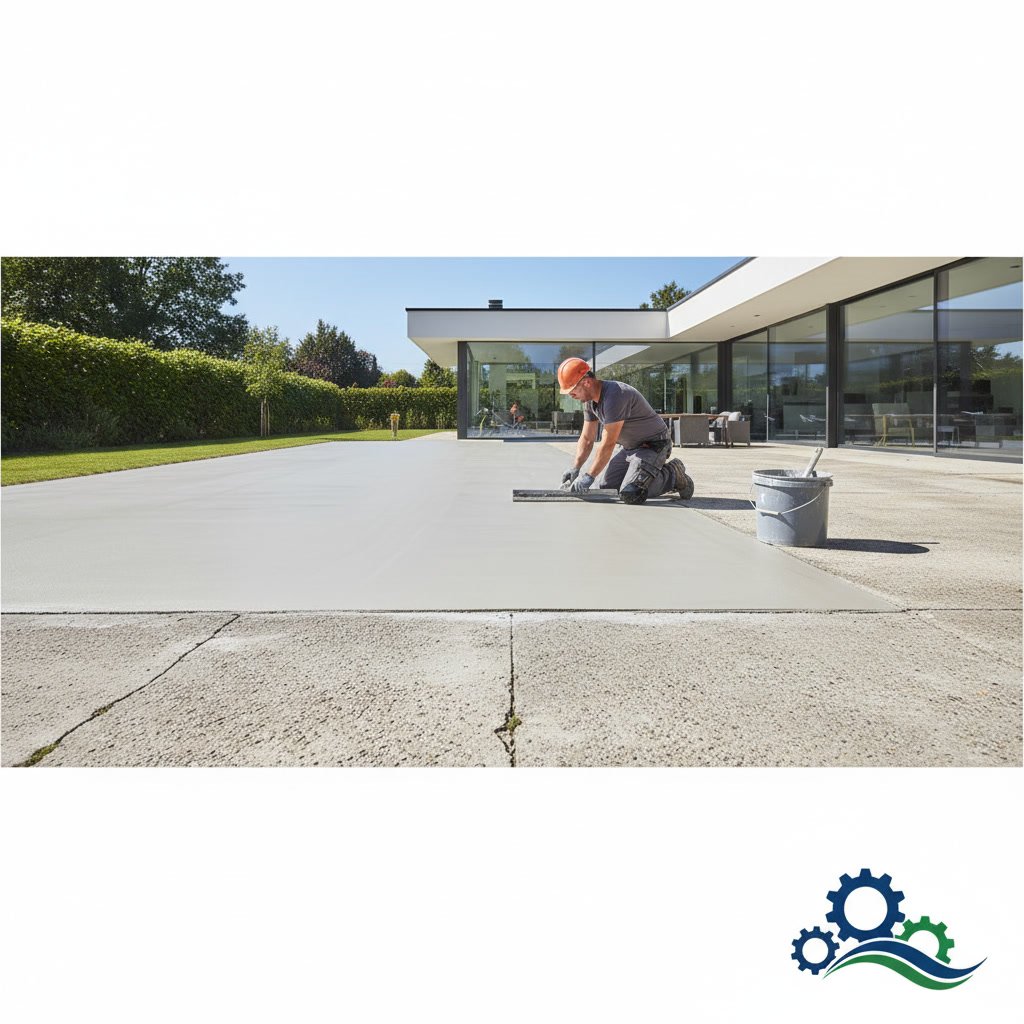
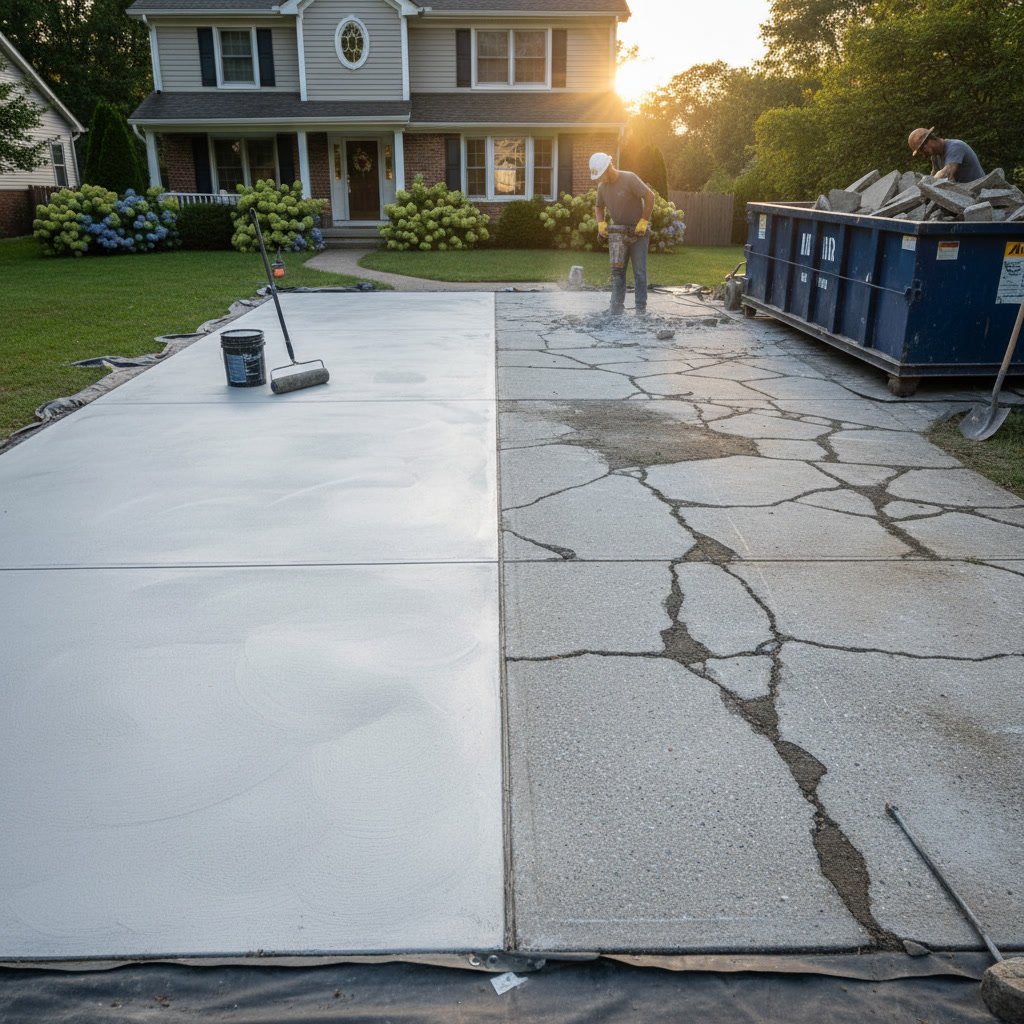
Resurfacing applies a thin layer of fresh concrete or specialty overlay material over your existing driveway. This method works well when the underlying structure remains sound but the surface has deteriorated. Think of it as adding a new skin over a healthy body. The process typically involves cleaning the old surface, making minor repairs, applying a bonding agent, and pouring a new layer that’s usually between one and two inches thick.
However, resurfacing cannot correct foundational issues. If the base beneath your driveway has eroded, shifted, or compacted unevenly, a new surface layer will simply follow those same failures. The result would be wasted money and a driveway that fails again within months.
Signs Your Driveway Is a Good Candidate for Resurfacing
Several indicators suggest resurfacing will deliver lasting results. Surface scaling, where the top layer flakes or peels away, often comes from freeze-thaw cycles or deicing salts. This damage rarely extends more than a quarter-inch deep. Shallow hairline cracks under an eighth of an inch wide typically don’t signal structural trouble. Fading, staining, or general wear from years of use affects appearance but not integrity.
If your driveway still sits level, drains properly, and doesn’t have widespread deep cracking, concrete restoration through resurfacing can add 10 to 15 years of life. You’re essentially hitting the refresh button on a solid foundation.
When Replacement Becomes the Only Viable Option
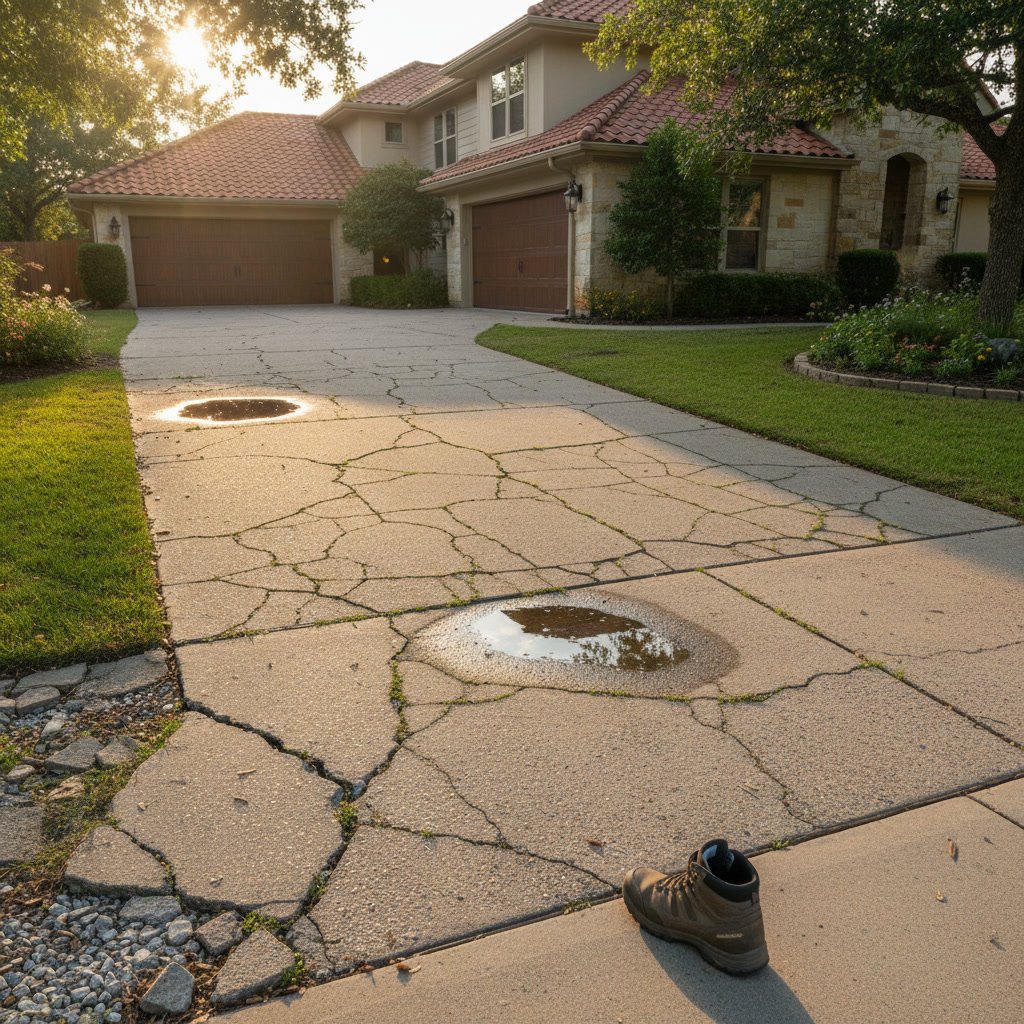
Deep structural cracks wider than a quarter-inch that run across large sections of your driveway indicate base failure. Multiple settlement areas where sections have sunk create drainage problems and trip hazards that resurfacing cannot fix. If more than 30 percent of your driveway surface shows significant damage, the cost difference between resurfacing and replacement narrows considerably.
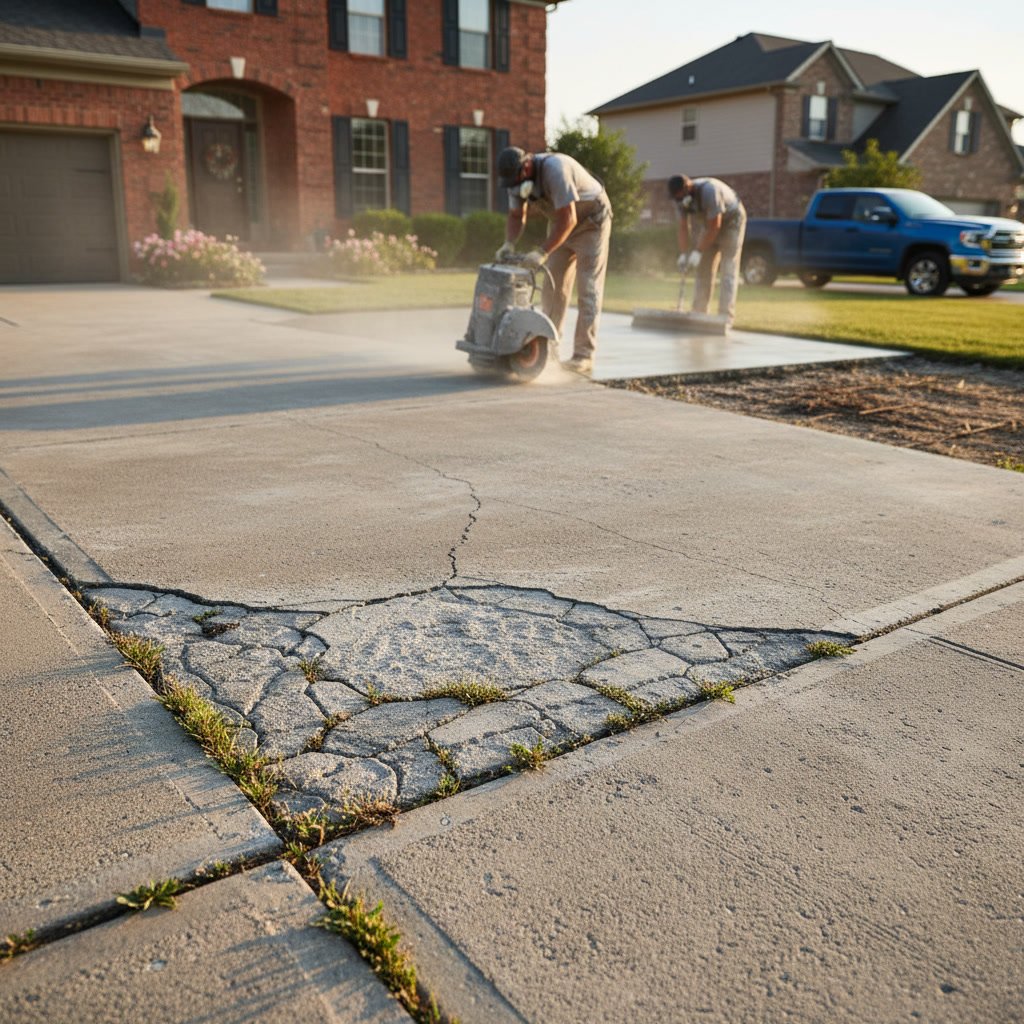
Spalling, where chunks of concrete break off exposing aggregate beneath, often means water has penetrated deeply and compromised the slab. Repeated freeze-thaw cycles cause this damage to spread. When you see widespread spalling, the structural integrity has declined to the point where a new surface won’t bond properly or last.
Evaluating Driveway Damage in Shingle Springs
Local climate and soil conditions affect how concrete ages. The soil composition in this region can shift with seasonal moisture changes, putting stress on concrete slabs. Winter rains followed by dry summers create expansion and contraction cycles that accelerate wear. If your driveway has reached 20 to 25 years old and shows moderate to heavy damage, replacement often makes more financial sense than attempting multiple repairs.
Properties with clay-heavy soil may experience more settling issues than those on stable rocky ground. Understanding why driveways crack and how to address those issues starts with recognizing your property’s specific challenges.
The Cost Factor: Resurfacing vs Replacement
Resurfacing typically costs 30 to 50 percent less than full replacement. For a standard two-car driveway of roughly 600 square feet, resurfacing might run between $2,400 and $3,600, while complete removal and replacement could reach $5,500 to $9,000 depending on thickness, base work, and finish options. However, if resurfacing fails within two to three years due to underlying problems you didn’t address, you’ll end up paying for both services.
The break-even calculation matters. If your driveway needs replacement within five years anyway, and resurfacing only buys you two or three years, the math favors replacement now. On the other hand, if your base is solid and resurfacing can deliver 12 to 15 additional years, it’s the clear winner.
Inspection Checklist: Six Key Areas to Examine
Start by walking your entire driveway and documenting what you find. First, check for crack width using a quarter as a reference. Anything narrower is often resurfacing-appropriate; wider cracks suggest deeper issues. Second, look for changes in elevation. Place a four-foot level across suspected areas. Gaps larger than half an inch indicate settling that resurfacing won’t fix.
Third, examine edges and corners where damage often begins. Crumbling edges mean water intrusion and base erosion. Fourth, check drainage patterns. Water pooling in multiple spots signals an uneven base. Fifth, tap the surface with a hammer in various locations. A hollow sound indicates the concrete has separated from the base beneath. Sixth, count the damaged areas. If fewer than 25 percent of the surface shows problems and those problems are shallow, resurfacing works.
How Base Condition Determines Your Best Option
The base or subgrade beneath your concrete does the heavy lifting. A proper base consists of compacted gravel or crushed rock, usually four to six inches deep, that distributes weight and allows drainage. When this base erodes or was never properly installed, the concrete above cracks and settles no matter how good the surface layer looks.
You can sometimes assess base condition by examining crack patterns. Random scattered cracks often come from surface issues like improper curing or freeze damage. Cracks that follow straight lines or create large geometric patterns usually trace back to base movement. If you notice sections that have clearly shifted or tilted, the base has failed and needs rebuilding.
Longevity Expectations for Each Approach
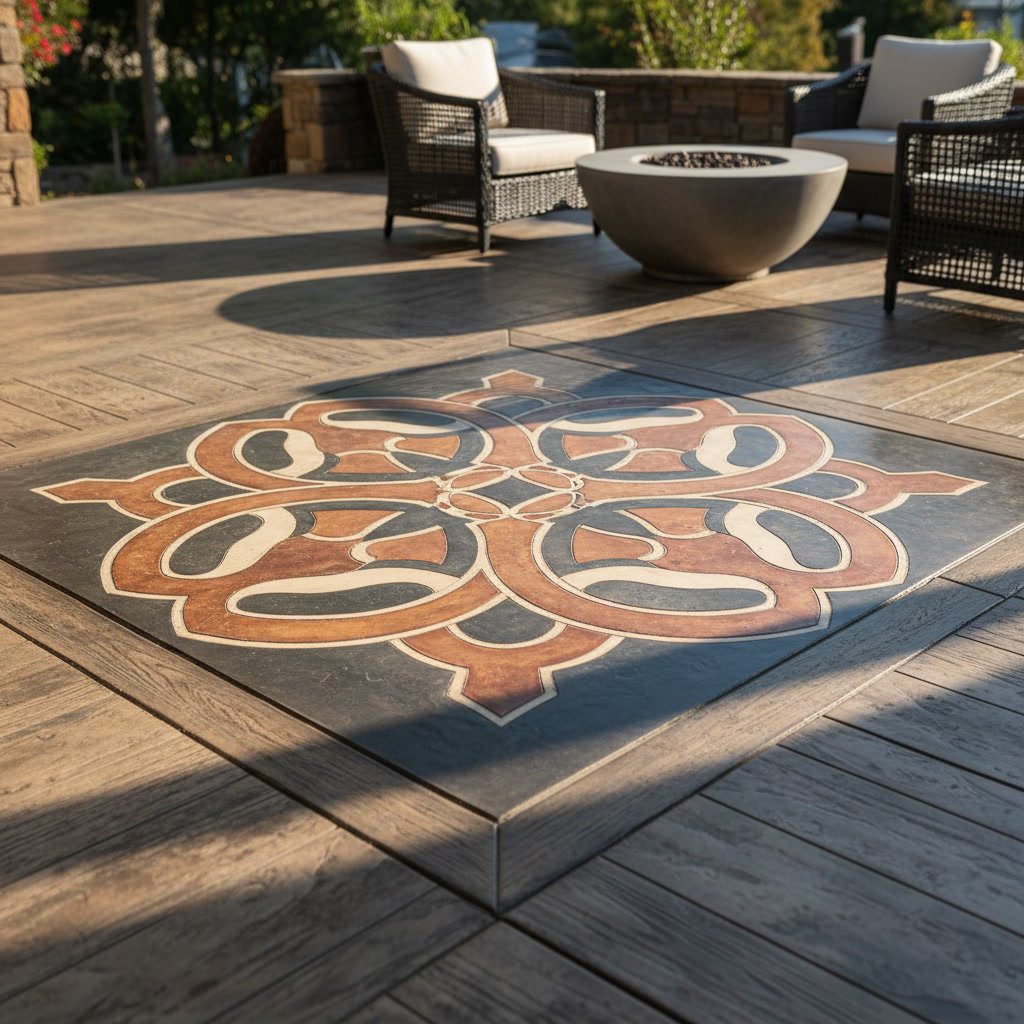
A professionally installed replacement driveway should last 30 to 40 years with proper maintenance. Quality resurfacing over a sound base delivers 10 to 15 years. Those numbers assume you address drainage, use proper materials, and don’t have extreme soil movement. If you choose broom finish driveways or decorative options like stamped concrete during replacement, selecting UV-stable sealers and following maintenance schedules protects your investment.
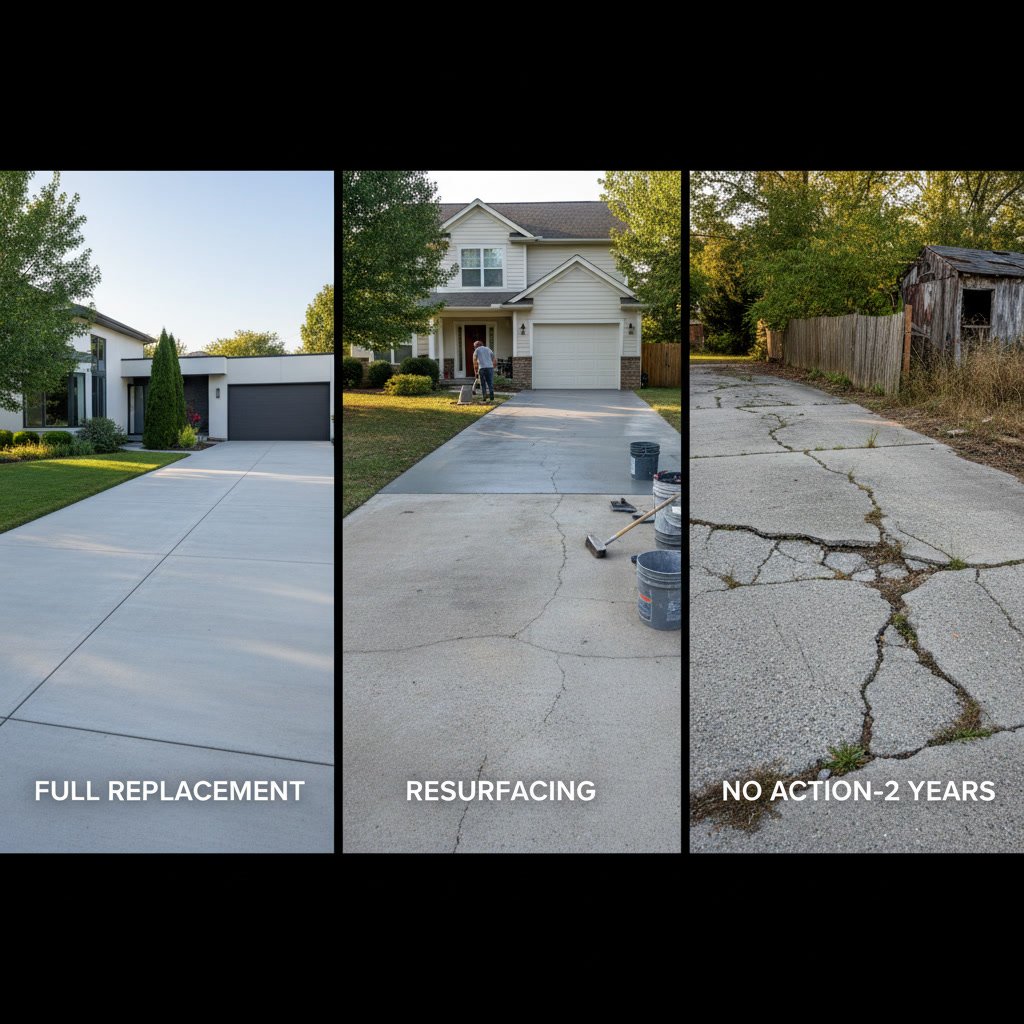
Resurfacing buys time and improves appearance but doesn’t reset the clock completely. Think of it as a mid-life upgrade rather than starting from zero. If your driveway is already 20 years old, resurfacing might get you to 30 or 32 years total, which could align perfectly with other planned exterior upgrades.
Additional Factors That Influence the Decision
Aesthetic goals matter. If you want to change the color, add texture, or incorporate decorative elements, replacement gives you that flexibility. Resurfacing limits you to overlays and topical treatments. Property value considerations also play a role. If you’re selling within two years, resurfacing improves curb appeal at lower cost. If you’re staying long-term, replacement offers better return on investment.
Permit requirements vary by jurisdiction. Full replacement often requires permits and inspections, adding time and cost. Resurfacing usually doesn’t trigger permit requirements unless you’re changing drainage or expanding the footprint. Consider how the project timeline fits your schedule and budget cycle.
Common Mistakes That Lead to Premature Failure
The biggest mistake homeowners make is choosing resurfacing based solely on cost without properly evaluating the base. A contractor who doesn’t thoroughly inspect and honestly assess the situation does you no favors. Another common error is ignoring drainage problems. Water is concrete’s enemy. If your driveway doesn’t shed water properly, neither resurfacing nor replacement will last without addressing that issue first.
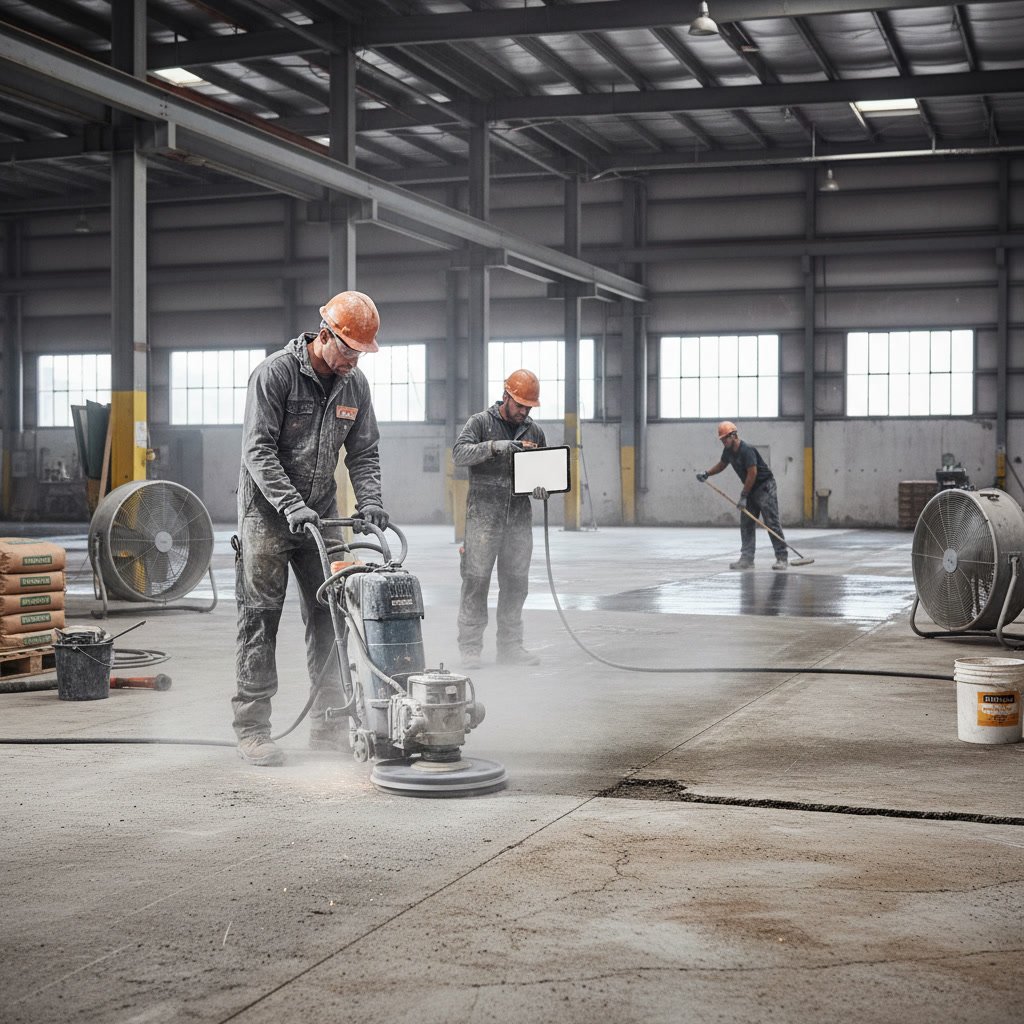
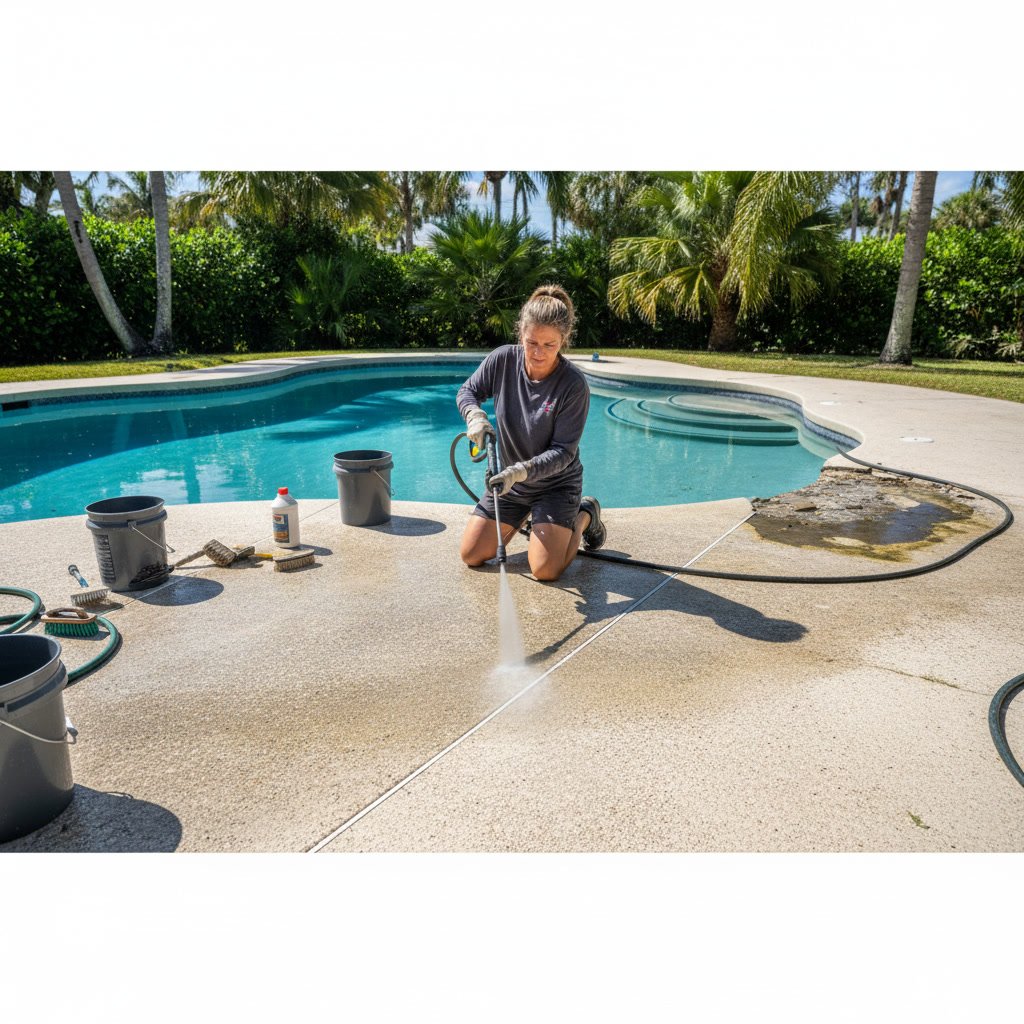
Skipping proper surface preparation before resurfacing guarantees poor bonding and early delamination. The existing concrete must be clean, sound, and properly profiled for the new layer to adhere. DIY resurfacing rarely achieves the preparation and application quality that professional crews deliver, especially when working with specialized overlay systems.
Making a Decision That Protects Your Investment
Gather multiple professional assessments before committing. Reputable contractors will tell you honestly whether resurfacing makes sense or if you’re better off with replacement. Ask to see examples of both services they’ve completed, ideally projects that are several years old so you can evaluate durability.
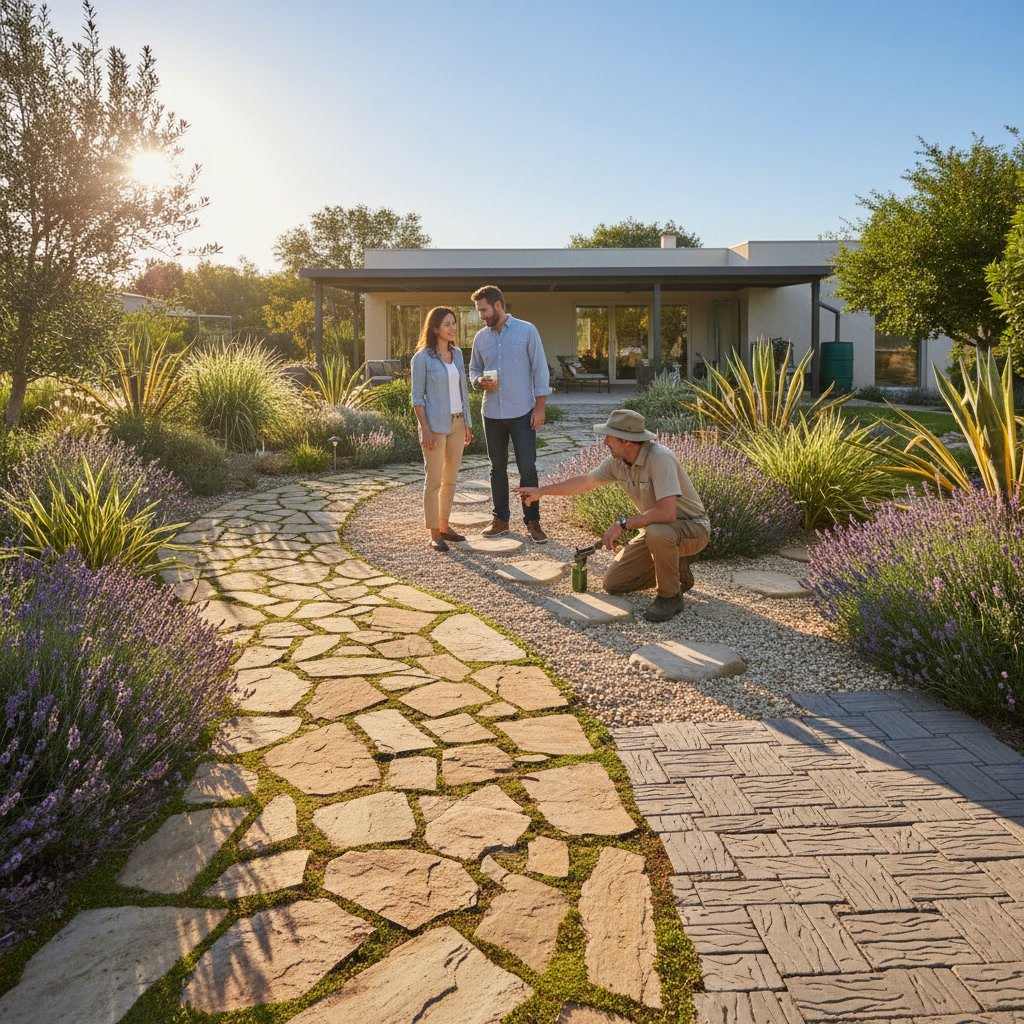
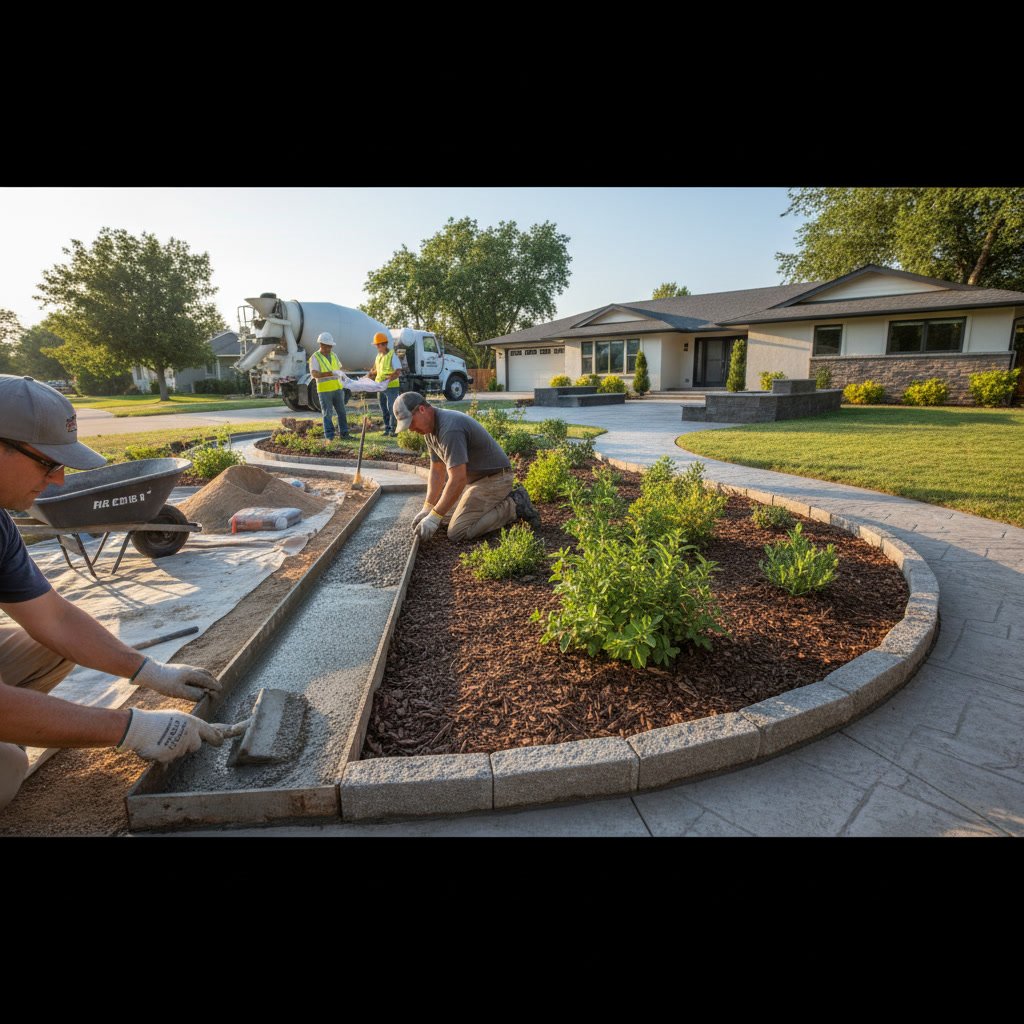
Consider your total property improvement plan. If you’re also planning custom walkways or other concrete work, coordinating these projects can reduce overall costs and ensure visual consistency. The decision between resurfacing and replacement isn’t always clear-cut, but focusing on the condition of what lies beneath the surface gives you the clearest answer.
Since 1990, STAMATELOS CONSTRUCTION has helped property owners throughout the region make informed decisions about their concrete surfaces. Whether your driveway needs a refresh or a complete rebuild, getting an expert evaluation from a team with decades of hands-on experience ensures you invest wisely. Reach out to discuss your specific situation and receive an honest assessment at +19163055310.