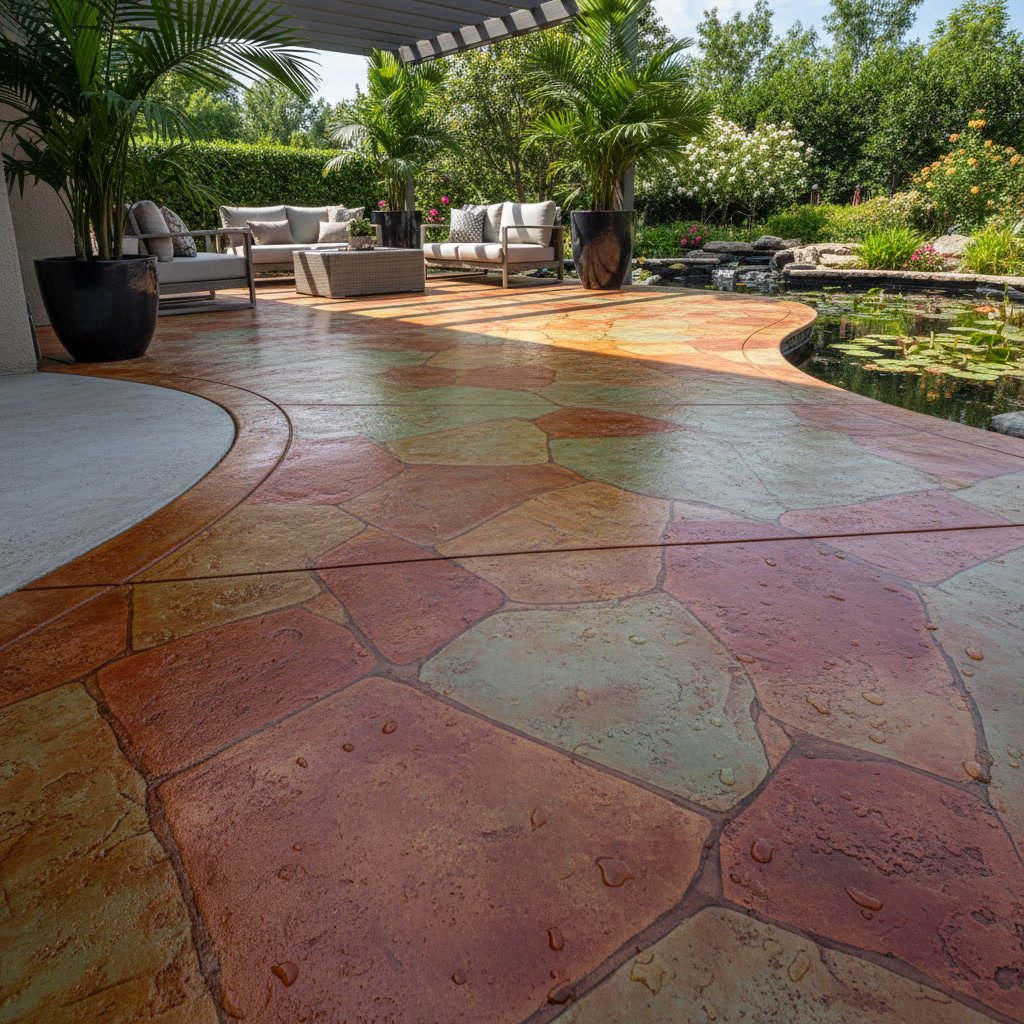
Decorative concrete staining introduces rich, translucent color to concrete surfaces through acid-based or water-based chemical reactions that penetrate the material rather than coat it. Unlike paint or overlays, stains bond chemically with concrete to create permanent color that won’t peel, chip, or fade under normal outdoor conditions. This transformation turns dull gray patios, walkways, and pool decks into custom surfaces with natural variegation and depth that mimics stone, terracotta, or aged leather at a fraction of replacement cost.
Why Plain Concrete Loses Its Appeal Over Time
Newly poured concrete offers a clean, uniform appearance that complements most architectural styles. After a few seasons of weather exposure, foot traffic, and UV radiation, that same surface develops an uneven patina marked by efflorescence, minor staining, and color inconsistencies. These changes don’t necessarily indicate structural problems, but they diminish curb appeal and make outdoor living spaces feel dated.
Standard gray concrete also absorbs heat, creating uncomfortable walking surfaces during summer months. The monotone finish provides no visual interest or design flexibility, limiting your ability to coordinate outdoor spaces with landscaping or home exteriors. Replacing functional concrete solely for aesthetic reasons represents a significant expense that most homeowners prefer to avoid.
The Chemistry Behind Permanent Color Transformation
Acid-based stains contain metallic salts that react with calcium hydroxide in cured concrete, creating permanent color compounds within the surface layer. This chemical reaction produces earthy tones including terracotta, amber, brown, and green, with natural variation determined by concrete age, porosity, and existing mineral content. The translucent finish allows the concrete texture to show through, creating depth similar to natural stone.
Water-based stains penetrate concrete pores and deposit pigment particles without chemical reaction. These products offer a wider color palette including blues, reds, blacks, and grays, with more predictable results and less variation. Both stain types become part of the concrete itself rather than sitting on the surface, which explains their exceptional durability compared to coatings or paints.

Surface Preparation Determines Final Results
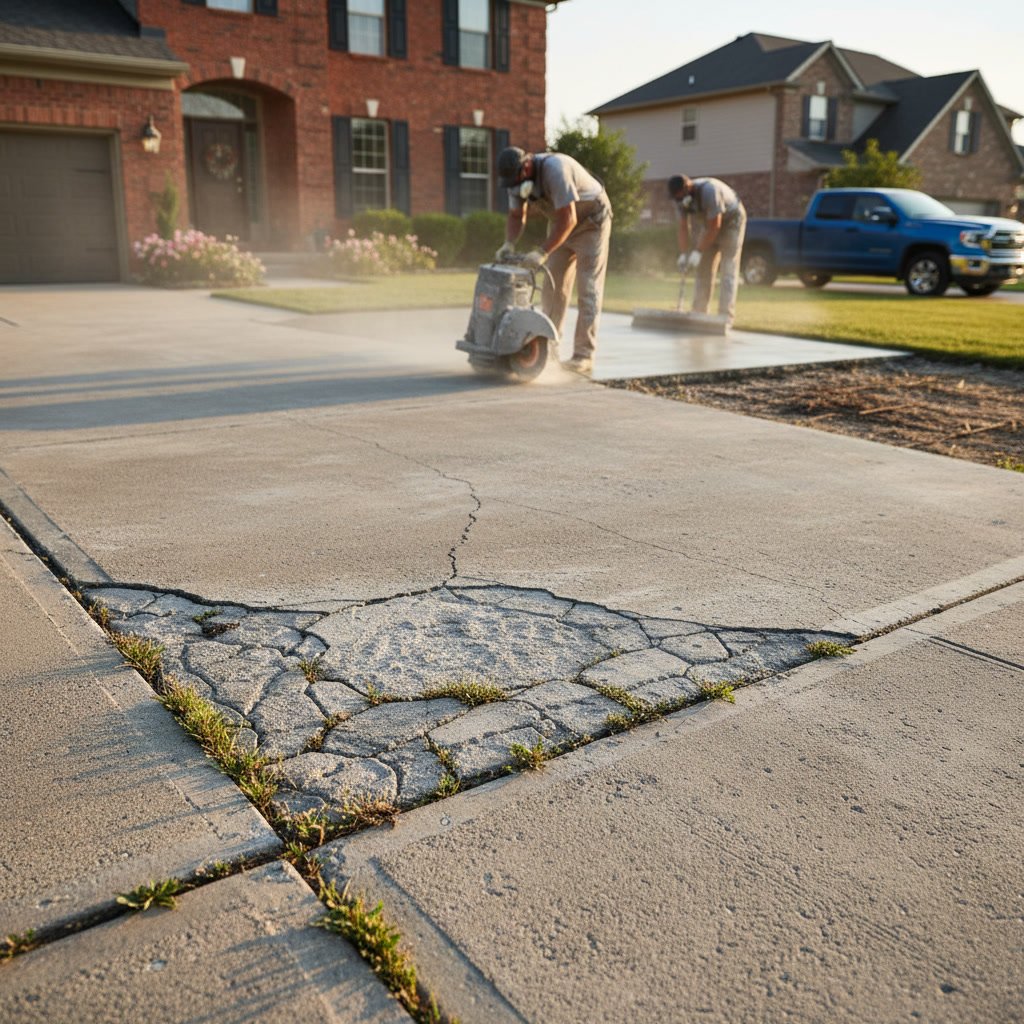
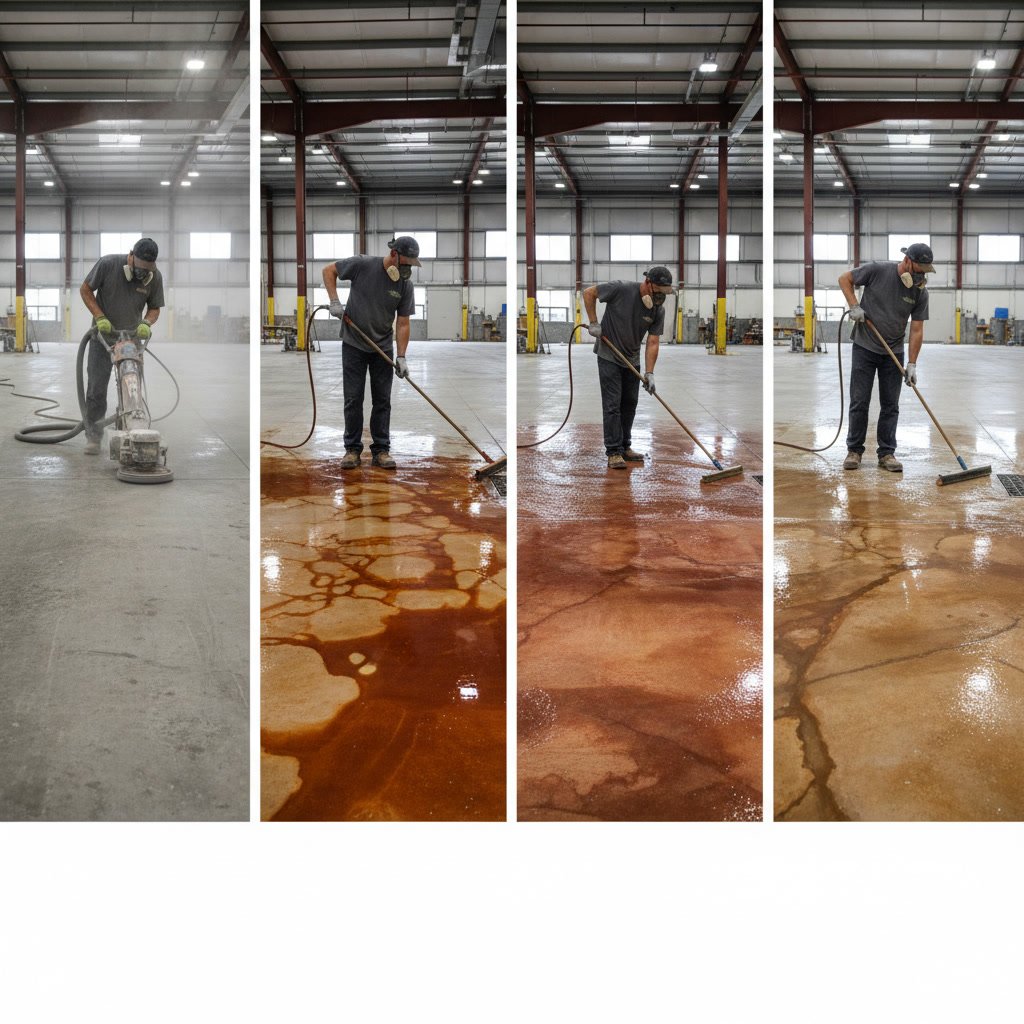
Proper surface preparation accounts for 70% of staining success. The concrete must be thoroughly cleaned to remove dirt, grease, sealers, and coatings that block stain penetration. Professional contractors use mechanical grinders, diamond abrasion, or chemical strippers depending on existing conditions and contamination levels.
Repairs to cracks, spalling, or surface defects should occur before staining. While minor imperfections add character to the finished surface, structural issues require attention through concrete restoration techniques. The surface must reach proper pH levels and moisture content, typically requiring at least 28 days of cure time for new concrete.
Design Possibilities Beyond Single-Color Applications
Staining allows for creative design approaches that plain concrete cannot achieve. Multiple stain colors can be layered or applied in distinct sections to create borders, geometric patterns, or flowing designs that complement surrounding architecture. Masking techniques produce crisp lines between color zones, while freehand application creates organic, watercolor effects.
Combining stained concrete with saw-cut patterns mimics tile, flagstone, or wood plank layouts. This approach works particularly well for custom walkways where you want decorative appearance without the maintenance challenges of natural stone. Staining also integrates seamlessly with existing stamped concrete, adding color depth to embossed texture patterns.
Four Steps Professional Contractors Use for Flawless Application
First, surface evaluation identifies existing sealers, determines concrete porosity, and assesses repair needs. Test patches in inconspicuous areas verify color expectations and stain compatibility with your specific concrete mix.
Second, thorough cleaning removes all contaminants through mechanical or chemical methods. The surface must dry completely, with moisture meters confirming acceptable levels before stain application proceeds.
Third, stain application follows manufacturer guidelines for dilution, coverage rates, and dwell times. Professionals work in small sections, maintaining wet edges to prevent lap marks. Acid stains require neutralization after the chemical reaction completes, followed by thorough rinsing.
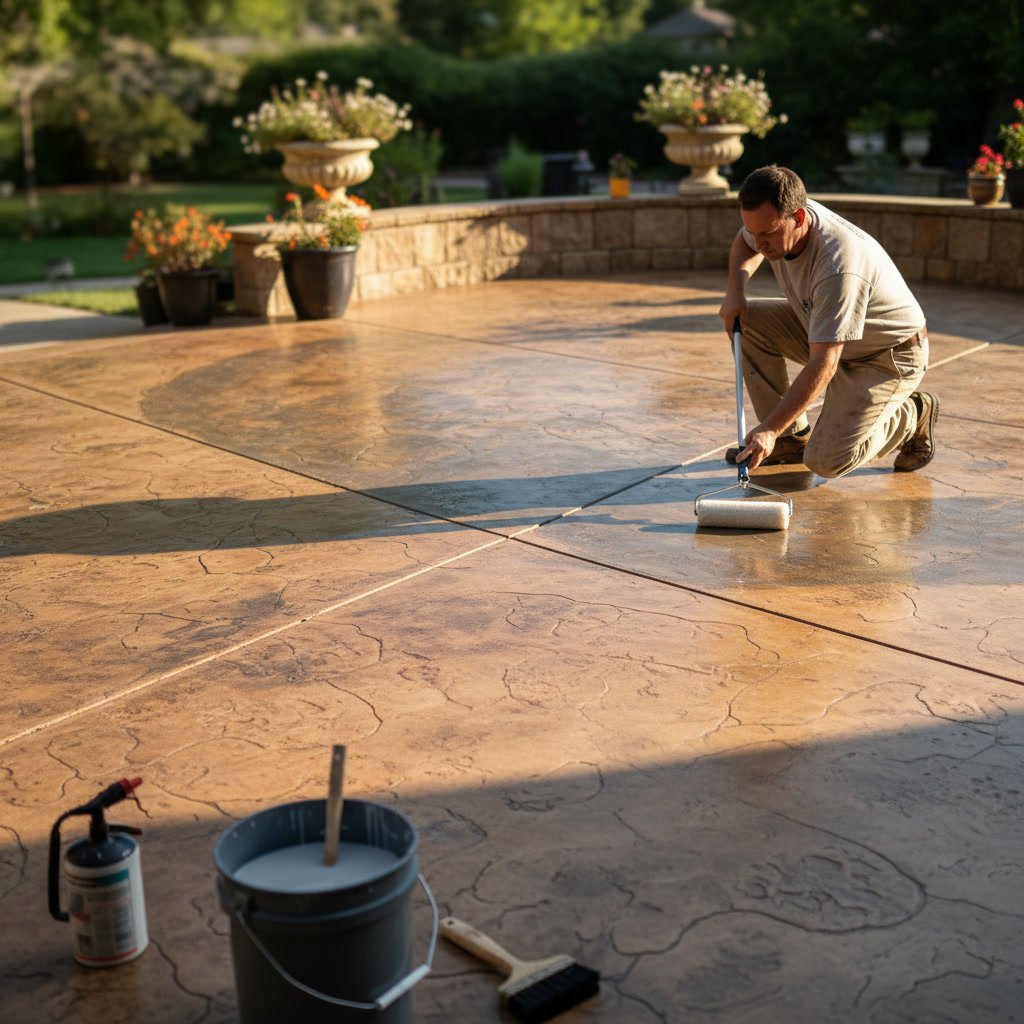
Fourth, sealer application protects the stained surface and enhances color depth. Most projects use penetrating sealers for outdoor applications, providing protection without creating slippery surfaces or requiring frequent reapplication.
Cost Comparison Against Replacement and Overlay Options
Staining existing concrete typically costs between $2 and $4 per square foot for professional application with basic single-color treatments. Multi-color designs or intricate patterns may reach $6 to $8 per square foot. These figures include surface preparation, stain materials, and sealer.
Compare this to concrete replacement at $8 to $15 per square foot for basic work, or decorative overlays at $7 to $12 per square foot. Staining preserves structurally sound concrete while delivering custom appearance at 30% to 50% of replacement costs. The process also generates minimal waste and disruption compared to demolition and repour projects.
Durability Expectations in Shingle Springs Weather Conditions
Properly applied concrete stains last 10 to 20 years in typical outdoor conditions before requiring refresh applications. The Sierra Nevada foothills climate around Shingle Springs presents moderate weather challenges including seasonal temperature swings, occasional freeze-thaw cycles, and summer heat that can stress inferior surface treatments.
Chemical stains show exceptional UV resistance because color develops within the concrete rather than on top of it. Water-based stains may fade slightly faster in direct sun exposure but still outperform surface coatings. Regular resealing every two to four years maintains protection and color vibrancy, a simple maintenance task that extends stain life significantly.
Winter moisture and summer heat cause minimal damage to stained concrete when proper drainage exists. Standing water and ice formation present the same risks to stained surfaces as plain concrete, making slope and drainage considerations equally important regardless of finish type.
Maintenance Requirements After Staining
Stained concrete requires less maintenance than most decorative surface options. Regular sweeping and occasional washing with mild detergent keep surfaces clean without special products or techniques. Avoid harsh chemicals, deicing salts, and acidic cleaners that can damage sealers or etch concrete.
Sealer reapplication represents the primary ongoing maintenance need. Traffic patterns, weather exposure, and sealer type determine reapplication frequency, typically every two to four years. This simple process takes a few hours and costs significantly less than the original staining investment.
Minor scratches or scuffs typically don’t penetrate deeply enough to affect stain color. Surface damage that does reach bare concrete can often be spot-treated with matching stain, though perfect color matching requires skill and may show slight variation depending on concrete age and condition.
Common Issues That Compromise Staining Results
Residual sealers represent the most common reason for stain failure. Even thin sealer residue prevents proper penetration, causing blotchy appearance or complete rejection. Professional testing identifies existing sealers that require removal before staining proceeds.
Concrete age and carbonation affect acid stain reactions. Very old concrete may have reduced calcium hydroxide content, limiting color development. New concrete under 28 days old may still contain excess moisture or release lime that interferes with stain bonding. Understanding these factors helps contractors adjust techniques for optimal results, similar to the careful preparation required when addressing common issues like driveway cracking problems.
Environmental conditions during application also matter. Rain within 24 hours of application can wash away uncured stain, while extreme heat causes rapid drying that creates lap marks and uneven penetration. Professional contractors monitor weather forecasts and adjust schedules accordingly.
Integration With Complete Outdoor Living Upgrades
Stained concrete coordinates beautifully with comprehensive outdoor improvements. When combined with landscaping updates, the color palette can echo natural stone elements, plant selections, or architectural details. Stained patios create visual continuity between indoor and outdoor spaces when colors complement interior flooring or wall treatments.
The process works equally well for pool decks, where cool earth tones reduce heat absorption and create resort-like ambiance. Staining existing pool decks saves thousands compared to removal and replacement while delivering dramatic visual improvement that enhances the entire backyard environment.
Property owners frequently combine staining projects with other concrete enhancements. Adding borders, saw-cut patterns, or texture stamps before staining creates custom designs that rival high-end natural materials at more accessible price points.
Making Outdoor Spaces Reflect Your Personal Style
Concrete staining offers the rare combination of dramatic visual transformation, lasting durability, and reasonable investment that few other improvement options match. The process preserves structurally sound surfaces while eliminating the dated appearance that diminishes property value and outdoor enjoyment. Chemical bonding ensures color permanence that weathers gracefully rather than deteriorating like surface coatings.
Professional application makes the difference between mediocre results and stunning transformations. Experienced contractors understand how concrete age, porosity, and existing conditions affect stain penetration and final appearance. They prepare surfaces properly, apply products at correct concentrations and coverage rates, and seal finished work to ensure maximum longevity.
Since 1990, STAMATELOS CONSTRUCTION has brought skilled craftsmanship to concrete enhancement projects throughout Cameron Park and surrounding communities. Our family-operated team combines expertise across multiple trades to deliver complete solutions that transform outdoor living spaces. Whether refreshing a tired patio or creating custom designs that complement your home’s architecture, professional concrete staining services provide lasting value and beauty.
Ready to transform your plain concrete surfaces into custom outdoor features? STAMATELOS CONSTRUCTION serves property owners throughout the foothills region with expert staining services backed by decades of experience. Call +19163055310 to discuss your project and schedule a consultation that explores design possibilities for your specific space.